
Weapon Light Lumens Explained: What You Really Need for Home Defense

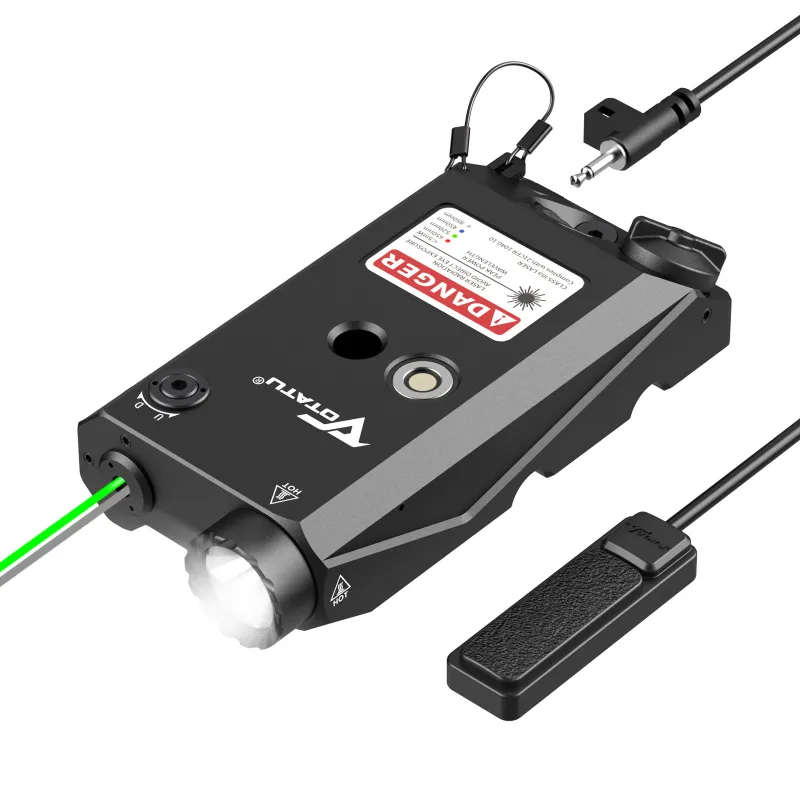
What Lumen Count Do You Actually Need in a Laser Light?
A laser light for home defense typically needs 300 to 1,000 lumens to identify threats without over-blinding yourself in close quarters. Most tactical operators settle in the 500 to 600 lumen range because it delivers enough throw to light up a hallway or room corner while your eyes retain enough night adaptation to navigate safely. Ultra-bright lights above 1,200 lumens can backscatter off white walls and temporarily blind you, the opposite of what you want at 2 a.m.
We tested dozens of weapon-mounted lights and laser light combos in real home layouts to measure effective identification distance, spill control, and recoil durability. This guide walks you through lumen ratings, beam patterns, and laser integration so you can match the right setup to your firearm and environment.
How Lumens Translate to Real-World Performance
Lumen counts on the box tell only part of the story. A 600-lumen light with a tight hotspot and minimal spill will punch farther down a corridor than an 800-lumen flood, but the flood reveals peripheral movement better in a wide room. For home defense distances (5 to 25 feet), candela (beam intensity) matters more than raw lumens.
Here is how the most common lumen tiers perform indoors:
- 200 to 400 lumens – enough to identify features on a face at 15 feet; minimal backscatter; battery lasts longer; ideal for apartments and small homes
- 500 to 700 lumens – the sweet spot for most defenders; lights up a standard bedroom end to end; enough intensity to cause momentary disorientation in an aggressor's peripheral vision
- 800 to 1,000 lumens – effective in larger homes or if you need to reach across a yard from a doorway; requires careful aim to avoid blinding yourself off reflective surfaces
- 1,200+ lumens – overkill indoors unless you are defending a warehouse; expect significant spill and a shorter runtime per charge
We prefer the 500 to 600 lumen range paired with a focused beam profile. If you are mounting the light on an AR 15 light setup, consider the longer sight radius; you can tolerate a bit more output because the rifle naturally holds farther from your face than a pistol.
Laser Light vs. White Light: When to Use Each
White light alone is faster for threat identification. A laser light combo adds an aiming reference when you cannot achieve a proper sight picture, such as shooting from behind cover, around a corner, or in an awkward retention position. The laser is not a replacement for your sights; it is an insurance policy for unconventional shooting angles.
Visible Laser Benefits
A red or green beam gives instant feedback on muzzle direction, even under stress when fine motor skills degrade. Green lasers appear brighter to the human eye and remain visible in partial daylight, while red lasers consume less battery and cost less. Both work well indoors at home-defense distances.
If you run a pistol, a red dot sight for pistol paired with a white light often makes more sense than a laser. The dot co-witnesses with your irons, stays on target during recoil, and does not telegraph your position the way a laser line does. We recommend reserving lasers for situations where you need passive aiming under night vision or want a visible deterrent.
IR Laser for Night Vision Users
An IR laser is invisible to the naked eye but shows up clearly through night-vision devices. If you have invested in NODs (night observation devices) for home security, an IR laser lets you aim without activating white light and sacrificing your night-vision advantage. Pair it with an IR illuminator to light the scene in the infrared spectrum.
Most civilian defenders will not need IR capability. It adds cost, requires night-vision equipment to see, and introduces another activation sequence to remember under stress. Stick with visible white light and a visible laser unless you have specific night-vision training and gear.
Choosing Between Integrated Combos and Separate Modules
You can mount a white light and laser as separate units or choose an integrated laser light combo housing. Integrated units save rail space, reduce snag points, and ensure the laser and light share a zero point. Separate modules give you flexibility to upgrade one component without replacing both and let you position each exactly where your thumb falls naturally.
| Feature | Integrated Combo | Separate Modules |
|---|---|---|
| Rail Space | One slot | Two slots (or stacked) |
| Weight | Typically lighter overall | Heavier combined |
| Upgrade Path | Replace entire unit | Swap light or laser independently |
| Zero Stability | Single housing, one zero | Two mounts, two potential shift points |
We recommend integrated combos for pistols and compact rifles where rail real estate is tight. For full-size rifles with extended fore-ends, separate modules give you the freedom to place the light at 12 o'clock and a laser or votatu laser at 3 or 9 o'clock for a cleaner activation setup.
Battery Life, Charging, and Runtime Considerations
High-lumen lights drain batteries quickly. A 600-lumen light running on a single CR123A battery will give you 60 to 90 minutes of continuous runtime, while the same light on a rechargeable 18650 cell can push 2 hours. For home defense, you rarely run the light continuously; short bursts mean a fresh battery can last months of intermittent training and checking bumps in the night.
Rechargeable options like a bean charger or beam charger simplify maintenance. You dock the entire weapon light in a charging cradle overnight instead of swapping cells. This approach works well for a dedicated home-defense gun that lives in a quick-access safe with a charging station nearby. If you rotate between range and home duty, keep spare CR123A batteries in your kit for field swaps.
Check your light every month. We set a phone reminder to activate the light, verify the laser if equipped, and confirm the battery indicator (if present) shows a healthy charge. Replace or recharge any cell below 50 percent. You can grab the code for 12 percent off accessories and charging solutions.
Mounting, Zeroing, and Activation Techniques
Most pistol lights mount to the dust-cover rail via a cross-bolt or lever clamp. Rifle lights use M-LOK, KeyMod, or Picatinny mounts depending on your handguard. Position the light so your support-hand thumb rests naturally on the activation paddle without shifting your grip.
Zeroing Your Laser
If you are running a laser, zero it at a realistic engagement distance. For home defense, 15 feet is a practical compromise. The laser dot and your point of impact will converge at that range; closer or farther, expect a small offset due to the height-over-bore between your barrel and the laser emitter. Most units include windage and elevation screws; make small clicks and verify at your chosen distance.
Activation Modes
- Momentary-on – press for light, release for darkness; best for clearing rooms and retaining surprise
- Constant-on – click to lock the light on; useful if you need both hands free to call 911 or open a door
- Strobe – disorienting flicker; some find it useful for deterrence, others consider it a liability that complicates target ID
We train primarily with momentary activation. You control exactly when the light is on, preserving your position when you are listening or moving. Practice activating the light under stress in dry-fire so the motion becomes automatic.
Matching Light Output to Your Home Layout
Walk through your home at night with a handheld light in the lumen range you are considering. Note where spill bounces off mirrors, windows, and glossy paint. A light that feels perfect in a carpeted bedroom may create a blinding halo in a tile bathroom.
If you live in an apartment with shared walls and short sightlines, a 400-lumen light with a wide beam gives you better peripheral coverage. If you are defending a two-story house with long hallways or need to illuminate a backyard from a doorway, the extra reach of a 700 to 800 lumen light justifies the trade-off in spill management.
Consider multiple setups. A laser light on your nightstand pistol and a higher-output AR 15 light on a rifle staged nearby gives you options depending on the threat level and response time.
Our Testing Process and Top Picks
We mounted each light on a firearm, fired 500 rounds to verify zero retention and housing durability, then scored activation ergonomics, beam quality, and battery life. Lights that flickered under recoil, lost zero after drop tests, or required awkward grip shifts to activate were eliminated.
The laser light combo units we tested balanced output and run time without excessive bulk. For budget-conscious buyers, a quality white-light-only unit paired with a separate red dot sight for pistol often delivers better value than an entry-level combo where both the light and laser are compromised.
Check the latest price for current discounts; Votatu frequently rotates deals on weapon lights and laser modules, and our readers save 12 percent sitewide with the code on the coupon page.
Final Recommendations
Start with 500 to 600 lumens in a white-light-only package if you are new to weapon-mounted illumination. Master activation, room-clearing angles, and battery discipline before adding a laser to the equation. If you already run night vision or need passive aiming for odd positions, an IR laser makes sense; otherwise, visible light and a red dot cover most defensive scenarios.
Invest in a beam charger or spare batteries, zero your equipment at a realistic distance, and run at least 100 dry repetitions so you can activate the light without conscious thought. The best lumen count is the one you have trained with enough to deploy smoothly under stress, and for most defenders, that sweet spot sits between 500 and 700 lumens with a focused beam and minimal spill.
Frequently asked questions
How many lumens should a laser light have for home defense?
Most home defenders need 500 to 700 lumens. This range provides enough intensity to identify threats at typical indoor distances (5 to 25 feet) without excessive backscatter off walls that can temporarily blind you.
Is a laser necessary on a weapon light?
No, a laser is optional. White light alone is faster for threat identification. A laser helps when you cannot achieve a proper sight picture, such as shooting from behind cover or in awkward retention positions, but a red dot sight often makes more sense for most pistol users.
Can I use an IR laser without night vision?
No, an IR laser is invisible to the naked eye and only visible through night-vision devices. Unless you own NODs and have night-vision training, stick with visible white light and a visible laser for home defense.
How often should I replace weapon light batteries?
Check your light monthly and replace or recharge any battery below 50 percent. A 600-lumen light on a single CR123A battery offers 60 to 90 minutes of continuous runtime, but short defensive bursts mean a fresh battery can last months of intermittent use.
What is better for a pistol, a laser light combo or separate modules?
An integrated laser light combo saves rail space and reduces snag points on a pistol. Separate modules offer flexibility to upgrade one component independently and let you position each control exactly where your thumb falls, but they take up more room and add weight.
At what distance should I zero my weapon-mounted laser?
Zero your laser at 15 feet for home defense. The laser dot and point of impact will converge at that distance. Closer or farther, expect a small offset due to the height difference between your barrel and the laser emitter.