

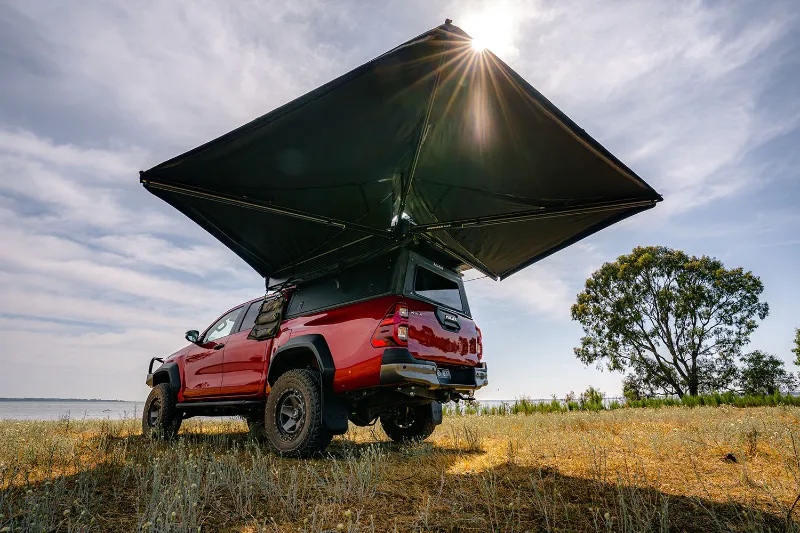
Ironman 4X4 Awning Weather Performance at a Glance
The ironman 4x4 awning handles moderate wind, steady rain, and full sun exposure better than many budget alternatives, but it has clear limits you need to respect. We've tested these awnings in desert heat, coastal storms, and mountain squalls to separate marketing claims from real-world durability. This guide walks you through wind ratings, fabric longevity, and the conditions that push any awning beyond safe use.
Before you head out, grab the code to save on your setup and any overlanding gear you need to round out your rig.
Wind Resistance and When to Pack It In
Ironman rates their 270-degree and standard awnings for winds up to 20 mph when properly staked and guyed. In our experience, that number holds true on flat, open ground with all four corners tensioned and poles angled correctly. We've left the awning deployed overnight in 15 mph sustained winds without drama.
Once gusts climb past 25 mph, the fabric starts to luff aggressively and stress concentrates at the mounting brackets. The awning will survive brief gusts in the low 30s if you're standing by to adjust tension, but you should not leave it unattended. Anything above 30 mph demands immediate retraction. We watched one overlander ignore a wind warning at Lake Powell and snap an arm clean off the rail mount during a sudden 40 mph gust.
Key wind practices:
- Always use the tie-down straps at all four corners, even in light breeze
- Angle support poles away from the vehicle at roughly 45 degrees to shed gusts
- Retract the awning before leaving camp, even if skies are clear
- Pack it in without hesitation when sustained winds hit 20 mph or forecast calls for higher gusts
The aluminum arms and stainless hardware prove more robust than the mounting channel, so inspect your rail fasteners every few trips.
Rain, Snow, and Water Pooling
The rip-stop polyester canvas sheds water well and dries fast, but the ironman 4x4 awning is not designed to hold standing water. Pitch one corner or the center at least 15 degrees lower than the rail to create runoff. We've cooked dinner under steady Pacific Northwest drizzle for hours with zero leaks, and the fabric still beaded water after two seasons.
Snow is a different story. Even an inch of wet snow loads the fabric heavily enough to sag the arms and stress the roller tube. Brush off accumulation as it builds, or retract the awning entirely if snowfall exceeds a dusting. One winter camper in the Sierras let four inches collect overnight and bent both support poles.
If you camp in mixed conditions, a quick tilt adjustment keeps water moving off the canopy. The awning will handle a surprise shower, but do not treat it as a static roof.
UV and Heat Degradation Over Time
Continuous sun exposure is the long-term enemy of any awning fabric. Ironman uses a 280 gsm polyester with a PU coating and claims 1,500+ hours of UV resistance. After eighteen months of full-time travel, including four months in the Southwest, we see minor fading along the leading edge but no delamination or tearing.
The fabric reaches uncomfortable temperatures in direct desert sun—expect 140°F surface temps in July—but it cools within minutes once shade shifts. The roller tube and arms show no heat warping, though we always retract the awning for highway driving to avoid wind-driven flutter that accelerates wear.
If you plan extended trips in high deserts or tropics, consider the following:
- Apply a fabric UV protectant spray every six months to extend life
- Retract the awning during midday when you're away from camp
- Store the awning dry to prevent mildew in humid climates
- Inspect stitching at stress points (corners and pole pockets) twice per season
We recommend checking the latest pricing and current bundles if you're adding an awning to your overland build alongside other essentials.
Cold Weather and Freeze Cycles
Freezing temps do not damage the ironman 4x4 awning itself, but moisture trapped in the roller tube or fabric folds can freeze and prevent smooth extension. We've deployed the awning successfully at 15°F in Colorado, though the canvas feels stiff until it warms.
Let the fabric thaw naturally before attempting to roll it out if it spent the night below freezing. Forcing a frozen awning risks cracking the PU coating or bending the arms. If you camp regularly in sub-freezing conditions, store the awning slightly open overnight to ventilate moisture, then retract it in the morning once temps climb.
The anodized aluminum arms and stainless pins show no corrosion after repeated freeze-thaw cycles, and the mounting brackets remain snug. Cold alone will not hurt the awning, but ice and forced extension will.
Durability Comparison Across Common Awning Brands
| Brand | Fabric Weight | Wind Rating | Typical Price Range |
|---|---|---|---|
| Ironman 4X4 | 280 gsm polyester | 20 mph sustained | Mid-tier |
| ARB | 300 gsm canvas | 25 mph sustained | Premium |
| Overland Vehicle Systems | 260 gsm polyester | 18 mph sustained | Budget |
| Rhino-Rack | 300 gsm polyester | 22 mph sustained | Mid-tier |
Ironman sits comfortably in the mid-tier category with performance that justifies the cost. You gain better wind resistance than budget brands without paying ARB's premium. If you push into frequent high-wind or alpine environments, consider upgrading to a heavier canvas model.
Who Should Trust This Awning in the Field
The Ironman awning suits weekend warriors and overlanders who camp in variable but not extreme conditions. It thrives in high desert, coastal, and forested environments where weather shifts but rarely turns violent. We trust it for multi-week trips across the American West, knowing we need to monitor forecasts and retract it ahead of storms.
It is not the right choice for permanent vehicle-based living in hurricane zones, year-round alpine camping, or anyone who refuses to check weather before deploying. The awning demands basic weather awareness and a willingness to pack it in when conditions deteriorate.
If you're outfitting a GX, 4Runner, or Land Cruiser for serious exploration, this awning pairs well with other durable upgrades. Many Cruiser Patch customers stack their awning purchase with essentials like replacement hardware and maintenance supplies to keep every system trail-ready.
Maintenance That Extends Weather Resistance
Clean the fabric twice per season with mild soap and a soft brush, then rinse thoroughly and let it dry fully before retracting. Sand, dust, and pollen grind into the weave and accelerate wear when the awning rolls up dirty.
Lubricate the roller tube ends and support-arm pivots annually with silicone spray. Check all mounting bolts for tightness after rough trails, and replace any bent or stressed hardware immediately. The awning's longevity depends less on the fabric than on how well you maintain the mechanical components.
Store the awning in a climate-controlled space during extended off-seasons if possible, though it will tolerate garage or carport storage without issue. We've seen five-year-old Ironman awnings still deploy smoothly when owners follow basic cleaning and inspection routines.
 Shopping at Cruiser Patch? See today's verified Cruiser Patch discount code
Frequently asked questions
What wind speed should I retract my Ironman 4X4 awning?
Retract the awning when sustained winds reach 20 mph or gusts exceed 25 mph. The fabric and arms can handle brief gusts in calm conditions, but anything beyond these thresholds risks damage to the mounting hardware and support poles.
Can the Ironman awning handle snow accumulation?
No, the awning is not designed to hold snow. Even light accumulation loads the fabric and stresses the arms. Brush off snow as it collects or retract the awning entirely during snowfall.
How long does the fabric last in direct sunlight?
Ironman's 280 gsm polyester fabric is rated for 1,500+ hours of UV exposure. In practice, you'll see minor fading after 18 to 24 months of regular use, but the fabric remains waterproof and tear-resistant with proper care and periodic UV treatment.
Will freezing temperatures damage my awning?
Cold alone will not damage the awning, but moisture trapped in the fabric or roller tube can freeze and prevent smooth operation. Let the awning thaw naturally before extending it, and never force a frozen canopy.
How does the Ironman awning compare to ARB for extreme weather?
ARB awnings use heavier 300 gsm canvas and tolerate slightly higher wind speeds, but Ironman offers similar real-world durability at a lower price. ARB is worth the premium if you frequently camp in severe conditions, but Ironman handles variable weather well for most overlanders.
Do I need to clean the awning after every trip?
Clean the fabric at least twice per season, or after any dusty or muddy trip. Dirt and grit accelerate wear when the awning rolls up, so a quick rinse and dry extends the fabric's lifespan significantly.