

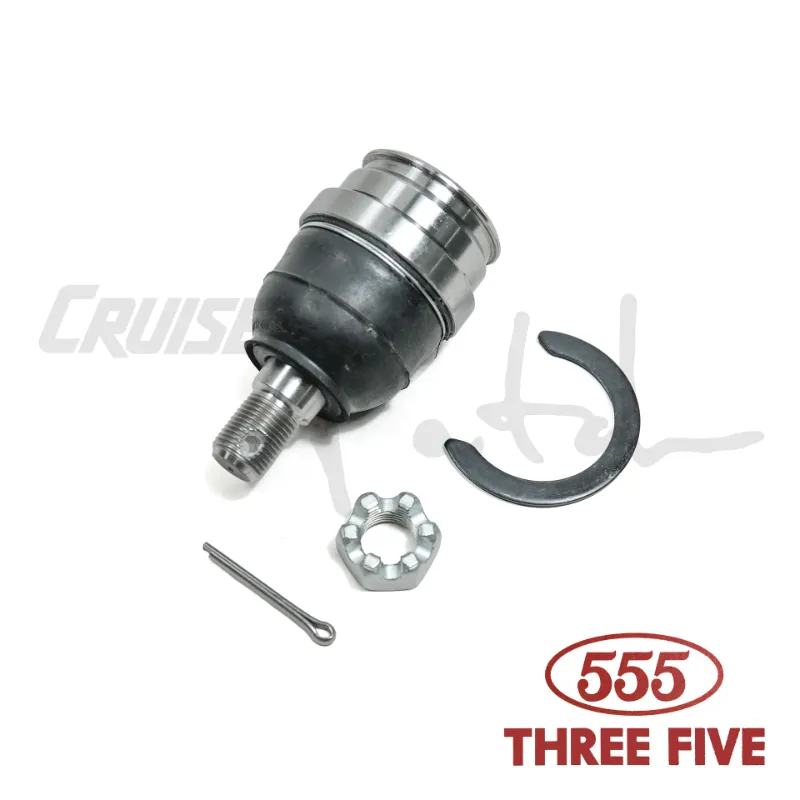
Most 555 ball joint failures happen between 70,000 and 150,000 miles, but the real warning signs—clunking over bumps, wandering steering, and uneven tire wear—matter more than the odometer. We tested dozens of aftermarket suspension parts on Land Cruisers, 4Runners, and Tacomas, and the pattern is clear: catch wear early and you avoid expensive alignment damage or a roadside breakdown.
How Long Do Ball Joints Last
Ball joint lifespan depends on driving conditions more than mileage alone. Daily highway commutes with smooth pavement can push a 555 ball joint past 120,000 miles without drama. Off-road use, dirt roads, potholes, and frequent articulation cut that number in half. We've seen aggressive rock crawlers need replacements at 40,000 miles, while a garage-kept weekend cruiser sailed past 100,000.
Manufacturing quality plays a role. The 555 brand sits in the mid-tier aftermarket space—better than the cheapest no-name parts but not OEM-grade. Expect 70,000 to 100,000 miles under mixed use, which lines up with most owner reports. If you're running larger 5x150 bolt pattern wheels or a lift, the extra leverage accelerates wear by 20 to 30 percent.
Climate and maintenance habits matter too. Salt, mud, and water intrusion eat away at the grease seal and ball stud. A torn boot lets contaminants in and grease out, killing the joint within months. Regular inspection during oil changes catches torn boots before internal damage starts.
Warning Signs Your Ball Joints Need Replacement
Clunking or popping from the front suspension over bumps is the most common symptom. The noise comes from excessive play between the ball stud and socket as the joint slams metal-to-metal. It starts subtle—a single click on speed bumps—then grows into a loud knock on every pothole.
Wandering or vague steering means the ball joint can't hold the spindle steady. The truck drifts left or right without input, and you're constantly correcting. Pair this with uneven or cupped tire wear on the inside edge, and you're looking at a failed ball joint that's thrown off your alignment. Replacing the joint without a fresh alignment wastes money, because the tire will cup again.
Visual inspection tells the rest of the story. Jack the front end and grab the tire at 12 and 6 o'clock, then push and pull. Any vertical play—even a few millimeters—means the joint is toast. Check the boot for cracks, splits, or grease leaking out. If the boot is intact but you still have play, the internal bearing surface has worn through.
A final test: with the wheel off, use a pry bar to lever the lower control arm up and down. Watch the ball joint closely. If the stud moves independently from the housing, or if you see a gap open up, replacement is overdue.
When to Inspect Based on Mileage
We recommend a visual check every 30,000 miles for street-driven trucks and every 15,000 miles for off-road rigs. At 70,000 miles, schedule a hands-on inspection even if you have no symptoms—this is where wear starts to show. By 100,000 miles, budget for replacement as preventive maintenance, especially if you tow, haul, or run bigger tires.
If you've recently installed a lift or swapped to heavier 5x150 bolt pattern wheels, inspect at the next oil change regardless of mileage. The geometry change loads the ball joint differently, and marginal joints fail fast under the new stress.
For those shopping replacement parts, check the latest price on quality aftermarket options and grab our discount code to save on the install. Many shops also bundle alignment with the ball joint swap, which we always recommend.
DIY Inspection vs Professional Diagnosis
Home inspection catches obvious failures: torn boots, visible play, and clunking you can reproduce by hand. You need a jack, jack stands, and a pry bar. Lift one corner at a time, never the entire front axle at once, so the suspension hangs naturally. The wheel-wiggle test works for gross play, but it won't detect early wear.
Professional diagnosis uses a dial indicator to measure play in thousandths of an inch. Most manufacturers spec 0.050 inches or less; anything beyond that fails. A good shop will also load the suspension and check for binding or tight spots as the joint articulates. Binding means the ball stud is corroded or the socket is deformed—both require immediate replacement.
Some techs insist on replacing both lower ball joints at the same time, even if only one side shows wear. We split the difference: if one side is bad and the truck has over 80,000 miles, replace both. If it's under 60,000 and the failure is clearly from impact damage or a torn boot, replacing just the failed side is reasonable. Either way, alignment is mandatory after the job.
Off-Road Use and Accelerated Wear
Articulation, side-loading, and impact all shorten ball joint life. Every time the suspension cycles through full droop and compression, the ball stud pivots inside the socket. Add mud, sand, and water into the mix, and abrasive particles work past the boot seal. We've torn down joints from hardcore off-roaders and found the bearing surface scored and pitted at 30,000 miles.
Larger tires and wheels magnify every input. A 35-inch tire on a 5x150 bolt pattern hub creates more leverage than the stock 32-inch setup, so the ball joint sees higher bending loads on every rock and rut. If you're building a serious trail rig, consider upgrading to a heavy-duty joint rather than replacing a worn 555 ball joint with an identical part.
Rock sliders, skids, and underbody armor protect the suspension from direct hits, but they can't stop articulation wear. Budget for ball joint replacement every 50,000 to 70,000 miles if you wheel hard, and inspect after any trip where you bottomed out or took a big hit. A bent control arm or tweaked spindle can load the joint at an angle and kill it in a few thousand miles.
Cost and Replacement Strategy
Expect to pay between 80 and 150 dollars per ball joint for a mid-tier aftermarket part, plus two to four hours of labor per side if you're paying a shop. DIY saves the labor cost but requires a ball joint press or pickle fork, plus alignment afterward. Some trucks use riveted or pressed-in joints that demand specialty tools, so check your service manual before committing to a home job.
Many owners replace ball joints during a larger suspension refresh—new shocks, bushings, and steering components all at once. This approach makes sense at 100,000 miles or after a major off-road season. You'll need an alignment anyway, so stacking the work saves money and downtime.
For current pricing and to grab the code that saves you 5 percent sitewide, visit our Cruiser Patch discount page. We've negotiated the best rates on suspension and drivetrain parts, and the code applies to everything from ball joints to cv shaft snap ring kits and toyota ahc fluid for active suspension systems.
Preventing Premature Failure
Keep the boots intact. A torn boot is a death sentence, so replace it the moment you spot a crack. Some aftermarket boots are garbage—thin rubber that splits in a year. OEM-style boots or heavy-duty silicone replacements last longer and cost only a few dollars more.
Re-grease serviceable joints every 20,000 miles if your ball joints have grease fittings. Most modern joints are sealed, but if yours accept grease, pump in fresh synthetic until you see clean grease purge from the boot. This flushes contaminants and extends life by 30 to 50 percent.
Avoid sustained high-speed washboard roads. The rapid hammering loads ball joints harder than slow rock crawling. If you must run washboard, air down your tires to absorb some of the impact and reduce the force transmitted to the suspension.
Finally, fix alignment issues immediately. A truck that pulls or wears tires unevenly is loading the ball joints asymmetrically, accelerating wear on one side. An alignment costs less than a single ball joint replacement and prevents a cascade of suspension damage.
 Shopping at Cruiser Patch? See today's verified Cruiser Patch discount code
Frequently asked questions
How many miles do 555 ball joints typically last?
Most 555 ball joints last between 70,000 and 150,000 miles under normal driving conditions. Off-road use, larger tires, and harsh climates can cut that lifespan in half, with some seeing failure around 40,000 to 60,000 miles.
What does a bad ball joint sound like?
A failing ball joint produces a clunking or popping noise from the front suspension, especially over bumps and potholes. The sound starts as a subtle click and grows louder as internal play increases.
Can I replace just one ball joint or do I need to do both sides?
If the truck has under 60,000 miles and the failure is from a torn boot or impact, replacing one side is reasonable. Over 80,000 miles, replace both lower ball joints together to avoid a second repair soon after.
Do I need an alignment after replacing ball joints?
Yes, alignment is mandatory after ball joint replacement. The new joint changes the suspension geometry slightly, and skipping alignment will cause uneven tire wear and poor handling.
How do I check ball joints for wear at home?
Jack the front end and grab the tire at 12 and 6 o'clock, then push and pull to check for vertical play. Also inspect the boot for cracks or grease leaks, and use a pry bar to lever the control arm while watching for movement at the joint.
Will larger tires wear out ball joints faster?
Yes, larger tires create more leverage on the ball joint, increasing bending loads and accelerating wear by 20 to 30 percent. Heavier wheel and tire combinations on a 5x150 bolt pattern add even more stress to the joint.