
J1772 Adapter vs Tesla Charging Adapter: Which One Do You Actually Need?

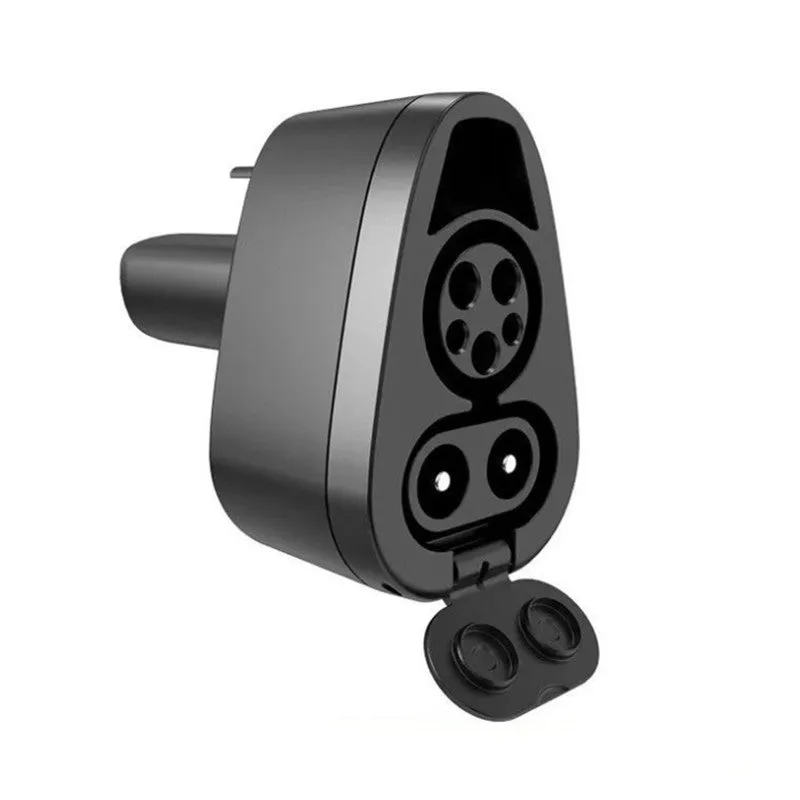
A tesla charger adapter lets your Tesla use charging stations that weren't originally designed for it, expanding your options at home and on the road. The two adapters most owners encounter are the J1772 (for Level 2 public chargers) and Tesla's proprietary connector, but knowing which one you actually need depends on your Tesla model year, your home charging setup, and where you drive.
What Is a Tesla Charger Adapter and Why It Matters
Tesla uses its own charging connector for its Supercharger network and tesla wall connector installations, while most non-Tesla public charging stations in North America use the J1772 standard. A tesla charger adapter acts as the bridge between these two ecosystems, letting you plug into thousands more charging points when you're away from a Supercharger.
Here's what each adapter does:
- J1772 to Tesla adapter: Converts a J1772 plug (the industry standard) so it fits your Tesla's charge port. Most Teslas ship with one in the glovebox.
- Tesla to J1772 adapter: Lets non-Tesla EVs use a Tesla charger or wall connector. Less common for Tesla owners, more relevant if you're sharing a home charger with another EV brand.
If you bought your Tesla new after 2020, check your glovebox or center console. Tesla includes a j1772 adapter with most vehicles, though some buyers report it's missing or stored in an unexpected spot. If you're wondering "does tesla come with j1772 adapter," the answer is usually yes, but it pays to confirm with your delivery checklist.
J1772 Adapter vs Tesla Charging Adapter: Key Differences
| Feature | J1772 to Tesla Adapter | Tesla Wall Connector | Tesla Mobile Connector |
|---|---|---|---|
| Use case | Public Level 2 stations | Home/workplace fast charging | Portable home charging |
| Charging speed | Up to 19.2 kW (80A) | Up to 11.5 kW (48A) | Up to 7.6 kW (32A) with NEMA 14-50 |
| Portability | Pocket-sized, keep in car | Hardwired to wall | Comes with interchangeable plugs |
| Price range | Check our discount code | Fixed installation cost | Moderate, plug-dependent |
The j1772 to tesla adapter is your road-trip essential. It weighs a few ounces, lives in your car, and unlocks ChargePoint, Blink, and almost every hotel or shopping-center charging station. You'll max out at the station's output (usually 6 to 12 kW), which adds 20 to 40 miles of range per hour.
A tesla charger like the Wall Connector is a dedicated home solution. It hardwires into your garage at 240V and delivers faster, more reliable charging overnight. If you already have a 240V outlet (NEMA 14-50 or similar), the Mobile Connector with the correct plug adapter offers a middle ground without installation costs.
Which Adapter Do You Need for Home Charging?
Your home charging setup hinges on three factors: your electrical service, how many miles you drive daily, and whether you want a permanent or portable solution.
If you have a standard 120V outlet (NEMA 5-15), the Mobile Connector that ships with most Teslas will add about 3 miles of range per hour. That works if you drive under 30 miles a day and can plug in overnight, but most owners upgrade quickly.
If you have or can install a 240V outlet, a tesla nema 14-50 adapter paired with the Mobile Connector jumps you to 30 miles of range per hour. Electricians often quote a few hundred dollars to add this outlet, and it's the sweet spot for renters or anyone who wants portability. Grab our code to save on compatible adapters and accessories.
If you want the fastest home charging, hardwire a Wall Connector. It requires professional installation but handles up to 48 amps (around 44 miles per hour for a Model 3). The tesla home charger price varies by labor and permits, so get quotes from two electricians before committing.
For apartment dwellers or owners with two EVs, consider whether your landlord or HOA allows installation. A J1772-compatible wall charger can serve both a Tesla (via adapter) and a non-Tesla, future-proofing your setup if you switch brands.
When You'll Use a J1772 Adapter on the Road
Public charging networks like ChargePoint, EVgo (Level 2), and Electrify America (Level 2) rely on J1772 plugs. Your j1772 adapter slides over the J1772 plug, clicks into your Tesla's charge port, and works exactly like a native Tesla connector.
You'll reach for it in these scenarios:
- Hotels and destination charging: Many properties offer free Level 2 charging with J1772 plugs. Plug in overnight and wake up to a full battery.
- Workplace charging: If your employer provides EV charging, it's almost always J1772.
- Road trips between Superchargers: Small-town charging stations and national parks often have one or two J1772 posts but no Superchargers within 50 miles.
- Emergency top-ups: When a Supercharger is full or offline, a nearby J1772 station can add enough range to reach the next stop.
Store the adapter in your glovebox or center console. We've tested half a dozen aftermarket versions, and the OEM Tesla adapter remains the most reliable. If yours is lost or you want a backup, check the latest price on a replacement before road-tripping.
Do You Need Multiple Adapters or Just One?
Most Tesla owners get by with the included J1772 adapter and nothing else. The exceptions:
- You share a non-Tesla home charger: Buy a Tesla-to-J1772 adapter (the reverse direction) so your Tesla can use a third-party wall charger installed for a Chevy Bolt, Nissan Leaf, or similar.
- You camp or visit remote cabins: A TT-30 or NEMA 10-30 adapter for the Mobile Connector taps into RV and older dryer outlets. These adapters charge slower but beat a dead battery.
- You own a pre-2020 Tesla: Older Model S and X vehicles used a different Mobile Connector. Verify your car's charge port generation before ordering adapters.
If you're building out a home garage with multiple charging options, a tesla charger paired with a universal j1772 adapter covers Tesla and guest EVs alike. For everything else, prioritize the adapter that matches where you actually drive, not every theoretical scenario.
How to Choose the Right Tesla Charging Adapter
Start by auditing where you charge today and where you'll charge in six months. Open your Tesla app, tap the charging icon, and review your last 30 sessions. If 90 percent happen at home or Superchargers, you barely need the J1772 adapter except as insurance.
Choose a J1772 to Tesla adapter if:
- You road-trip frequently to areas with sparse Supercharger coverage
- Your workplace or apartment complex provides free J1772 charging
- You want a backup for Supercharger downtime
Invest in a home tesla wall connector or 240V outlet if:
- You drive more than 40 miles daily and charge overnight
- You want to skip public charging almost entirely
- Your commute or schedule makes Supercharger detours inconvenient
Add a Mobile Connector with multiple plug adapters if:
- You travel between different properties (vacation home, in-laws, etc.)
- You want one portable solution that works on 120V, 240V, and specialty outlets
- You're deciding whether to commit to a hardwired Wall Connector
We recommend keeping the factory J1772 adapter in your car at all times and upgrading your home setup based on daily range needs. Our discount code applies to both adapters and home charging accessories, so you can test a 240V Mobile Connector setup before paying for a permanent Wall Connector install.
Pair your new charging setup with other Tesla essentials like a tesla carplay adapter for seamless phone integration or tesla model 3 model y pillows to make those charging stops more comfortable.
Frequently asked questions
Does Tesla come with a J1772 adapter?
Most new Teslas delivered after 2020 include a J1772 adapter in the glovebox or center console. Check your delivery checklist or contact Tesla support if you can't locate it, as some owners report it was packed separately or omitted.
Can I use a J1772 adapter at a Tesla Supercharger?
No. Superchargers use Tesla's proprietary high-speed DC connector and won't accept a J1772 adapter. The J1772 adapter only works with Level 2 AC charging stations.
Where is my Tesla J1772 adapter stored?
Tesla typically stores the J1772 adapter in the glovebox, center console, or under the trunk floor near the Mobile Connector. Check all three spots, as location varies by model year.
What is the difference between a tesla charger adapter and a J1772 adapter?
A J1772 to Tesla adapter lets your Tesla use public J1772 charging stations. A Tesla to J1772 adapter (less common) lets non-Tesla EVs use a Tesla Wall Connector. Most Tesla owners only need the first type.
How fast does a J1772 adapter charge a Tesla?
Charging speed depends on the J1772 station's output, typically 6 to 12 kW, adding 20 to 40 miles of range per hour. The adapter itself doesn't limit speed; the station and your car's onboard charger do.
Do I need a NEMA 14-50 adapter for home charging?
Only if you have a 240V NEMA 14-50 outlet (common in RVs and garages) and want to use the Tesla Mobile Connector. A hardwired Wall Connector skips the outlet entirely and charges faster.