
Kids Skincare vs. Adult Skincare: What's the Difference?

Understanding Skincare For Kids vs. Adult Products
Skincare for kids is formulated with a higher pH, fewer active ingredients, and gentler cleansing agents than adult skincare because children's skin is thinner, more permeable, and produces less oil. Adult products often contain acids, retinoids, and fragrances that can irritate young skin or disrupt its natural barrier. We tested dozens of formulas to understand exactly what sets kid-friendly products apart and why using the right skincare matters at every age.
Young skin doesn't need anti-aging serums or deep exfoliation. It needs protection, mild cleansing, and hydration that supports its natural development. That's where products like kids face wash and age-appropriate routines make a real difference.
pH Balance and Skin Barrier Differences
Adult skin typically has a pH between 4.5 and 5.5, while children's skin sits closer to neutral, around 6 to 7. Adult cleansers are formulated to match that lower pH, but when kids use them, the mismatch can strip natural oils and weaken the skin barrier.
Key differences in barrier function:
- Children's stratum corneum (outer skin layer) is thinner and less robust
- Kids produce fewer ceramides and lipids that lock in moisture
- Young skin loses water faster, making it more prone to dryness and irritation
- The skin's acid mantle develops fully during puberty, not before
Kids skin care products are designed to cleanse without disrupting this developing barrier. When you check the latest options, look for sulfate-free formulas that rinse clean without that tight, squeaky feeling.
Ingredient Strength and Active Concentrations
Adult skincare relies on potent actives like glycolic acid, retinol, and high-percentage niacinamide to address aging, pigmentation, and texture. Kids don't face these concerns, and their skin can't tolerate the same concentrations.
| Ingredient Type | Adult Products | Kids Products |
|---|---|---|
| Exfoliating acids (AHA/BHA) | 5-10%+ glycolic, 2% salicylic | 0.5-1% salicylic (teens only) |
| Retinoids | Retinol, tretinoin, adapalene | Not recommended under 12 |
| Fragrance | Often synthetic, high concentration | Fragrance-free or minimal natural |
| Preservatives | Parabens, formaldehyde-releasers | Gentler alternatives like phenoxyethanol |
For pre-teens and younger children, skin care for 9 to 10 years olds focuses on basic cleansing and sun protection. Once puberty starts and oil production ramps up, a salicylic acid cleanser for teenagers can help manage breakouts without the harshness of adult acne treatments. According to dermatology guidelines on youth skincare, introducing actives gradually is key.
How Oil Production Changes With Age
Children under 10 produce very little sebum compared to adults. Their skin is naturally drier, which is why so many kids deal with eczema or rough patches. Adult moisturizers are often too rich or occlusive for young skin, while adult cleansers strip what little oil kids do produce.
Oil production timeline:
- Ages 3-9: Minimal sebum, focus on gentle cleansing and barrier repair
- Ages 10-12: Oil production begins in the T-zone as puberty approaches
- Ages 13+: Full sebaceous gland activity, acne and greasy hair become common
This is when the best shampoo for teenage greasy hair becomes essential. Teens often need to wash hair daily, while younger kids can go longer between washes. Similarly, a teenager's face may need a light gel moisturizer, while a seven-year-old benefits from a richer cream.
Sensitivity, Allergies, and Fragrance Concerns
Kids have more reactive skin. Their immune systems are still learning to distinguish between harmless substances and real threats, which is why contact dermatitis and allergic reactions are more common in childhood.
What to avoid in kids' products:
- Synthetic fragrances and dyes that trigger irritation
- Essential oils in high concentrations (even "natural" can irritate)
- Alcohol denat or SD alcohol, which dry and sting
- Harsh surfactants like sodium lauryl sulfate
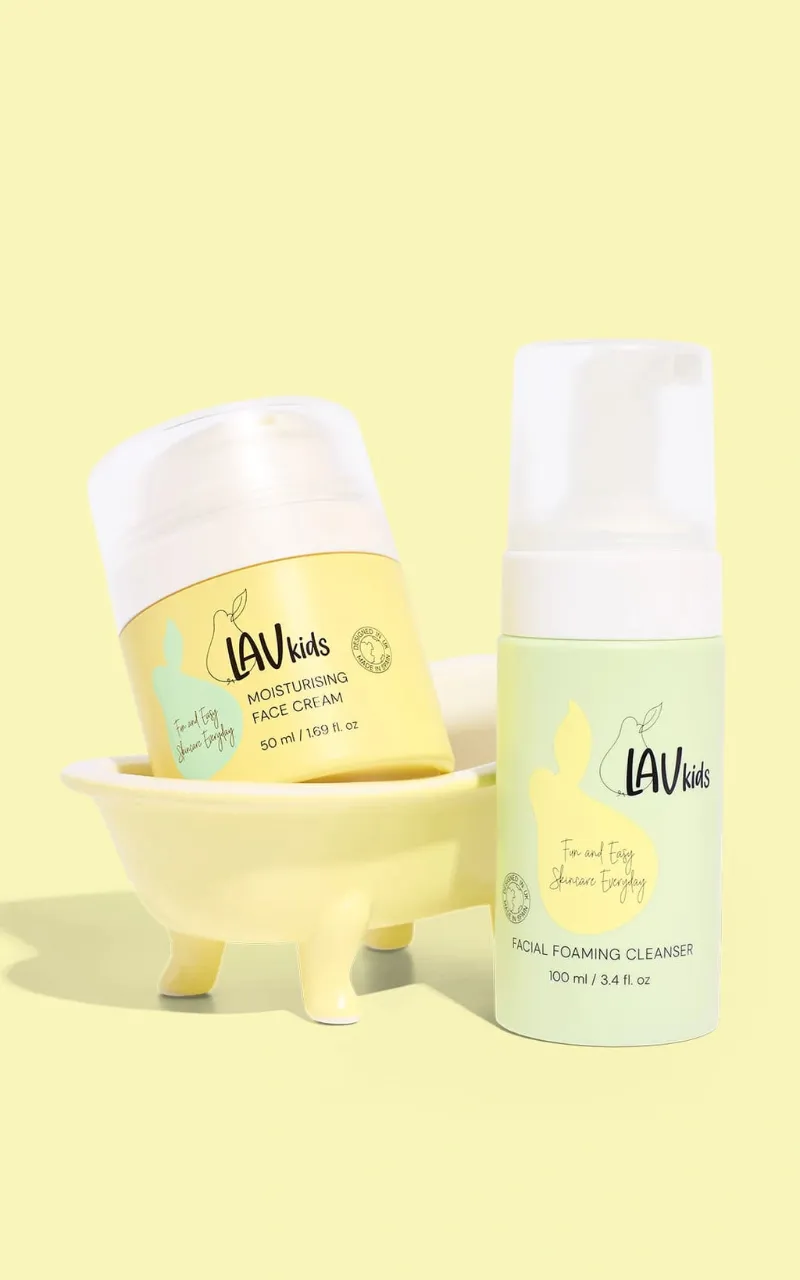
When you grab the code for Lav Kids, you're accessing a line specifically tested for sensitive, young skin. The skincare for kids bundles we tested prioritize hypoallergenic, dermatologist-approved formulas that parents can trust.
Building Age-Appropriate Routines
Adult routines often involve five to ten steps: double cleanse, toner, essence, serum, eye cream, moisturizer, SPF. Kids need two to three steps maximum.
Simple routine for ages 3-10:
- Gentle cleanser (once daily, or just water in the morning)
- Moisturizer with SPF during the day
- Plain moisturizer at night if skin feels dry
Routine for teens (11+):
- Salicylic or gentle foaming cleanser morning and night
- Lightweight moisturizer
- SPF 30+ every morning
- Optional spot treatment for breakouts
Teens transitioning from kid to adult products should start with one targeted product, like a cleanser formulated for their age group, rather than jumping straight to a full adult regimen. Lav Kids offers starter bundles that take the guesswork out of building that first routine.
When to Transition to Adult Products
There's no magic age, but most dermatologists recommend waiting until at least 16 before introducing adult-strength actives. Even then, start with lower concentrations and watch for irritation.
Signs your teen is ready for stronger products:
- Persistent acne that mild cleansers don't control
- Visible hyperpigmentation or acne scars
- Increased oil production that leaves skin shiny within hours
- Interest in targeted concerns like texture or dark spots
If basic kids face wash isn't cutting it anymore but full adult products feel too harsh, look for teen-specific formulas that bridge the gap. These typically contain 0.5% to 1% salicylic acid or low-percentage benzoyl peroxide rather than the 2% to 10% found in adult acne treatments.
The bottom line: kids' skin is fundamentally different in structure, function, and needs. Using products designed for their age protects the skin barrier, prevents irritation, and sets the stage for healthy skin long-term. Whether you're shopping for a first cleanser or helping a teen navigate breakouts, choosing age-appropriate formulas makes all the difference.
Frequently asked questions
At what age should kids start using skincare products?
Most kids can start a simple skincare routine around age 3 or 4 with a gentle cleanser and moisturizer. Before that, plain water and a soft washcloth are usually enough unless a pediatrician recommends something specific for eczema or dryness.
Can my 10-year-old use my adult face wash?
It's not recommended. Adult cleansers are formulated for lower pH and higher oil production, which can strip and irritate a 10-year-old's skin. A kids face wash is gentler and better suited to their developing skin barrier.
When can teenagers start using salicylic acid for acne?
Teenagers can safely use low-concentration salicylic acid (0.5% to 1%) once puberty starts and oil production increases, typically around age 11 or 12. Start with a cleanser rather than a leave-on treatment to minimize irritation.
Why does my child's skin react to products that work fine for me?
Children's skin is thinner, more permeable, and has a less developed acid mantle, making it more reactive to fragrances, preservatives, and active ingredients that adult skin tolerates easily. Their immune systems are also still learning, so allergic reactions are more common.
Do kids need separate shampoo for greasy hair?
Yes, once puberty begins. Younger kids produce very little scalp oil, but teens often need a clarifying or oil-control shampoo designed for their increased sebum production to keep hair fresh between washes.
Is natural or organic skincare always better for kids?
Not necessarily. Natural ingredients like essential oils can irritate sensitive skin just as much as synthetic ones. Look for hypoallergenic, dermatologist-tested formulas regardless of whether they're labeled natural or not.