
Ladder Train vs Single Lorry Steps: Which Access Equipment Suits Flatbed Work?

Lorry steps handle quick, repeated access to a cab or low trailer deck, while a ladder train is the better choice when you need to climb high-sided flatbed loads or reach over the deck from ground level. We test both types of access kit on real flatbed work, and the honest answer is that most drivers end up wanting both, just for different jobs.
In this guide we break down when each option earns its place on your truck, what to look for before buying, and how they stack up against other access equipment like a flatbed trailer ladder.
What Are Lorry Steps and Who Are They For?
Lorry steps are compact, fixed or folding platforms that give you a safe foothold when climbing in and out of the cab or onto a low trailer. They are the direct answer to the daily grind of cab access, which is where most slips and strains happen for drivers.
You will see them described in a few ways when shopping around:
- Running board steps for trucks mount along the side of the cab or chassis
- Retractable truck steps tuck away when not in use, keeping the vehicle clean for loading
- Portable truck step designs sit loose on the ground and move wherever you need them
- Heavy duty truck steps carry higher load ratings for worksite abuse
If you mostly need a safer way in and out of the cab, a dedicated set of lorry steps is the simplest upgrade you can make. They bolt on in minutes, they do not get in the way of strapping down, and they take the biggest single strain off your knees and ankles. For current pricing and our discount, check the latest price before you order.
There is also a growing market for truck steps for elderly or less mobile drivers, and the same logic applies: a stable, wide-tread platform at a sensible height beats stretching or hopping every single day.
What Is a Ladder Train?
A ladder train is a modular system of ladder sections that clip together, letting you build the exact height you need and hook it over a trailer edge, headboard, or load. Instead of buying one fixed ladder that is too short for one trailer and too tall for another, you add or remove sections.
That modularity is why flatbed drivers rate them. One day you are sheeting a load at chest height; the next you are climbing over a stack of palletised cargo. A good ladder train handles both without needing a second piece of kit rattling around the cab.
Key advantages:
- Adjustable length for different deck heights and load profiles
- Hooks or clamps that grip trailer edges so the ladder stays put under foot
- Breaks down into short sections that store behind the cab or in a toolbox
- Lighter per section than one long single-piece ladder
The trade-off is setup time. A fixed set of lorry steps is always ready; a ladder train takes a minute to assemble and position. For high access, that minute buys you a lot of safety.
Lorry Steps vs Ladder Train: Side-by-Side
| Feature | Lorry Steps | Ladder Train |
|---|---|---|
| Best for | Cab and low-deck access, repeated use | High-sided loads, over-deck access |
| Setup | None, always fitted or ready | Assemble sections per job |
| Storage | Fixed to vehicle or small footprint | Sections stow in a toolbox |
| Height range | Fixed, low to mid height | Variable, extend as needed |
| Portability | Limited | High |
Do You Still Need a Flatbed Trailer Ladder?
Often, yes. A flatbed trailer ladder sits between the two options: single-piece, quick to throw up against a trailer, but limited to one working height. We recommend it when you mostly work at one consistent deck height and do not want the fuss of modular sections.
If your work varies, the ladder train wins. If you never climb higher than the trailer deck itself, good lorry steps plus a basic flatbed trailer ladder cover 90% of the job.
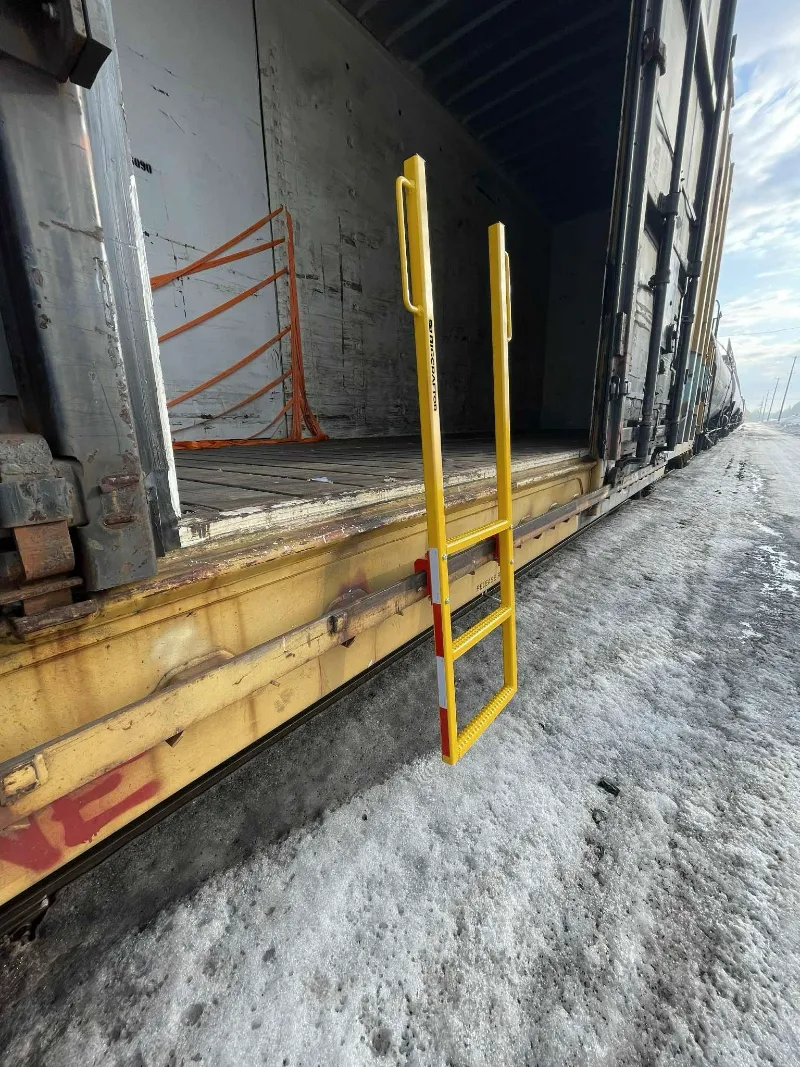
For specialist work, a railway ladder is worth knowing about too. It is built for rail-side access with specific footing and clearance requirements, so only choose that route if your work actually takes you onto or alongside track.
Materials and Build: What Actually Matters
Whichever access equipment you buy, check the same fundamentals:
- Load rating. Steps and ladders should state a maximum load. Pick one with headroom above your body weight plus whatever you carry up with you.
- Tread design. Open perforated or grip-pattern treads shed mud, ice, and diesel. Closed smooth treads get lethal in winter.
- Fixings. For mounted lorry steps, galvanised or stainless bolts resist road salt far better than plain steel.
- Width. Narrow steps punish boots with deep lugs. Wider treads are kinder on long shifts.
When you are comparing mounted options, browsing ranges like Truck & Lorry Sliding Steps gives you a feel for how retractable and sliding designs differ, and Steps and Tread shows the typical tread and mounting hardware options on the market.
Fitting and Daily Care
Mounted steps: check the chassis mounting points, use the correct bolts with thread lock, and re-torque after the first week of driving. Vibration works fixings loose faster than most people expect.
Portable steps and ladder trains: inspect the hooks, hinges, and locking pins before every use. A worn locking pin on a modular ladder section is the kind of failure you only discover at height. Wipe treads down after winter gritting season, and store sections dry so aluminium or steel joints do not corrode.
While you are kitting out the flatbed, it is worth sorting your load-securing workflow at the same time. A strap gun speeds up tensioning, a stevedore hook makes threading straps under loads far quicker, and a strap winder for drill winds surplus webbing in seconds instead of minutes. Faster strapping means less time on the deck, which is its own safety win. You can grab the code for 5% off all orders while you are at it.
Which Should You Buy First?
Start with where you climb most:
- If cab access is the daily pain, buy lorry steps first. Cheapest fix, biggest comfort gain.
- If you sheet or climb high loads regularly, a ladder train earns its keep immediately.
- If you do both, get the steps now and add the ladder train when the budget allows.
And before you commit to anything, check the latest price on our coupon page, because access kit pricing moves around and our 5% code applies across the whole store.
Frequently asked questions
Can I use lorry steps instead of a ladder train for high loads?
Yes, they solve different problems. Lorry steps handle cab and low-deck access every day, while a ladder train covers high-sided loads and over-deck climbing. Most working flatbed drivers use both.
How do I choose the right height for truck steps?
That depends on your deck heights and whether you want fixed or portable access. Fixed steps suit regular cab use, while a portable truck step works if you need a foothold in different spots around the trailer.
What load rating should heavy duty truck steps have?
Check the stated load rating before buying and choose one with headroom above your body weight plus any equipment you carry up with you. Ratings should be clearly stated by the manufacturer.
Is a ladder train easier to store than a flatbed trailer ladder?
A ladder train is modular and breaks down into sections, so it stores in a toolbox or behind the cab. A flatbed trailer ladder is one fixed-length piece that is faster to deploy but less flexible on height.
Are retractable truck steps worth it over fixed ones?
Retractable and sliding designs tuck away when not in use, which keeps the step clear of loading equipment and reduces trip hazards. Fixed steps are simpler and cheaper but stay in place permanently.