
How Long Does a Grip Strengthener Take to Show Results?

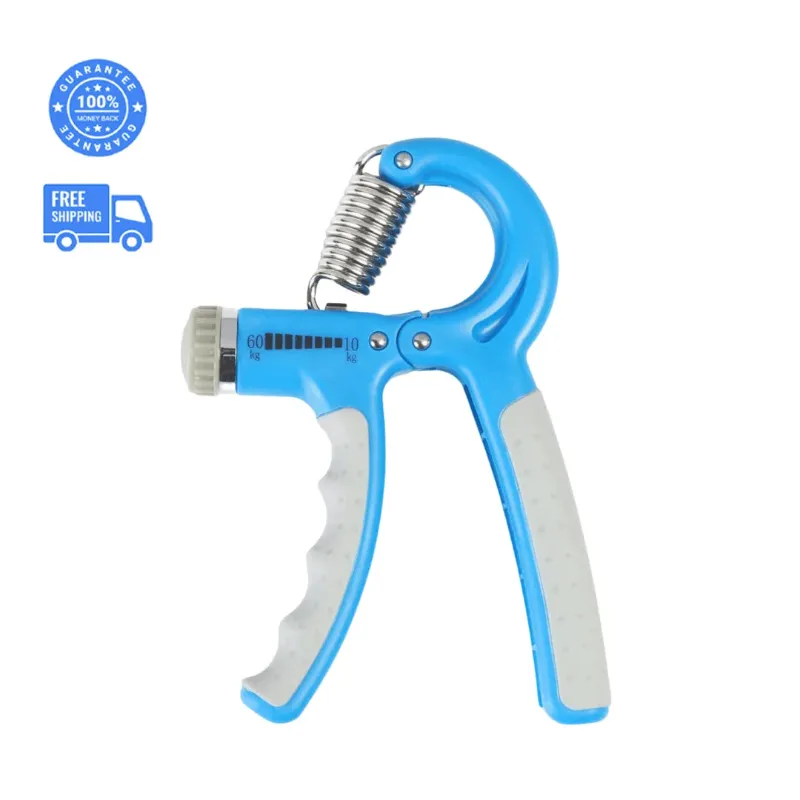
An adjustable grip strengthener typically shows noticeable results in 2 to 4 weeks with consistent training, though strength gains continue building for months. Most users feel a difference in grip endurance and hand firmness within the first two weeks, while measurable strength increases—like closing the gripper at higher resistance or holding heavier weights—appear around the four-week mark.
What to Expect in Your First Month
Your timeline depends on training frequency, starting strength, and the quality of your tool. Here's what we see across real users:
- Week 1-2: Neuromuscular adaptation kicks in. Your hands learn to recruit muscle fibers more efficiently, so gripping feels less awkward and more controlled.
- Week 3-4: Forearm endurance improves noticeably. You can complete more reps before fatigue, and everyday tasks—opening jars, carrying bags—feel easier.
- Week 5-8: Measurable strength gains appear. You'll advance resistance levels on your adjustable grip strengthener and notice visible forearm definition if you're lean enough to see it.
Consistency beats intensity here. Training three to five times per week with progressive overload delivers faster results than sporadic heavy sessions that leave your forearms too sore to recover.
How Training Frequency Affects Your Timeline
The best grip strength tool works only as well as your program. We recommend this weekly structure for fastest results:
- Beginners: 3 sessions per week, 3 sets of 10-15 reps per hand at moderate resistance. Rest 48 hours between sessions.
- Intermediate: 4-5 sessions per week, mixing high-rep endurance work (20+ reps at lower resistance) with low-rep strength sets (5-8 reps at near-maximum resistance).
- Advanced: Daily training with varied resistance and grip types (crush, pinch, support), using tools like the best adjustable grip strengthener models that let you dial in precise load.
Overtraining stalls progress. If your forearms stay sore or your grip feels weaker session to session, add a rest day. Pairing grip work with recovery tools like a muscle stimulator can help manage fatigue and speed up adaptation between workouts.
Why Some People See Faster Results
Genetics and baseline strength create a wide range. Climbers and manual laborers often see results in under two weeks because their hands already handle high-volume gripping. Desk workers or beginners may need the full four to six weeks to feel a clear difference.
Your tool matters too. The best hand grip strengthener options—like those from APE BORN—offer smooth, adjustable resistance so you can progress in small increments instead of jumping from too-easy to impossible. Cheaper fixed-resistance grippers force you to plateau until you're strong enough for the next model, which can add weeks to your timeline. Check the latest price to compare adjustable models that grow with you.
Other factors that accelerate results:
- Progressive overload: Increasing resistance by small amounts every 1-2 weeks keeps your muscles adapting.
- Full range of motion: Squeezing until the handles nearly touch recruits more muscle than partial reps.
- Grip variety: Rotating between crush grip (squeezing), pinch grip (thumb opposition), and support grip (static holds) prevents adaptation plateaus.
Research from BarBend's expert testing confirms that adjustable models reduce time to measurable strength gains by allowing micro-progression that fixed grippers can't match.
Measuring Your Progress Beyond Feel
Subjective "it feels stronger" isn't enough. Track these metrics every two weeks:
| Metric | How to Test | What Improvement Looks Like |
|---|---|---|
| Max resistance closed | Dial your gripper to the highest setting you can fully close for 1 rep | Adding 5-10 kg every 3-4 weeks |
| Endurance reps | Count reps at 50% of your max resistance until failure | Increasing from 15 to 25+ reps |
| Dead-hang time | Hang from a pull-up bar | Adding 10-15 seconds per month |
We also suggest testing functional carryover. Can you open stubborn jars easier? Do your lifts feel more secure? Does your handshake feel noticeably firmer? These real-world signals often appear before the numbers jump.
For a more comprehensive upper-body approach, many users pair grip training with a push up board to build balanced arm and chest strength, since stronger forearms support heavier pressing movements.
Combining Grip Training With Other Tools
Grip strengtheners work fastest when layered into a full training plan. Here's how we combine them with complementary gear:
- With EMS: A core-sculpting belt or ab pulse unit can activate forearm flexors and extensors during recovery days, priming the muscles for your next grip session without adding mechanical fatigue.
- With recovery tools: The smart cupping massager helps flush metabolic waste from overworked forearms, and a portable red light panel can reduce inflammation if you're pushing volume hard.
- With full-body EMS: If you're using an EMS suit or EMS shorts for strength or endurance, add grip work immediately after to capitalize on neuromuscular priming.
Garage Gym Reviews notes that stacking grip training with compound lifts—deadlifts, rows, farmer's carries—cuts your timeline to visible results by building forearm mass and neural drive simultaneously.
Plateau-Busting Strategies After the First Month
Around week six to eight, progress often slows. Break through by cycling your training variables:
- Change the stimulus: Swap standard crush-grip squeezes for timed static holds (squeeze and hold for 30-60 seconds).
- Add asymmetry: Train one hand to failure, then immediately switch to the other without rest. This metabolic stress triggers fresh adaptation.
- Increase frequency on weak days: If your non-dominant hand lags, give it an extra daily mini-session (2 sets) to catch up.
- Use tempos: Slow your squeeze to a 3-second concentric, 2-second hold, 3-second release. Time under tension matters as much as resistance.
If you've stalled despite smart programming, grab the code and upgrade to a higher-quality adjustable model. Loose hinges, uneven resistance, or uncomfortable handles sabotage consistency, and consistency is the only variable that guarantees results.
Remember that grip strength is a long game. Elite climbers and strongman competitors train grip for years, not weeks. The first month builds your foundation; the next six months build genuine, competition-level strength. Stay patient, track your numbers, and adjust resistance every session. The results will show up in your workouts, your daily tasks, and eventually in the mirror.
Frequently asked questions
How often should I use an adjustable grip strengthener each week?
Train 3 to 5 times per week for best results, allowing at least 48 hours of rest between sessions for beginners. Advanced users can train daily by varying intensity and grip types to avoid overtraining.
Can I see grip strength results in just two weeks?
You'll notice improved grip endurance and control within two weeks due to neuromuscular adaptation, but measurable strength gains—like closing higher resistance levels—typically appear around the four-week mark with consistent training.
Why has my grip strength progress stalled after a month?
Plateaus usually mean you need to change your training stimulus. Try adding static holds, slowing your tempo, increasing frequency on your weaker hand, or progressing to a higher resistance level every 1 to 2 weeks.
Do I need a high-resistance model or will any hand grip work?
Adjustable models deliver faster results because you can increase resistance in small increments and avoid long plateaus. Fixed-resistance grippers force you to wait until you're strong enough for the next jump, which can add weeks to your timeline.
What's the best way to measure my grip strength improvements?
Track three metrics every two weeks: the maximum resistance you can fully close for one rep, endurance reps at 50% of your max, and dead-hang time from a pull-up bar. Real-world carryover like easier jar opening also signals progress.
Can I combine grip training with EMS or recovery tools?
Yes. Pairing an adjustable grip strengthener with EMS tools for active recovery or using a smart cupping massager to flush forearm fatigue can accelerate results by improving recovery between sessions.