
What to Look for When Buying a Professional Table Tennis Racket

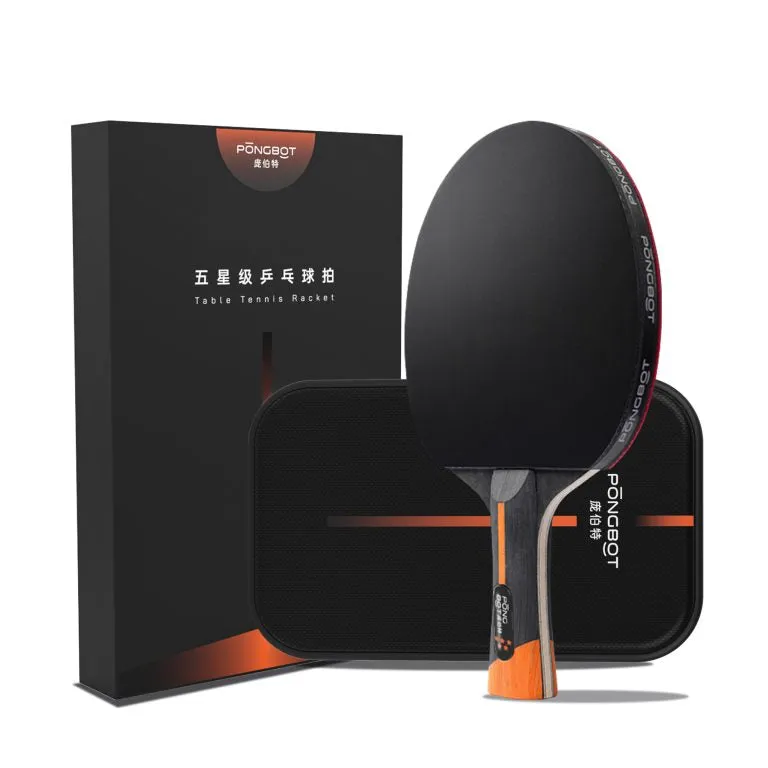
A professional table tennis racket combines a multi-ply wood blade, competition-grade rubber sheets, and balanced weight distribution to deliver the spin, speed, and control serious players demand. Whether you're upgrading from recreational equipment or building a training setup around a ping pong machine, understanding the anatomy of a pro-level paddle helps you match your playing style to the right gear.
We've tested dozens of table tennis rackets alongside automated training tools like the pongbot pace s pro, and we've learned that the best racket for you depends on blade composition, rubber hardness, handle shape, and how you balance offense with defense. Below we break down every component so you can shop with confidence.
Blade Construction and Materials
The blade is the foundation of any serious paddle. Professional models typically feature five to seven plies of wood, often mixing softer woods like limba or ayous for control with harder species like koto or arylate-carbon composites for speed. All-wood blades offer better feel and dwell time, which translates to spin generation and touch shots. Carbon-reinforced blades add stiffness and power but sacrifice some vibration feedback.
Check the blade's speed rating, usually expressed on a 1 to 10 scale. Offensive players gravitate toward ratings of 8 or higher, while all-around competitors prefer 6 to 7.5 for a balance of speed and control. If you train with a pingpong server or robot, a slightly slower blade often helps you groove consistent strokes before ramping up velocity.
Look for ITTF approval stamps. Tournament-legal blades meet strict thickness and material standards, and reputable manufacturers like Butterfly and Stiga clearly mark compliance. For reference, Best Table Tennis Racquets showcases popular models across price tiers, though we recommend cross-checking specs before committing.
Rubber Type, Thickness, and Hardness
Rubber sheets make or break your spin and speed potential. Pro-level rubbers come in two main categories: inverted (smooth surface) and pips-out (textured). Inverted rubber dominates modern offensive play because the smooth top sheet grips the ball longer, generating heavy topspin and sidespin. Pips-out rubber suits defensive choppers or players who prefer unpredictable pace changes.
Sponge thickness ranges from 1.5 mm to the maximum 2.0 mm for inverted sheets. Thicker sponges catapult the ball faster, while thinner sponges enhance control and placement. Hardness, measured in degrees (typically 35° to 50°), affects how much energy you need to compress the rubber. Softer sponges (35° to 40°) forgive timing errors and suit intermediate players; harder sponges (45°+) reward clean technique with explosive speed.
Most professionals pair a faster, harder rubber on the forehand with a slightly softer, spinnier rubber on the backhand. If you're building a complete training environment with a professional table tennis racket and automated practice tools, matching your rubber hardness to your typical rally speed keeps your muscle memory consistent.
Key rubber checkpoints:
- ITTF logo printed on the sponge or packaging
- Brand and model printed on the top sheet for tournament inspection
- Fresh manufacture date (rubber oxidizes and loses grip after 12 to 18 months of play)
- Compatibility with your blade's playing style (speed + speed = hard to control)
Handle Shape and Grip Comfort
Handle geometry directly affects wrist mobility and stroke versatility. The four most common professional shapes are:
| Handle Type | Best For | Wrist Freedom |
|---|---|---|
| Flared | All-around players, medium-large hands | Moderate |
| Straight | Penhold grip, quick grip changes | High |
| Anatomic | Shakehand players seeking locked grip | Low |
| Concave | Players with smaller hands | Moderate |
Flared handles taper outward at the butt, preventing the racket from slipping during aggressive loops. Anatomic handles feature contoured ridges that lock your fingers into position, ideal if you rarely switch grips mid-rally. Straight handles suit Asian penhold grips and players who rotate the paddle for backhand blocks.
Test the handle in your natural grip before buying. Your middle finger should rest comfortably along the blade's edge without cramping, and the butt should not dig into your palm during forehand drives. Many specialty retailers and sites like Buy ping pong paddles & table tennis bats offer detailed handle dimensions, though nothing replaces an in-hand test when possible.
Weight, Balance, and Swing Speed
Total racket weight typically ranges from 170 to 200 grams for professional setups. Lighter rackets (under 180 g) accelerate faster, benefiting players who rely on quick counters and short-game finesse. Heavier rackets (190 g and up) carry more momentum through the ball, adding pace to loops and smashes but demanding stronger wrists and forearms.
Balance point matters as much as total weight. A head-heavy racket generates more spin and power but feels sluggish in transition. A handle-heavy or neutral-balance racket offers better maneuverability for blocking and flicking. If you drill frequently against a tennis robot or spend hours on serve-return drills, a lighter, neutral-balance setup reduces fatigue without sacrificing performance.
Weigh your assembled racket (blade plus two rubber sheets) on a kitchen scale. If it feels too light, consider thicker sponges or a denser wood blade. If it feels too heavy, swap one rubber for a thinner or lighter model. Small tweaks of 5 to 10 grams shift the feel significantly at high speeds.
Recognizing Quality and Avoiding Counterfeits
Brand reputation signals consistent quality control. Butterfly, Stiga, DHS, Yasaka, and Tibhar dominate the professional market, and their flagship models undergo rigorous testing. Lesser-known brands may offer solid entry-level options, but verify ITTF approval and read independent reviews before investing.
Inspect the rubber's top sheet for uniform texture and the sponge for even color and density. Authentic pro-grade sheets display crisp logo printing and include a protective film. Blades should show clean ply lines along the edge with no gaps or glue bleed. Counterfeit Butterfly and Stiga paddles flood online marketplaces, often lacking the logo depth and wood grain detail of genuine models. When in doubt, check the latest price and shop from authorized retailers who stand behind their products.
Pairing Your Racket with Training Tools
A well-chosen racket works in tandem with your practice regimen. If you own a pongbot pace s pro or similar automated server, match your racket's speed rating to the machine's ball output. Training with a faster racket than your tournament blade ingrains poor timing, while training with a slower setup limits your ceiling.
Consistency across your gear stack matters. Use the same racket during solo drills, robot sessions, and live play so every stroke grooves the same contact point and follow-through. Keep a backup racket with identical specs and similar break-in wear to avoid jarring transitions if your primary paddle needs fresh rubber.
For players building a complete home training setup, grab the code to save on bundled packages that include rackets and serving machines. We've found that investing in one high-quality racket and pairing it with reliable training tech yields faster improvement than cycling through multiple budget paddles.
Final Thoughts
Choosing the best professional table tennis racket means aligning blade speed, rubber characteristics, handle shape, and weight with your technique and competitive goals. Start by identifying your playing style (offensive looper, all-around blocker, or defensive chopper), then narrow your search to ITTF-approved models from established brands. Test handle shapes in person when possible, and don't hesitate to mix rubber hardness between forehand and backhand to optimize spin and control.
Remember that even top-tier Butterfly table tennis paddles and Stiga ping pong paddles require break-in time and periodic rubber replacement. Treat your racket as a precision instrument: store it in a case, clean the rubber after each session, and replace worn sheets every few months to maintain peak grip. With the right setup and consistent practice, your professional racket becomes an extension of your arm, translating intention into winning shots.
Frequently asked questions
What is the difference between a professional table tennis racket and a recreational paddle?
Professional rackets use multi-ply wood blades with separate, high-quality rubber sheets that are ITTF approved, while recreational paddles feature pre-assembled, lower-grade rubber bonded to simpler blades. Pro models offer far greater spin, speed, and customization.
How often should I replace the rubber on my professional racket?
Most competitive players replace rubber every three to six months depending on practice frequency, since the top sheet loses grip as it oxidizes. If you notice reduced spin or a slick feel, it's time for fresh sheets.
Can I use a Butterfly table tennis racket with a robot trainer?
Absolutely. Pairing a quality Butterfly or Stiga paddle with a robot like the Pongbot Pace S Pro helps you build consistent stroke mechanics, as long as your racket's speed rating matches the ball output you're practicing against.
What blade speed rating should beginners choose?
Beginners benefit from blades rated 5 to 7 on a ten-point scale, which offer enough control to learn proper technique while still providing adequate speed for rallies. You can upgrade to faster blades as your consistency improves.
Are expensive professional table tennis rackets worth the investment?
High-end rackets deliver measurably better spin, speed, and feel due to premium wood, advanced rubber compounds, and tighter quality control. If you compete regularly or train seriously, the performance gain justifies the cost.
Do I need different rubbers on forehand and backhand sides?
Many pros use slightly different rubbers on each side to optimize their strengths. A common setup pairs a faster, harder forehand rubber for loops with a softer, spinnier backhand rubber for blocks and flicks.