
LS1 Wiring Harness vs Standalone ECU: Which Swap Solution Is Right for Your Build?

LS1 Wiring Harness vs Standalone ECU: Which Swap Solution Is Right for Your Build?
An ls1 wiring harness keeps your factory ECU and sensors intact while simplifying the swap, whereas a standalone ECU replaces the entire engine management system for unlimited tuning potential. Most street-driven LS swaps benefit from a modified factory harness because it retains OBD-II functionality, costs less, and works with stock sensors. Standalone units make sense when you plan aggressive boost, E85 flex-fuel, or need features your factory PCM cannot support.
We have tested both paths across dozens of swaps—from budget S10 builds to track-prepped drift cars—and the decision hinges on your power goals, tuning experience, and whether you need features like traction control or drive-by-wire.
What an LS Swap Wiring Harness Actually Does
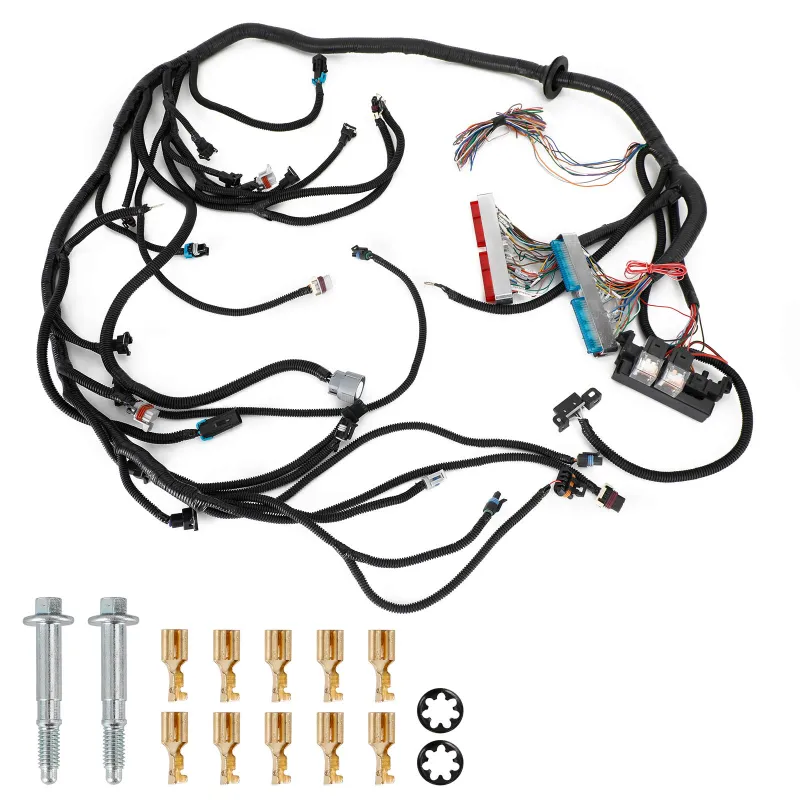
A factory-based ls1 wiring harness strips away the body-control wiring your donor vehicle needed (HVAC, airbags, ABS) and keeps only the engine-control circuits. These harnesses retain the original PCM, which means you get factory cold-start logic, emissions readiness, and direct compatibility with GM sensors.
Most ls swap wiring harness plug and play kits simplify the donor-harness surgery for you. You receive labeled connectors for:
- Throttle-body and fuel-injector power
- Crank and cam sensor signals
- Knock sensors and oxygen-sensor feedback
- Coil drivers and alternator excitation
- Gauge outputs (tach, coolant temp, oil pressure)
Because the PCM remains stock, you still need a laptop and tuning software (HP Tuners or EFI Live) to adjust fueling, spark tables, and disable VATS or speed limiters. The ls wiring harness and ecu bundle ensures every connector matches your engine generation, so an LS1 harness will not plug directly into an LQ4 without adapter pigtails.
When a Standalone ECU Makes Sense
Standalone engine management—think Holley Terminator X, AEM Infinity, or MoTeC—replaces your factory PCM with a universal controller. You wire sensors to generic inputs, tune from scratch, and gain features impossible on a stock computer.
Advantages of going standalone:
- Custom sensor support (MAP, speed-density, or MAF)
- Built-in boost control, nitrous timing, and multi-stage injection
- Flex-fuel ethanol sensing and automatic map switching
- Datalogging with CAN-bus integration for dash displays
- No security bypass or emissions-monitor hassles
Trade-offs you accept:
- Higher upfront cost—entry-level units start around twice the price of a harness kit
- You lose OBD-II readiness, which complicates emissions testing in states that scan
- Wiring is universal, so you build your own harness or pay a shop premium
- Tuning requires dyno time or solid self-tuning knowledge
If you are planning a turbocharged LS build pushing over 600 wheel horsepower, need progressive nitrous staging, or want check the latest price on a harness and ECU combo that supports flex fuel, a standalone becomes the better long-term investment.
Cost and Complexity Breakdown
| Solution | Typical Cost Range | Wiring Time | Tuning Required |
|---|---|---|---|
| Modified Factory Harness | Low to Moderate | 4–8 hours | Base tune + tweaks |
| LS1 Wiring Harness Kit | Moderate | 2–4 hours | Base tune + tweaks |
| Standalone ECU | High | 8–15 hours | Full custom tune |
A quality ls1 wiring harness kit arrives with every connector pre-pinned and a detailed diagram showing which circuits go to battery, ignition, and chassis ground. You will spend an afternoon routing wires and crimping a handful of power and ground terminals, then load a base calibration file that gets the engine running safely.
Standalone systems demand more labor up front. You source your own mil-spec connectors, pin each sensor wire by hand, and configure every input in the ECU software before the first start. Budget an extra weekend if you have never built a harness from scratch. Once running, however, you own complete control over every timing cell and fuel map.
Compatibility With Common Swap Chassis
Street and autocross swaps (Miata, S10, RX-7, 240SX) pair well with a plug-and-play harness because these builds prioritize reliability and passing inspection. The factory PCM handles idle quality and closed-loop fuel trim better than most budget standalone units, and you retain working check-engine-light diagnostics.
Dedicated race and drift cars benefit from standalone management. You eliminate the mass-airflow sensor, simplify the firewall pass-through, and run speed-density fueling that survives high slip angles without false lean codes. Standalone systems also let you map launch-control RPM windows and two-step limiters without aftermarket piggyback modules.
Boosted street builds occupy the middle ground. A 5.3 wiring harness and ecu combo tuned for E85 will support 550–650 horsepower on a conservative boost map, especially if you upgrade the fuel system and add an 02 spacer to prevent rich-condition false codes. Beyond that threshold, closed-loop authority and narrow factory injector scaling make standalone tuning more predictable.
Tuning and Support After the Install
With a factory harness, your tuner uploads a modified calibration to the existing PCM using the same ALDL or OBD-II port your donor truck had. HP Tuners credits cost around one-tenth the price of a standalone license, and most LS-swap forums provide starter files for common swaps. You will adjust VE tables, spark advance, and fan temperatures, but the framework—fuel-injector characterization, throttle maps, torque management—remains GM-validated.
Standalone ECUs ship with blank maps. You define injector flow, set up crank and cam sync patterns, calibrate your throttle-position sensor, and build fueling tables from zero. The learning curve is steeper, yet you avoid the frustration of fighting VATS disable procedures or speed-limiter workarounds that vary between PCM generations.
For DIY tuners, grab the code and pair your harness with a wideband oxygen sensor kit. Both paths require closed-loop feedback; the difference is whether you modify an existing strategy or write one from scratch.
Our Recommendation for Most Builders
Start with an ls1 wiring harness if your build goals include street-legal registration, sub-600-horsepower naturally aspirated or mild-boost output, and you prefer spending weekends driving rather than tuning. The harness approach delivers faster first-start success, costs less overall, and keeps resale value higher because the next owner inherits OBD-II diagnostics.
Choose standalone when you need features the factory PCM physically cannot deliver: flex-fuel on the fly, staged nitrous with per-stage timing retard, CAN-networked dash integration, or extreme boost control with closed-loop targeting. Accept the longer wiring phase and higher tuning investment as the price of ultimate flexibility.
We also run into hybrid setups—builders who install a ls1 wiring harness for the first season, then upgrade to standalone once they have validated the mechanical side of the swap and want to chase higher numbers. That two-step path spreads out cost and keeps the project moving when budget or time is tight.
No matter which route you pick, our current discount applies to both harness kits and sensor accessories. You will find the same attention to connector quality and wire gauge whether you wire once with a plug-and-play harness or commit to the full custom path with standalone management.
Frequently asked questions
Can I reuse my donor truck's ls1 wiring harness as-is?
You can, but donor harnesses include hundreds of body-control circuits you don't need in a swap chassis. A trimmed or aftermarket harness removes that excess wiring, shortens routing, and labels every connector so you avoid trial-and-error testing.
Do standalone ECUs work with factory GM sensors?
Most standalone units accept GM crank, cam, and coolant sensors directly. You may need to recalibrate throttle-position voltage ranges and confirm your ECU supports the specific injector impedance your LS generation uses.
Will a plug-and-play wiring harness pass emissions testing?
Yes, if your state scans OBD-II. Factory-based harnesses retain all emissions monitors, so the PCM will set readiness flags. Standalone ECUs typically lack OBD-II compliance, which fails inspection in scan states.
How much horsepower can a stock LS1 PCM handle?
With proper tuning and upgraded injectors, a factory PCM supports 550 to 650 wheel horsepower. Beyond that, injector scaling limits and narrow fuel maps make standalone tuning more predictable, especially under boost.
Can I switch from a harness to standalone later?
Absolutely. Many builders start with a factory harness to get running quickly, then upgrade to standalone when they add forced induction or need advanced features. The mechanical swap stays the same; only the wiring and ECU change.
What tools do I need to install an LS swap wiring harness?
You will need a crimp tool for power and ground terminals, heat-shrink tubing, zip ties, and a multimeter for continuity checks. A wiring diagram specific to your harness generation is essential for tracing any custom sensor locations.