
What Makes the Engwe Mountain E Bike Different from a Standard Electric Bike?

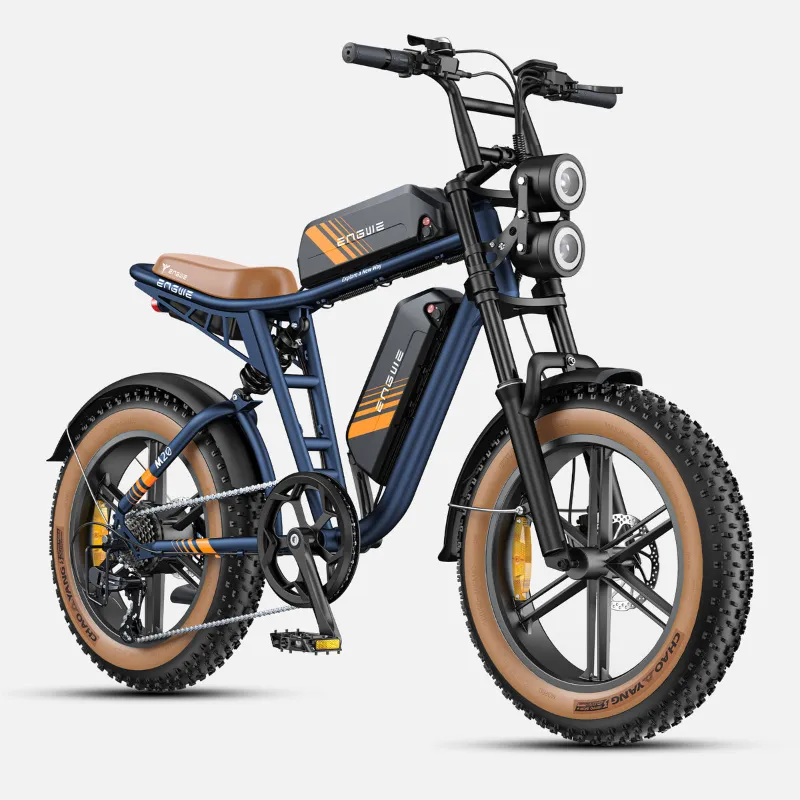
The Engwe mountain electric bike is built for riders who want more than a commuter-grade motor bolted onto a thin-tired frame. Where a standard electric bike for adults prioritizes pavement efficiency, Engwe's mountain lineup layers in off-road geometry, higher torque, and components sized for real terrain. Here is exactly what separates the two, so you can decide which style fits your riding.
What a Standard Electric Bike Actually Gives You
A typical electric bike for adults sold at mass-market retailers focuses on flat-road commuting. You get a hub motor in the 250W to 500W range, narrow 1.75-to-2-inch tires, a rigid or lightly suspended fork, and a modest battery sized for 20 to 40 miles of assisted riding on smooth surfaces.
These bikes do their job well in urban settings. But take one onto gravel, a dirt path, or a rooted trail and the limits show up fast: the tires lose traction, the fork transmits every bump straight into your hands, and the motor can bog under load on steep climbs.
How the Engwe Mountain Build Changes the Formula
Engwe's mountain models are engineered around a different set of priorities.
- Fat tires: Most Engwe mountain builds ship with 4-inch-wide knobby tires. A fat tire ebike floats over sand, snow, mud, and loose gravel that would stop a standard tire cold.
- Higher motor output: Engwe mountain motors typically exceed 500W peak, delivering the torque needed for real climbs rather than gentle inclines.
- Full or dual suspension: Front and rear suspension absorbs trail chatter, protects the battery and electronics, and keeps the wheels tracking through roots and rocks.
- Reinforced frame geometry: The frame is slacker at the head tube and lower at the bottom bracket, which puts you in a stable attack position rather than an upright commuter posture.
- Hydraulic or mechanical disc brakes: Rim brakes fade in mud and wet conditions. Disc brakes on the Engwe mountain models give consistent stopping power regardless of conditions.
For a broader baseline on what to expect from any quality build, the Best Electric Bike Buying Guide from Consumer Reports is a solid reference before you spend.
Engwe Mountain vs. Other Engwe Styles: Quick Comparison
Not every rider needs a mountain setup. Here is how the mountain model lines up against other Engwe options on the same platform.
| Style | Best For | Terrain | Tire Width |
|---|---|---|---|
| Mountain electric bike | Trails, gravel, off-road | Mixed on/off road | ~4 in fat |
| Folding ebike | Commuters, storage-limited riders | Pavement, light paths | ~2 in standard |
| Hybrid bike | Road and light gravel mixed use | Pavement, packed gravel | ~2-2.4 in |
| Electric dirt bike | Aggressive off-road, motocross-style riding | Dirt tracks, rough trails | Knobby narrow |
If you primarily ride paved roads and store the bike in a small flat, the folding ebike is the smarter buy. If you split time between city streets and weekend gravel, the hybrid bike lands in the middle. The mountain model earns its extra weight and cost only when you actually ride off-pavement regularly.
Motor, Battery, and Range Realities
Mountain riding is harder on a battery than road riding. Climbing, loose surfaces, and heavier frames all pull more watt-hours per mile. Engwe accounts for this by pairing its mountain motors with larger battery packs than you would find on a commuter-grade electric bike.
Expect real-world range to be notably lower on a steep dirt trail than the maximum figure quoted for flat-road pedal-assist. Factors that affect your actual range:
- Rider weight and cargo (a loaded bike bag adds up)
- Assist level used (throttle-only mode drains faster than pedal-assist level 1)
- Elevation gain on the route
- Tire pressure (lower pressure improves grip but increases rolling resistance; a quality bike pump with a gauge helps you find the sweet spot)
Who the Engwe Mountain Electric Bike Actually Suits
This is not the right bike for everyone, and that is fine.
Good fit:
- Riders who want one bike for trails on weekends and light commutes on weekdays
- Adults who ride gravel paths, forest roads, or beach terrain where fat tires shine
- Anyone who finds standard commuter geometry uncomfortable on uneven ground
Less ideal fit:
- Pure city commuters who want the lightest, most portable option (consider the foldable electric scooter or the folding ebike instead)
- Riders looking for an electric bike motorcycle-style experience with pegs and a moto frame (the electric dirt bike is closer to that feel)
- Kids or smaller adults who need a scaled-down frame (a mini bike or mini bike frame build is a better starting point)
Accessories That Complete the Setup
A mountain electric bike punishes neglected maintenance harder than a road bike does. A few additions pay for themselves quickly:
- Bike chain tool: Mud and grit accelerate chain wear. Being able to break and reset a chain on the trail is genuinely useful.
- Bike bag: A frame or saddle bag carries a tube, multi-tool, and snack without a backpack.
- Bike pump: Fat tire pressure is lower than road tire pressure, and getting it right affects both traction and battery range.
For an independent take on how Engwe mountain models stack up against other builds in the category, Electric Bike Reviews at ebikes.org publishes detailed, unbiased breakdowns worth reading before you commit.
Where to Buy and How to Save
Engwe sells direct, which cuts out the retailer markup you would pay buying an electric bike at big-box stores. Before you check out, grab the current discount code for 10% off your order. The code applies across the full lineup, so it works whether you end up choosing the mountain model, a fat tire ebike, or any other build in the range. Check the latest price and see if the code is still live on the coupon page before you add to cart.
Frequently asked questions
Is the Engwe mountain electric bike suitable for daily commuting, or is it purely off-road?
The Engwe mountain electric bike handles both, though it is optimized for mixed terrain. The fat tires and motor power work fine on pavement, but the bike is heavier than a dedicated commuter model, so if your route is 100% flat city roads you may prefer a folding ebike or hybrid bike instead.
How does a fat tire ebike differ from a standard electric bike in terms of ride feel?
Fat tires run at much lower pressure than standard tires, which provides a natural cushioning effect over bumps and loose surfaces. The trade-off is slightly higher rolling resistance on smooth pavement, though most riders barely notice it at assisted speeds.
Can I use the same discount code on accessories like the bike bag or bike pump?
Yes, the 10% off code on the Engwe coupon page applies sitewide across all orders, including accessories. Check the coupon page to confirm the current terms before checkout.
What is the difference between the electric dirt bike and the mountain electric bike?
The electric dirt bike leans toward a motorcycle-style build with a moto-inspired frame, narrower knobby tires, and aggressive ergonomics suited to dirt tracks. The mountain electric bike uses fat tires and a more versatile geometry that works on both trails and roads.
Do I need special tools to maintain a fat tire ebike?
Most maintenance tasks use standard bicycle tools. A bike chain tool is especially useful for trail repairs since fat tire bikes see more drivetrain wear from mud and grit. A quality bike pump with a pressure gauge is also essential because fat tires need precise low-pressure settings for optimal traction.
How does the Engwe mountain model compare to electric bikes sold at large retailers?
Retailer-sourced electric bikes at mass-market chains typically prioritize low price points over component quality, offering modest motors and basic frames. Engwe sells direct and focuses its mountain builds on higher motor output, full suspension, and fat tires that those budget options rarely include at a comparable price.