
QIDI Tech PA12-CF vs PETG-CF: Which Carbon Fiber Filament Should You Choose?

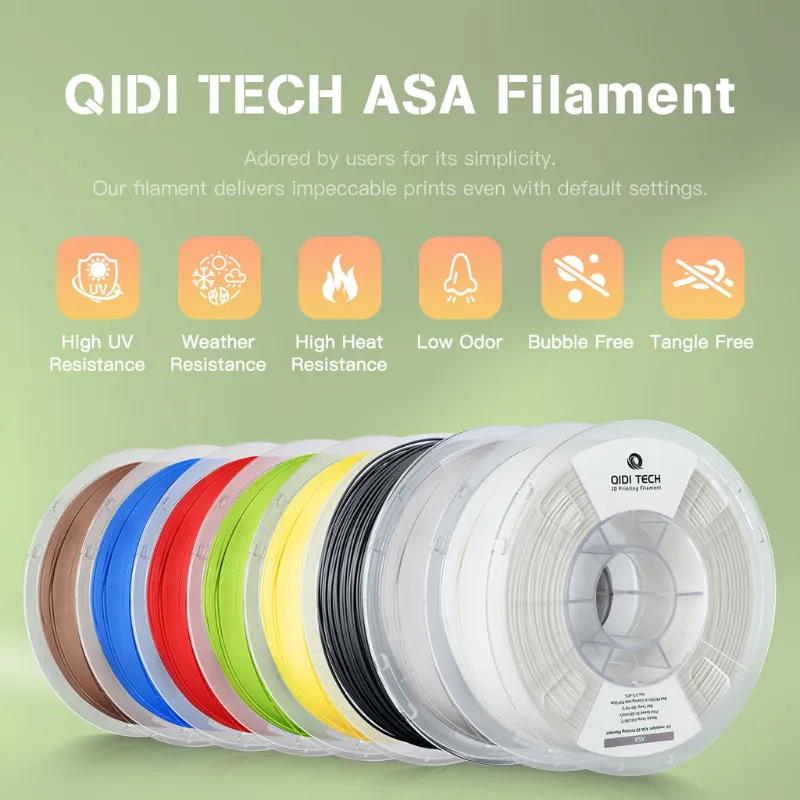
When choosing between PA12-CF and PETG-CF, understanding how asa 3d filament properties compare helps you pick the right carbon fiber material for your specific print demands. Carbon fiber reinforced materials have become essential for makers who need durability beyond standard plastics, but selecting between nylon and polyester-based composites requires knowing what each delivers.
Understanding Carbon Fiber Reinforced Filaments and ASA 3D Filament
Carbon fiber composite filaments blend plastic with short carbon strands, combining lightweight strength with the processability of fdm 3d printing. Unlike standard materials like pla-cf or generic asa 3d filament, carbon fiber variants print harder and maintain rigidity under stress. The real distinction between PA12-CF and PETG-CF lies in their base chemistry, print behavior, and final part performance. ASA materials provide excellent outdoor durability, and when reinforced with carbon, they create parts that resist both mechanical wear and environmental degradation.
PA12-CF vs PETG-CF: Key Differences
| Property | PA12-CF | PETG-CF |
|---|---|---|
| Strength | Very high tensile and impact strength | Good tensile strength, less impact resistant |
| Flexibility | More flexible, slightly better layer adhesion | More brittle, requires precise settings |
| Print Temperature | 240-260°C | 235-250°C |
| Ease of Printing | Moderate difficulty, can warp | Easier, more forgiving |
| Cost | Higher | Lower |
| Best Use | Mechanical parts, hinges, impact areas | Rigid structural components, fixtures |
PA12-CF excels when your part needs to absorb shock or flex slightly under load. Nylon's inherent toughness makes it ideal for brackets, clips, or moving components. PETG-CF, by contrast, prints more predictably and produces stiffer finished parts, making it better for static structural pieces or enclosures where dimensional accuracy matters most.
When to Choose PA12-CF for Your Project
PA12-CF suits projects where durability and resilience are non-negotiable. If you're printing drone frames, robotic arms, or mechanical assemblies that endure repeated stress, nylon's combination of strength and flexibility wins. The trade-off is longer print times and tighter temperature control; asa filament temperature management becomes critical because PA12 tends to warp if cooled too quickly.
Ensure your printer has a heated chamber or enclosure—models like the qidi plus 4 and qidi plus4 handle demanding materials well. Pair carbon fiber printing with a bl touch for automatic bed leveling, since PA12-CF's stickiness and warping tendency make reliable first-layer contact essential. Keep your filament dry using a filament dryer box or qidi box before printing, as moisture degrades nylon and makes extrusion inconsistent.
When to Choose PETG-CF for Your Project
PETG-CF wins when you need reliable, repeatable prints with minimal tweaking. Its lower processing temperature and shorter cooling time reduce warping risk, making it forgiving for makers still dialing in carbon fiber settings. Use PETG-CF for enclosure parts, mounting brackets, or finished pieces where visual quality and dimensional stability matter more than flex.
The ease-of-print advantage means fewer failed builds and faster iteration, which adds real value if you're prototyping or printing multiple copies. PETG-CF's 3d printer filament properties also make it more cost-effective than PA12, so if your design doesn't explicitly require nylon's toughness, PETG-CF delivers solid performance at a better price point. Check the latest price on QIDI Tech's site to compare material costs directly.
Print Settings and Temperature Considerations
Temperature precision separates success from waste with carbon fiber composites. PA12-CF typically needs 240-260°C nozzle heat and a bed around 80-100°C, while PETG-CF runs cooler at 235-250°C with a bed of 70-90°C. Both benefit from slower print speeds (30-40 mm/s) because fast extrusion with abrasive carbon fibers increases nozzle wear and pressure inconsistencies.
An asa 3d filament temperature controller with real-time monitoring helps catch swings early. Maintain consistent ambient temperature around your printer—unheated workshops cause PA12-CF especially to cool unevenly, triggering layer splits. Ultimate Materials Guide - Tips for 3D Printing with ASA offers deeper insights into thermal management that applies to all advanced composites.
Durability, Finish, and Long-Term Performance
PA12-CF parts outlast PETG-CF under mechanical stress because nylon absorbs impact rather than fracturing. If your print will experience vibration, dropped loads, or outdoor temperature swings, PA12-CF's chemical stability and flexibility maintain integrity longer. Parts printed in PA12-CF remain slightly flexible even after curing, which also means they handle thermal expansion better.
PETG-CF parts stay more rigid and accept finishing better—they sand smoother and take paint without cracking. If your application emphasizes appearance or precise geometry over ruggedness, PETG-CF edges ahead. Both outlast standard plastics by significant margins when printed with proper settings and stored dry.
Choosing Between Them: A Quick Decision Tree
Ask yourself three questions:
- Does your part need to flex, absorb impact, or endure repeated stress? Choose PA12-CF.
- Is your part primarily static, requiring high stiffness and dimensional accuracy? Choose PETG-CF.
- Are you new to carbon fiber printing and want fewer failed prints? Start with PETG-CF and upgrade to PA12-CF as your skill grows.
If you're using a QIDI printer like the qidi plus 4, both materials print successfully with the machine's thermal management. First-time carbon fiber users should pair their printer with a bl touch to handle nozzle wear from abrasive fibers, and invest in a filament dryer box to remove moisture that degrades both materials. Grab the code to save 5% on materials and accessories as you stock up.
Other QIDI composite options like pps-cf and asa 3d filament exist for specialized applications, but PA12-CF and PETG-CF represent the best balance of availability, ease, and performance for most makers. What is ASA Filament - Everything You Need to Know provides additional context on why material science matters when stepping beyond basic plastics.
Frequently asked questions
Can I use PA12-CF on any 3D printer?
PA12-CF works on most FDM printers with a heated bed, but nylon's warping tendency benefits from a heated chamber. Enclosed printers like the QIDI Plus 4 handle it well. Always verify your printer's max nozzle temperature first.
What's the main advantage of asa 3d filament over PA12-CF or PETG-CF?
ASA excels at outdoor durability and UV resistance, making it ideal for weathered parts. PA12-CF and PETG-CF prioritize mechanical strength and carbon reinforcement over environmental hardening, so choose based on whether your print faces weather or load stress first.
Does PETG-CF really print easier than PA12-CF?
Yes, PETG-CF has lower print temperatures, less warping, and more forgiving tolerances. It's a better entry point for carbon fiber printing. PA12-CF demands tighter temperature control and usually requires a filament dryer box to prevent moisture issues.
How long do PA12-CF and PETG-CF parts last compared to standard filament?
Both carbon fiber composites last significantly longer under mechanical stress. PA12-CF remains flexible and handles repeated impact, while PETG-CF stays rigid. In normal use, both outperform PLA or standard PETG by years.
Should I use a BL Touch with carbon fiber filaments?
A BL Touch helps maintain consistent first-layer contact, which is critical because carbon fibers wear nozzles unevenly. It's especially useful for PA12-CF, which sticks aggressively to the bed and needs precise leveling.
What's the asa filament temperature range I should use for PA12-CF?
PA12-CF typically prints at 240-260°C nozzle temperature with a bed around 80-100°C. The exact range depends on your specific brand and printer, so start at the manufacturer's recommendation and adjust slowly.