

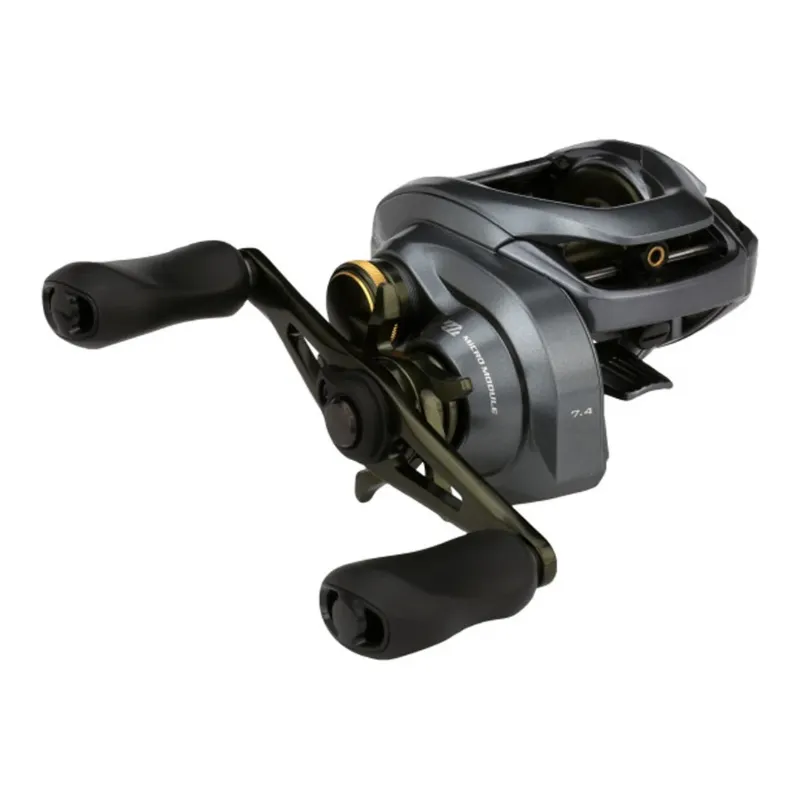
The digital brake on the Curado DC 200 is set by spool tension first, then the external DC dial, and you change that dial as lure weight and wind change rather than setting it once and forgetting it. If you are weighing that reel up against the shimano curado mgl 150, the short version is this: the DC 200 forgives a rushed cast, while the MGL 150 rewards a smooth one. Below is how we set both on the bank, plus the rods and lures we pair them with.
What the DC brake actually does before you touch a dial
The DC system uses a microcomputer to read spool speed many times a second and apply braking in short pulses. You are not overriding it with your thumb, you are giving it a job to do.
- Start with the spool tension knob, not the dial. Tie on your lure, hold the rod at 45 degrees, release the spool and let the lure fall. It should hit the water and the spool should stop without a loose overrun. That is your baseline.
- Set the DC dial to a middle position for your first casts, then work down as your thumb improves.
- Keep the reel's own brake setting where it shipped unless you genuinely know why you are changing it. Most overruns on the DC 200 come from a tension knob that is too loose, not from the dial.
If you have never run a baitcaster before, the DC 200 is the friendlier starting point. If you already cast well, the shimano curado mgl 150 gives you more feel and less interference.
Setting the Curado DC 200 digital brake, step by step
This is the sequence we use every time we spool up a fresh curado dc 200.
- Spool it properly. Fill to roughly a millimetre below the spool lip. Overfilled spools are the most common cause of a bird's nest on day one.
- Set tension with the lure you plan to start on. Not the lightest lure in the box, the one you will actually cast first.
- Pick a higher DC setting for the first dozen casts. Wind, cold fingers and a stiff braid all cost you control early on.
- Cast, then listen and watch. A lure that flutters or dives before it reaches the target means too much braking. A spool that keeps spinning after the lure lands means too little.
- Drop one setting at a time. Two clicks down is enough to feel a difference without losing a lure to a nest.
- Re-check tension whenever you change lure weight. Digital braking does not remove the need for that basic adjustment.
Do this on grass or open water before you fish a lure you cannot afford to lose.
Dial positions that match real UK fishing
Our rule is simple: let the conditions set the dial, not your ego.
- Open water, no wind, heavy glide bait: lower settings. This is where the DC 200 feels closest to a well-tuned conventional reel and where a spro kgb chad shad 180 casts beautifully.
- Canal or narrow river with banks and trees: raise it. You want the cast to die slightly early rather than climb.
- Gusting wind, crosswind, or casting into it: raise it again and accept the lost distance. A short accurate cast beats a long retrieve from a bird's nest.
- Small, light jerkbaits in cold water: this is where the DC system starts asking more of you. A lucky craft jerkbait in the wind is manageable with a higher setting, but it is not the reel's happy place.
- Frogs over pads: you are casting into cover and need a hard, accurate cast, so a mid setting with a firm thumb works better than a low one.
Related terms worth knowing while you shop: the Daiwa Tatula reel range and Shimano Curado model differences both come up constantly, and we cover the Daiwa side in our guide to the daiwa tatula sv tws, which uses a different braking philosophy entirely.
shimano curado mgl 150 vs Curado DC 200: which brake suits you
| What matters | Curado DC 200 | shimano curado mgl 150 |
|---|---|---|
| Braking system | Digital, externally adjustable dial | Centrifugal, set internally with brake blocks |
| Adjusting on the water | Fast, no tools, no side plate removal | Slower, side plate off, blocks moved |
| Best for | Wind, night casting, newer baitcaster users, mixed lure weights | Confident casters chasing distance and feel with lighter lures |
| Feel | More assisted, slightly less feedback | More direct, you feel the spool |
| Our pick for | One reel that does everything in UK weather | A second reel for finesse and light lures |
Both are genuine, current Shimano reels and both hold their value. If you can only run one baitcaster for bass, pike and perch across a British season, the DC 200 is the safer single purchase. If you already own a digital reel and want something that gets out of the way, the shimano curado mgl 150 is the one we reach for.
Rod and lure pairings we actually fish
Brake settings only make sense next to the rod and lure they are working with. Our bench pairings:
- DC 200 with a 7ft medium-heavy casting rod for glide baits, spinnerbaits and frogs. The jackall kaera frog over lily pads is a good stress test for your dial setting.
- MGL 150 with a medium casting rod for jerkbaits, small swimbaits and tubes. A strike king coffee tube skipped around structure is a fair test of a light-lure setup.
- Either reel on a dobyns fishing rods casting model if you want one rod that covers a wide lure range without feeling over-tipped.
On the spinning side, a daiwa tatula x matches well with finesse presentations when the baitcaster stays in the bag. Whatever you buy, check the reel seat and guide sizes before you commit. A great reel on the wrong rod will feel like a bad reel.
Getting it to your door in the UK and Ireland
We order from the same store we recommend, so here is what actually happens.
- Discount code redemption steps: add your reel or rod to the basket, go to checkout and enter the code in the discount field. The 10% comes off before shipping is calculated. Grab the code here.
- Shipping to UK and Ireland: mainland addresses are straightforward, and Northern Ireland and Republic of Ireland deliveries are supported. Check the current lead times on the store page before you plan a trip around a delivery.
- Order tracking and delivery updates: you get a tracking reference once the parcel leaves, so keep an eye on it rather than assuming a next-day arrival.
- Returns and refunds policy: if the reel does not suit you, do not spool it. Unused, boxed tackle is far easier to return.
- Genuine tackle authenticity: buy from a proper retailer, keep the box and the paperwork, and be wary of any listing that will not show you a serial or a real product photo.
Check the latest price and current offer before you order, since reel pricing moves around.
The short version
Set spool tension with the lure you will actually cast, start the DC dial in the middle, then work down one click at a time. Raise it for wind, cover and cold fingers. If you want the reel that asks less of you, take the Curado DC 200. If you want the reel that gives more back once your thumb is trained, take the shimano curado mgl 150. Either way, run the numbers with our code before checkout.
 Shopping at Banff UK & Ireland? See today's verified Banff UK & Ireland discount code
Frequently asked questions
Do I still need to set spool tension on the Curado DC 200?
Yes. The digital brake controls spool speed during the cast, but the tension knob sets the baseline for your lure weight. Set tension first, then adjust the DC dial.
Is the shimano curado mgl 150 harder to cast than the DC 200?
It is less forgiving. The MGL 150 uses centrifugal braking you configure internally, so it rewards a smooth cast and punishes a snappy one more than the DC 200's digital system.
Can I cast light jerkbaits on the Curado DC 200?
You can, but you will usually need a higher dial setting and a rod rated for the lure weight. Light lures in wind are where the DC system asks the most of your thumb.
What DC dial setting should I start with?
Start around the middle of the range and adjust from there. Cast, watch whether the lure dives early or the spool keeps spinning, then move one setting at a time.
How do I know the reel I order is genuine Shimano tackle?
Buy from a retailer that shows real product photos and keeps the box and paperwork intact, and check the reel over on arrival before you spool it. That also protects your return options.
Which rod pairs best with a Curado DC 200 for UK bass?
A 7ft medium-heavy casting rod covers glide baits, frogs and spinnerbaits well. Dobyns casting models are a good match if you want one rod across a wide lure range.