

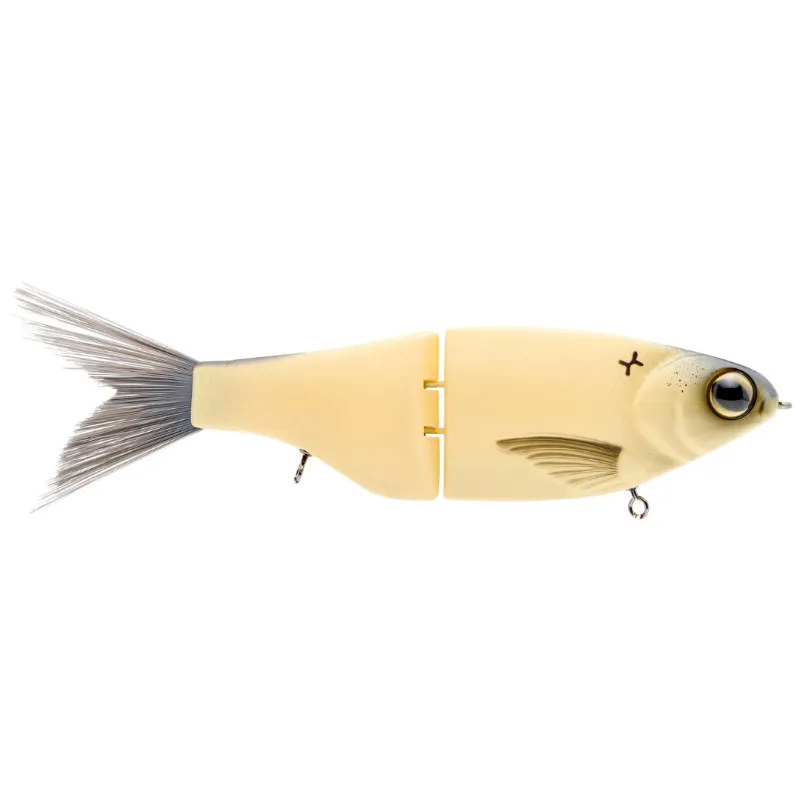
Working the spro kgb chad shad 180 through the cast and retrieve is mostly about what you don't do: you cast it out, count it down, then turn the reel handle in short, steady pulls and let the bait glide side to side on a semi-slack line instead of spinning on a tight one. Do that and the bait walks and flashes like a wounded baitfish, drawing fish in from a wide area. Wind it like a crankbait and you get a rolling, splashing mess that spooks more than it catches.
Here is exactly how we cast, count down, retrieve and pause this glide bait, plus the rod and reel pairings that make the whole thing easier on your hands.
What the Bait Does Underwater
Glide baits are not crankbaits with a different paint job. The spro kgb chad shad 180 is built to glide, meaning most of its action happens on the pause and on the transition between pulls, not during a constant wind.
- On the pull: the bait kicks forward and slightly to one side, showing flank.
- On the pause: it swings wide, opposite to the pull direction, then hangs almost still as it slows.
- On a tight line: it rolls instead of gliding, which is the number one reason anglers give up on glide baits.
So the whole retrieve is a rhythm of pull, glide, hang. Your job is to give the bait line at the right moments without giving it so much slack that you can't set the hook.
The Cast: Long, Quiet, Downwind
Glide baits are reaction baits, and a splashy entry kills the first three seconds of the retrieve, which is often when fish commit.
- Load the rod smoothly rather than whipping it. A lob cast keeps the bait from tumbling and keeps trebles clear of your line.
- Land it a metre or two beyond the fish-holding edge you're targeting, so the bait arrives in the strike zone on the glide, not on the splash.
- Work downwind where you can. It buys you extra casting distance on a light bait and keeps the bow out of your line.
- Strip a little line off the spool before the bait lands if fish are shallow. A glide bait that lands and then sits with a taut line looks wrong.
Rod, Reel and Line for the spro kgb chad shad 180
A dedicated glide bait setup is a long, fairly soft-tipped rod with real backbone, a reel with a fast retrieve and a drag that stays smooth under a hard sweep. Our usual pairing for the spro kgb chad shad 180 is a 7ft 6in to 8ft heavy-power rod with a moderate-fast tip, which loads on the cast and still lets you drive the hook home at distance. The dobyns fishing rods range is what we reach for first here, because the heavier models keep that soft tip without turning into a pool cue.
Reel choice matters less than retrieve ratio and drag smoothness, but it does change how the bait feels:
| Reel | Best for | Why it suits a glide bait |
|---|---|---|
| daiwa tatula sv tws | Big baits, heavy line, long days | Smooth, controlled drag and a solid frame that won't flex under a hard sweep |
| shimano curado mgl 150 | All-round glide and swimbait work | Light spool that starts up easily on short, choppy pulls |
| curado dc 200 | Anglers who cast hard and often | Brake control helps keep long casts straight and backlash-free |
Line: fluorocarbon in the 15 to 20lb class is our default because it sinks slightly, gives the bait a cleaner glide and adds abrasion resistance around timber. Braid to a fluoro leader works if you need extra distance, but keep the leader short so the bait doesn't hang on the pause.
If you're still weighing up the Daiwa Tatula range against the Shimano Curado models, check the latest price on both before you commit, and match the rod to the bait weight rather than the other way around.
The Retrieve, Step by Step
This is the part people ask about most, so here is the sequence we use from a fresh cast.
- Count it down. Let the bait sink on a controlled slack line, counting as it drops. Start high in the water column and add two counts each cast until you find fish.
- Take up slack and load the rod. Sweep the rod tip from one side to the other while turning the handle a couple of times. You want a pull, not a wind.
- Open the spool briefly. Let the bait swing on a semi-slack line for one to three seconds. Watch the line, not the bait.
- Repeat on the other side. Alternating left and right creates that side-to-side walk rather than a straight retrieve.
- Extend the pause. If fish follow but don't eat, hold the bait still for four or five seconds. Follows without commits are almost always a pause problem.
- Reel down and sweep on the bite. Don't strike at the splash. Wait until you feel weight, then sweep hard.
| Water and conditions | Cadence that works |
|---|---|
| Cold water, pressured fish | Two short pulls, long pause of three to five seconds |
| Warming water, active fish | Steady pull-glide with one-second pauses, faster tempo |
| Shallow flats and weed edges | Long casts, high rod tip, minimal pause so the bait stays above cover |
| Deep points and ledges | Longer countdown, slower sweeps, longer pauses |
Reading Conditions and Avoiding the Common Mistakes
- Overworking the bait. Most misses come from too much handle turning. Fewer pulls, longer glides.
- A tight line on the pause. You'll pull the bait out of its glide and straight at you.
- Fishing it too shallow. Glide baits shine when they're tracking a metre or two down over structure, not skittering on the surface.
- Wrong rod. A fast, stiff flipping rod pulls hooks and won't load on the cast.
- Standing in one spot. This is a search bait. Cast, fan out, cover water, then come back to the spot where a fish showed.
Glide Baits vs the Rest of the Box
A glide bait is one tool, and knowing when to put it down saves you time. If fish are suspended and inactive, the slow, wide flash of the spro kgb chad shad 180 earns bites that faster baits won't. When fish want something sharper and more erratic, switch to a lucky craft jerkbait and fish it with hard twitches and short pauses. In shallow cover and around lily pads, the jackall kaera frog is the better call because it fishes where a treble-hooked glide bait can't go. And when fish are pinned to the bottom and refusing to rise, a strike king coffee tube dragged slowly along the substrate out-fishes everything in the box.
A daiwa tatula x rod makes a good second setup for the jerkbait and tube duties while the heavier rod stays rigged with the glide bait. Two rods, one ready for reaction, one for finesse, covers most days on the water.
Buying Genuine Tackle in the UK and Ireland
Glide baits are copied constantly, and a fake with the wrong weighting will not glide no matter how well you work it, so buy from a seller who is clear about genuine tackle authenticity. Our store supports Banff UK & Ireland with shipping to the UK and Ireland, and every order gets order tracking and delivery updates so you know when your bait lands.
- Use the current 10% off all orders code at checkout, and follow the discount code redemption steps on the store page if you haven't used it before.
- Check the returns and refunds policy before you order if you're unsure about rod length or reel ratio.
- Keep your receipt. Genuine tackle claims are easier to resolve with an order number.
Get the cadence right and the spro kgb chad shad 180 becomes one of the most versatile big-fish baits in the boat. Pull, glide, hang, and let the bait do the work.
 Shopping at Banff UK & Ireland? See today's verified Banff UK & Ireland discount code
Frequently asked questions
How long should I pause when working the spro kgb chad shad 180?
Start with one to three seconds on a semi-slack line and extend to four or five if fish follow without committing. In cold water, err on the longer side and keep the rod tip still so the bait swings wide instead of straightening out.
Which reel is best for a glide bait, the daiwa tatula sv tws or a shimano curado?
Both work. The Daiwa Tatula SV TWS suits heavier baits and long days on the water, while the Shimano Curado MGL 150's light spool starts up easily on short, choppy pulls. Pick based on how you cast and what line you plan to run.
Can I fish a glide bait on a medium-power rod?
You can, but a heavy-power rod with a moderate-fast tip is far better. It loads properly on the cast, keeps trebles pinned under pressure and stops the bait rolling on the retrieve. A stiff flipping rod is the worst option.
What line do you use for the spro kgb chad shad 180?
Fluorocarbon in the 15 to 20lb class is our default because it sinks slightly and gives a cleaner glide. Braid to a short fluorocarbon leader is fine if you need extra casting distance around clear water.
How do I know the tackle I buy is genuine?
Order from a seller that states its authenticity position clearly and always keep your order number and receipt. Counterfeit glide baits are usually weighted wrong, so they will not glide no matter how you work them.
Do you ship tackle to Ireland and how do refunds work?
Yes, the store supports UK and Ireland shipping with order tracking and delivery updates. Read the returns and refunds policy on the store page before ordering, especially for rods where length and power are easy to get wrong.