
Weber Griddle Insert vs. Griddle for Gas Grill: Which Fits Your Setup?

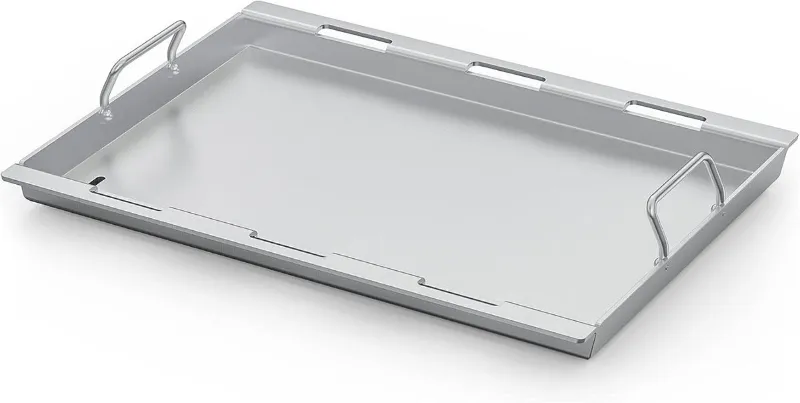
A weber griddle insert slides into your existing grill grate, turning one or more burners into a flat-top cooking surface without replacing your entire setup. A standalone gas griddle, on the other hand, is a dedicated appliance that sits on your patio or countertop. We tested both styles to help you decide which fits your space, cooking style, and budget.
What Is a Weber Griddle Insert and How Does It Work?
A weber griddle insert is a porcelain-enameled or cast-iron slab designed to drop into the grate slots of Weber Genesis, Spirit, and similar models. It replaces one or two cooking grates, letting you cook pancakes, smash burgers, and stir-fry vegetables directly on your gas grill. Most inserts are sized to cover half the grill surface, so you keep burners free for traditional grilling.
Weber offers model-specific inserts for the Genesis II, Genesis 400, and Spirit 300 series. Fitment is critical: the insert must align with your grate supports and sit level over the burners. Measure your grate dimensions and check your model number before ordering.
Key features to look for:
- Porcelain-enamel coating for stick resistance and easy cleanup
- Integrated grease channels that funnel drippings toward the front
- Notched corners or handles for safe removal when hot
- Compatibility with your exact grill model (Genesis II, Spirit, Summit, etc.)
Grease management varies by design. Some inserts have a shallow lip and rely on your grill's existing drip tray, while others include a dedicated grease cup or channel. We found models with front-facing grease grooves are easier to clean mid-cook, especially when cooking bacon or fatty meats.
Standalone Gas Griddle: When a Full Flat-Top Makes Sense
A standalone gas griddle is a self-contained unit with its own burners, grease trap, and legs or cart. Blackstone, Camp Chef, and others dominate this category. These griddles offer 22 to 36 inches of continuous cooking surface, independent heat zones, and built-in grease management systems with removable drip trays.
Advantages of a standalone griddle:
- Larger uninterrupted cooking surface for big batches
- Independent temperature control across multiple burners
- Purpose-built grease channels and rear or side drip cups
- No need to sacrifice grill grates or burner access
The tradeoff is footprint. A standalone griddle occupies dedicated patio space and requires a separate propane tank or natural gas hookup. If you already own a Weber Genesis or Spirit and want to add griddle capability without buying a second appliance, an insert is the more space-efficient choice.
Weber Griddle Insert vs. Blackstone: Fitment and Cooking Surface
The weber griddle insert vs blackstone debate boils down to integration versus independence. Weber inserts are engineered for specific grill models, ensuring a snug fit and even heat distribution from your existing burners. Blackstone griddles are standalone units that excel at high-volume cooking and outdoor events but occupy their own real estate.
| Feature | Weber Griddle Insert | Blackstone Standalone |
|---|---|---|
| Installation | Drops into existing grill grates | Requires separate setup and propane |
| Cooking area | ~200-240 sq in (half-grill) | 300-720 sq in (full flat-top) |
| Grease management | Channels to grill drip tray | Dedicated rear drain and cup |
| Heat zones | Uses grill burners (2-3 zones) | Independent burner controls (2-4 zones) |
We tested a Genesis II weber griddle insert alongside a Blackstone 22-inch model. The Weber insert heated evenly over two burners and integrated seamlessly with our existing grill accessories, including the side tables and tool hooks. The Blackstone offered more total surface area and superior grease handling, but it required a dedicated cart and second propane tank adapter for easy swaps.
For weekend breakfast cooks or anyone adding griddle capability to an existing Weber, the insert wins on convenience. For catering-sized batches or dedicated flat-top fans, a standalone griddle is worth the investment.
Grease Management and Cleanup: What to Expect
Weber griddle insert grease management relies on shallow channels molded into the porcelain enamel. Grease flows toward the front edge, where it drips into your grill's standard drip tray. This works well for moderate fat content, but heavy bacon sessions can overwhelm the tray. We recommend scraping the insert mid-cook and emptying the tray between batches.
Standalone griddles typically feature a rear grease trough that funnels drippings into a removable cup. This design handles higher volumes and keeps grease away from the cooking surface. After cooking, let the griddle cool, scrape with a metal spatula, and wipe with a damp cloth. Weber inserts lift out for sink cleaning, though the porcelain coating makes quick wipe-downs easy.
Cleaning tips for both styles:
- Scrape while the surface is still warm (not hot)
- Use a griddle stone or non-abrasive pad on porcelain
- Season cast-iron inserts with a thin layer of oil after each use
- Empty grease traps before they overflow
Check current pricing and grab our discount code for 7% off replacement gas grill parts and griddle accessories.
Which Weber Griddle Insert Fits Your Grill Model?
Weber manufactures inserts for the Genesis II, Genesis 400, Spirit 300, and Spirit II series. Each model has specific grate dimensions and burner spacing, so cross-compatibility is rare. The weber griddle insert genesis ii measures approximately 12.9 x 16.5 inches and sits over two burners. The weber griddle insert spirit 300 is slightly narrower to match the Spirit's compact frame.
Before ordering, confirm your grill's model number (stamped on the front control panel or inside the cabinet door) and measure your existing grate width. Some aftermarket brands offer "universal" inserts, but fitment issues and uneven heating are common. We recommend sticking with Weber-branded inserts for Genesis and Spirit models to ensure proper support and warranty coverage.
Half inserts are the most popular configuration. They let you griddle on one side while grilling burgers or vegetables on the other, giving you true dual-zone cooking. Full-width inserts exist for Summit models but eliminate traditional grate space entirely.
Who Should Choose an Insert vs. a Standalone Griddle?
Choose a weber griddle insert if you:
- Already own a Weber Genesis, Spirit, or Summit grill
- Want to add flat-top capability without a second appliance
- Have limited patio space or prefer a compact setup
- Cook for two to four people most of the time
- Value the ability to grill and griddle simultaneously
Choose a standalone gas griddle if you:
- Regularly cook for six or more people
- Want maximum flat-top surface area for pancakes, hibachi-style meals, or catering
- Prefer independent burner controls and dedicated grease systems
- Have room for a second outdoor cooking station
- Plan to use the griddle as your primary cooking surface
Both options integrate with standard grill accessories like spatulas, scraper sets, and heat-resistant gloves. If you are upgrading other grill components, explore replacement char broil grill parts and gas grill parts to keep your entire setup running smoothly. Visit our GrillPartsReplacement discount code page to save 7% on your order.
We have found that most Weber owners appreciate the flexibility of an insert. It transforms your existing grill into a versatile breakfast and dinner station without sacrificing your traditional grilling capability. For dedicated griddle enthusiasts or those hosting large gatherings, a standalone unit delivers the surface area and grease capacity that inserts cannot match.
Frequently asked questions
Will a Weber griddle insert fit my Genesis II grill?
Weber manufactures model-specific inserts for the Genesis II series, typically measuring 12.9 x 16.5 inches to fit over two burners. Confirm your exact model number before ordering to ensure proper fitment and even heating.
How do you clean a weber griddle insert after cooking?
Let the insert cool slightly, scrape with a metal spatula while still warm, then wipe with a damp cloth. The porcelain-enamel coating resists sticking and lifts out for sink cleaning if needed.
Can I use a Weber griddle insert and regular grates at the same time?
Yes, most Weber inserts are designed as half-grill replacements, covering one or two burners while leaving the rest of your grates in place for simultaneous grilling and griddling.
Does a standalone griddle heat more evenly than an insert?
Standalone griddles often feature independent burner controls and thicker cooking surfaces, which can provide more consistent heat across larger areas. Inserts rely on your grill's existing burners and work best for moderate cooking zones.
What is the best way to manage grease on a Weber griddle insert?
Scrape grease toward the front channels during cooking so it drips into your grill's drip tray. Empty the tray between batches when cooking high-fat foods like bacon to prevent overflow.
Are Weber griddle inserts compatible with Spirit 300 grills?
Weber offers a dedicated insert for the Spirit 300 series with dimensions tailored to that model's narrower frame. Always verify your grill's model number and grate size before purchasing.