
Where to Position Abstract Art Prints in Small Living Rooms

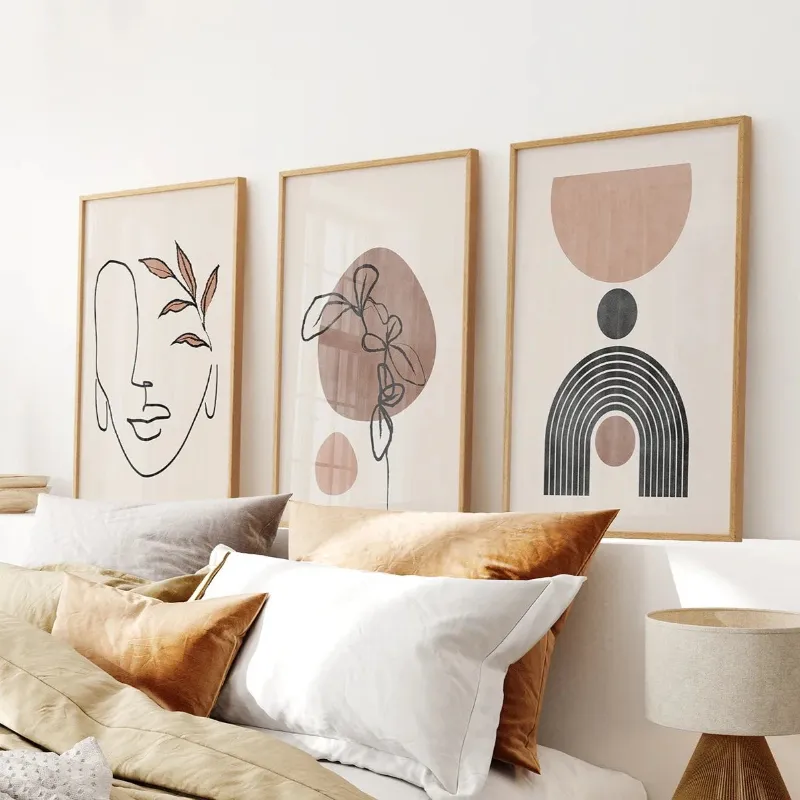
Where to Position Abstract Art Prints in Small Living Rooms
Abstract art prints work beautifully in compact living rooms when you position them to enhance rather than shrink your space. The right placement draws the eye upward, creates natural focal points, and adds personality without cluttering walls. We've tested dozens of arrangements in tight quarters to help you make the most of every square foot.
Best Wall Positions for Abstract Art Prints in Compact Spaces
The walls you choose matter as much as the art itself. In small living rooms, some positions amplify space while others make the room feel cramped.
Above the sofa is the classic choice for good reason. Center a single large abstract piece or a three piece wall art set 6 to 8 inches above the back cushions. This arrangement anchors your seating area and pulls attention to mid-wall height, making ceilings feel taller. For maximum impact in tight spaces, choose pieces that span two-thirds to three-quarters of your sofa width.
Opposite the entry creates an immediate focal point that welcomes guests and gives the room purpose. When someone walks in, their eye lands on your abstract art prints first, establishing a visual hierarchy that makes the space feel intentional rather than squeezed.
On narrow walls between windows or doors turns awkward gaps into gallery moments. A vertical abstract print fills these slivers beautifully and prevents the broken-up feeling that bare wall fragments create.
Above console tables or sideboards grounds floating furniture and creates balanced vignettes. Hang your wall art so the center sits at eye level when you're standing, typically 57 to 60 inches from the floor.
Avoid hanging art on every wall. In small rooms, one or two well-placed pieces outperform a crowded gallery wall that shrinks visual space.
Choosing the Right Scale and Configuration
Size dictates whether your art expands or overwhelms a small living room. We recommend measuring twice and visualizing before you commit.
Single large pieces (24×36 inches or bigger) create drama without clutter. One bold abstract canvas commands attention and unifies a room better than multiple small frames competing for space. Modern abstract art prints in oversized formats trick the eye into perceiving more square footage. Check the latest price on large-format options that suit compact walls.
Triptych and multi-panel sets stretch horizontal space when arranged in a line. 3 piece wall art creates movement and rhythm, guiding the eye across the wall rather than boxing it into a single square. Keep individual panels close together (2 to 4 inches apart) so they read as one cohesive statement.
Vertical orientations lift low ceilings. A tall, narrow abstract print pulls the eye upward and adds height perception to boxy rooms. This works especially well flanking windows or in slim wall sections.
| Configuration | Best For | Spacing Tip |
|---|---|---|
| Single large (30×40"+) | Above sofa, main focal wall | Center on wall or furniture below |
| Triptych horizontal | Long, low walls above consoles | 2-4 inches between panels |
| Vertical pair | Narrow walls, flanking windows | Hang at same height, 6-12 inches apart |
| Grid of 4 small | Empty wall needing structure | Equal spacing all around, tight grid |
Skip tiny prints scattered randomly. They fragment walls and make small rooms feel chaotic.
Height and Eye-Level Guidelines for Maximum Impact
Hanging height transforms how art interacts with your space. The wrong height shrinks rooms and disrupts flow.
The 57-inch rule remains our baseline: hang pieces so their center sits 57 inches from the floor, the average human eye level in museums and galleries showcasing abstract digital art. This creates a natural sightline whether you're standing or moving through the room.
Above furniture, adjust upward. When hanging over a sofa, console, or credenza, position the bottom edge 6 to 8 inches above the furniture. This prevents the art from feeling like it's sitting on the piece below while maintaining visual connection.
In seating areas, consider seated eye level. If you'll view the art primarily while sitting, drop the center height slightly to 48 to 52 inches. Your artwork in wall should feel comfortable from your most common vantage point.
Go higher in rooms with tall ceilings. If your small living room has 10-foot ceilings, you can push abstract prints higher to emphasize vertical space. Leave at least 8 to 12 inches between the art's top edge and the ceiling to avoid a cramped look.
Measure and mark with painter's tape before hammering. Moving holes wastes wall space you can't afford in tight quarters.
Color and Style Strategies That Open Up Small Rooms
The abstract prints you choose affect perceived room size as much as where you hang them. Certain palettes and compositions expand space optically.
Light and neutral abstracts reflect light and push walls outward visually. Pieces dominated by whites, soft grays, beiges, and pastels keep small living rooms airy. Abstract art prints for living room spaces work best when they complement rather than overpower your existing palette.
Cool tones recede while warm tones advance. Blues, greens, and purples in your abstract prints create depth perception, making walls feel farther away. Reserve warm reds, oranges, and yellows for small accent pieces or mixed-palette abstracts.
High contrast draws focus. A bold black-and-white abstract creates a powerful focal point that distracts from limited square footage. The eye lands on the art, not the room's size.
Coastal and beach themes bring in visual breathing room. Coastal wall art and beach wall art featuring water, sky, and sand tones evoke openness and horizon lines that small spaces crave. These work particularly well in living rooms that lack natural views.
Avoid busy, dark, or oversized patterns. Dense compositions with heavy color saturation close in walls. Stick with abstracts that have breathing room in their composition, featuring light scatter effects or open gestural marks.
Lighting Your Abstract Prints to Enhance Space
Proper lighting doubles the impact of well-positioned art and makes small living rooms feel more spacious. We position both art and light sources together for maximum effect.
Picture lights mounted directly above your abstract prints add gallery sophistication and highlight texture. Battery-operated LED picture lights eliminate wiring hassles in rentals.
Track lighting or adjustable ceiling spots let you aim focused beams at your wall art from above. This creates dramatic shadows and depth while leaving floor space clear of lamps.
Natural light deserves respect. Hang abstract prints perpendicular to windows rather than directly opposite them to avoid glare. UV-filtering glass or acrylic protects prints from fading if sun exposure is unavoidable.
Backlighting and uplighting cast ambient glow that softens walls and expands perceived boundaries. A small LED strip behind a floating canvas or a floor uplighter in a corner bounces light across your abstract art, creating layered illumination that adds dimension.
Layer your lighting. Combine overhead ambient light with focused accent lights on your art and task lighting elsewhere. This depth prevents the flat, small-room feeling that single overhead fixtures create.
Common Small-Room Mistakes to Avoid
We've seen these positioning errors shrink countless compact living rooms. Skip them and your space immediately feels larger.
- Hanging too many pieces. Three to five well-chosen abstracts maximum. More turns walls into visual noise.
- Choosing all horizontal rectangles. Mix orientations to break up monotony and add architectural interest.
- Ignoring furniture relationships. Art should relate to what's below it in scale and alignment, not float randomly.
- Pushing art into corners. Corners already feel tight. Position prints on open wall expanses where they breathe.
- Matching frame colors to wall colors exactly. This erases boundaries. Choose frames with slight contrast to define the art.
- Forgetting the rule of thirds. Center large pieces or position them using the rule of thirds for dynamic, unforced placement.
Grab the code for 10% off your order and experiment with professional-quality prints that transform small living rooms into curated, spacious-feeling galleries. The right abstract art in the right position makes every inch count.
Frequently asked questions
How high should I hang abstract art prints in a small living room?
Hang prints so the center sits 57 inches from the floor for standard eye level. Above furniture like sofas, position the bottom edge 6 to 8 inches above the top of the piece to maintain visual connection without crowding.
What size abstract art works best above a small sofa?
Choose a single piece or multi-panel set that spans two-thirds to three-quarters of your sofa's width. For a 72-inch sofa, aim for art that's 48 to 54 inches wide total to create balanced proportion without overwhelming the space.
Can three piece wall art make a small room look bigger?
Yes, when arranged horizontally with tight spacing (2 to 4 inches between panels). The linear configuration guides the eye across the wall, creating a sense of width and movement that expands perceived space.
Should I use light or dark abstract prints in a compact living room?
Light and neutral abstracts with cool tones (blues, greens, soft grays) work best because they reflect light and visually recede, making walls feel farther away. Dark, heavily saturated prints can close in small spaces.
Where should I avoid hanging wall art in a small living room?
Avoid tight corners, every available wall, and directly opposite windows where glare becomes a problem. Leave some walls bare to give the room visual breathing space and prevent a cluttered, cramped feeling.
Do I need special lighting for abstract art in small spaces?
While not required, focused lighting like picture lights or adjustable track spots dramatically enhances your art and adds depth. Layered lighting makes small rooms feel larger and more sophisticated than a single overhead fixture alone.