
What Does Wildcrafted Sea Moss Mean and Why Does It Matter?

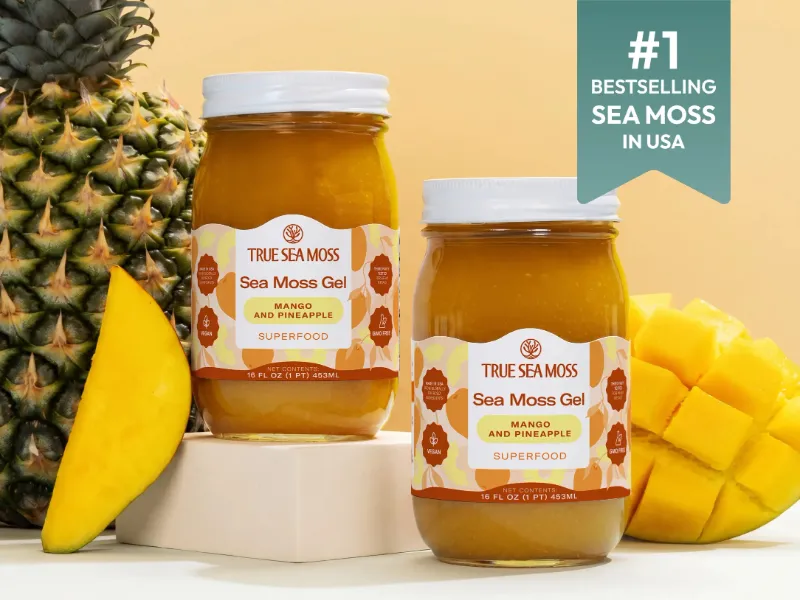
Wildcrafted sea moss refers to seaweed harvested directly from its natural ocean environment rather than cultivated in controlled pools or tanks. This distinction matters because where and how your sea moss grows directly impacts its mineral content, purity, and overall quality.
We tested multiple varieties to understand the real differences between wildcrafted and pool-grown options, and the harvesting method plays a bigger role in quality than most buyers realize.
What Wildcrafted Means for Your Sea Moss
The term "wildcrafted" describes a harvesting method, not a species. When you see wildcrafted seamoss on a label, it means divers or coastal harvesters collected the seaweed from rocky ocean floors, tidal pools, or shallow reefs where it grew naturally.
Pool-grown sea moss, by contrast, is cultivated in man-made saltwater tanks or rope systems. Farmers control water temperature, salinity, and nutrients to accelerate growth. The process is faster and more predictable, but the mineral profile often differs.
Key differences between the two:
- Mineral absorption - Wildcrafted varieties draw nutrients from diverse ocean ecosystems with fluctuating conditions, while pool-grown moss absorbs only what farmers add to the water
- Growth rate - Ocean-harvested moss takes 3-6 months to mature; pool systems can produce harvestable crops in 6-8 weeks
- Texture and color - Natural ocean currents and sunlight exposure create variations in color (gold, purple, green) and a firmer texture
- Contaminant risk - Wildcrafted moss may contain trace sand or salt; pool-grown carries lower risk of ocean pollutants but can harbor bacteria if tanks aren't properly maintained
Neither method is inherently superior for every use case. Wildcrafted options appeal to buyers seeking maximum mineral diversity, while pool-grown varieties offer consistency.
Why Harvesting Location Changes Nutrient Density
Sea moss benefits stem largely from its mineral content, particularly iodine, potassium, calcium, and magnesium. Ocean-harvested moss grows in mineral-rich seawater that varies by region, depth, and season.
Irish coastlines, Caribbean reefs, and North Atlantic waters each produce moss with slightly different profiles. Real irish moss from cold Atlantic waters tends to have higher carrageenan content (the gel-forming compound), while Caribbean varieties often show more color variation due to warmer, sunnier conditions.
Pool systems use filtered or synthetic seawater with added minerals. Farmers can replicate ocean conditions, but natural seawater contains trace elements and organic compounds that are difficult to reproduce artificially. The result is often adequate but less complex.
What this means for buyers:
- If you want the broadest possible mineral spectrum, prioritize wildcrafted options from clean ocean zones
- For consistent gel texture and predictable iodine levels, pool-grown sea moss gel works well
- Always check sourcing transparency - reputable sellers specify harvest location and test for heavy metals
Check the latest price and grab our code to save 15% on wildcrafted and pool-grown varieties.
How to Identify Truly Wildcrafted Products
Marketing claims don't always match reality. We've seen "wildcrafted" labels on products that show clear signs of pool cultivation, including uniform color, identical frond size, and suspiciously fast restocking cycles.
Look for these authenticity markers:
- Color variation - Natural ocean moss comes in mixed shades within the same batch (gold, purple, tan). Perfectly uniform color suggests controlled growing conditions
- Salt and debris - Small amounts of sea salt crystals or tiny shell fragments are normal in ocean-harvested moss. Pristine, debris-free batches may be pool-grown
- Harvest location specificity - Sellers should name the region (St. Lucia, Irish coast, Grenada) rather than vague claims like "Atlantic Ocean"
- Seasonal availability - True wildcrafting follows ocean conditions. Year-round, unlimited stock suggests farm production
- Third-party testing - Reputable brands publish lab results for heavy metals, microbes, and iodine content
True seamoss suppliers often provide harvest certifications or diver partnerships. If a brand can't or won't share sourcing details, assume pool cultivation until proven otherwise.
Wildcrafted vs Pool-Grown: Which Should You Choose?
Your ideal choice depends on how you plan to use the moss and what you prioritize.
| Factor | Wildcrafted | Pool-Grown |
|---|---|---|
| Mineral diversity | Broader spectrum from natural seawater | Consistent but narrower profile |
| Availability | Seasonal, limited batches | Year-round, scalable |
| Price | Usually higher per ounce | More affordable at volume |
| Prep work | Requires thorough rinsing | Typically cleaner out of package |
Choose wildcrafted if:
- You want maximum nutrient density and trace minerals
- You're using raw moss for homemade sea moss gel and value traditional harvesting
- You don't mind paying a premium for ocean-sourced quality
Choose pool-grown if:
- You prioritize affordability and consistent texture
- You're new to sea moss and want a predictable starting point
- You use flavored options like mango sea moss or pineapple sea moss where base quality matters less than taste
Both types work for sea moss drink recipes, smoothies, and topical use. The difference shows most clearly when you're consuming large amounts daily or using it medicinally.
How to Prepare and Store Wildcrafted Varieties
Ocean-harvested moss needs more prep than pool-grown options because it carries natural salt, sand, and organic matter.
Our cleaning process:
- Rinse the dried moss under cool water for 2-3 minutes to remove visible salt and debris
- Soak in fresh water for 12-24 hours, changing the water 2-3 times (this rehydrates the moss and draws out remaining salt)
- Inspect for any remaining shell fragments or seaweed strands and remove by hand
- Drain and use immediately, or blend with fresh water to make gel
Storage tips:
- Raw dried moss keeps 12+ months in an airtight container away from moisture
- Fresh gel made from sea moss powder or whole moss lasts 3-4 weeks refrigerated
- Freeze gel in ice cube trays for 3-6 month storage - pop cubes into smoothies or drinks as needed
Wildcrafted varieties often expand more during soaking than pool-grown types because the natural drying process compresses the fronds more tightly. Expect 1 ounce of dried moss to yield 8-12 ounces of gel depending on water ratio.
Where to Buy Wildcrafted Options with Confidence
We recommend True Sea Moss for transparent sourcing and lab-tested wildcrafted products. Their wildcrafted seamoss ships with harvest location details and heavy metal test results, and they work directly with Caribbean divers.
What to verify before buying:
- Third-party lab reports for iodine, heavy metals (lead, mercury, arsenic), and microbial content
- Clear harvest region and date range
- Return policy in case you receive pool-grown moss mislabeled as wildcrafted
- Realistic pricing - genuine ocean-harvested moss typically costs $25-$45 per pound dried
Avoid sellers who can't provide specifics or who offer wildcrafted claims at suspiciously low prices. Quality ocean-sourced moss costs more to harvest, test, and ship than pool-grown alternatives.
Grab our discount code to save on your first wildcrafted order and compare it directly to pool-grown options if you're still deciding which suits your needs better.
Frequently asked questions
Is wildcrafted sea moss better than farmed varieties?
Wildcrafted moss typically offers broader mineral diversity because it grows in natural ocean ecosystems with varying nutrients. However, pool-grown moss provides more consistent quality and lower contamination risk when properly cultivated. Your choice depends on whether you prioritize nutrient density or consistency.
How can I tell if my sea moss is really wildcrafted?
Look for color variation within the same batch, small amounts of natural salt or debris, and specific harvest location details from the seller. Uniform color, year-round availability, and vague sourcing claims suggest pool cultivation.
Does wildcrafted sea moss need more cleaning than pool-grown?
Yes, ocean-harvested moss requires thorough rinsing and 12-24 hour soaking to remove natural salt, sand, and organic matter. Pool-grown varieties are typically cleaner but should still be rinsed before use.
Why does wildcrafted sea moss cost more?
Ocean harvesting is labor-intensive, weather-dependent, and seasonal. Divers must navigate tides and reefs, and yields are limited by natural growth cycles. Pool farming offers faster, year-round production at lower cost.
Can I use wildcrafted moss the same way as pool-grown?
Yes, both types work for gel, smoothies, and topical use. Wildcrafted moss may expand more during soaking and requires extra prep, but the end applications are identical once cleaned and prepared.
Where is the best wildcrafted sea moss harvested?
Irish coastlines, St. Lucia, Jamaica, and Grenada are known for clean waters and high-quality moss. The best source depends on specific mineral content you're seeking and the seller's testing practices rather than location alone.