
10 Mil vs 6 Mil Vapor Barrier: What Works Best for Crawl Space Moisture Control

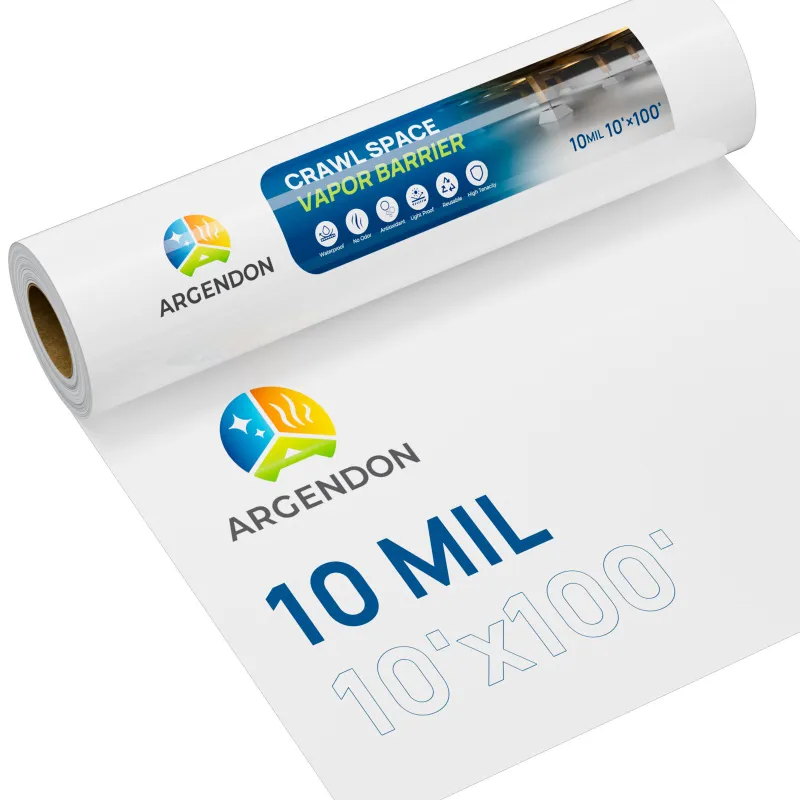
10 Mil vs 6 Mil Vapor Barrier: What Works Best for Crawl Space Moisture Control
A 10 mil vapor barrier is thicker and more resistant to punctures than 6 mil, making it the better investment for crawl space encapsulation projects where longevity and reliable moisture control matter. We've tested both thicknesses across residential and commercial installations, and the performance gap becomes clear once you factor in durability, installation ease, and total cost over time.
Choosing the right vapor barrier thickness determines whether your crawl space stays dry for decades or requires costly repairs within a few years. The decision hinges on your subfloor condition, installation method, and whether you're pairing the barrier with a crawl space dehumidifier for complete moisture management.
Understanding Vapor Barrier Thickness and Mil Ratings
Mil refers to one-thousandth of an inch, so a 10 mil barrier measures 0.010 inches thick while 6 mil measures 0.006 inches. That 0.004-inch difference translates to roughly 67% more material, which directly impacts puncture resistance, tear strength, and how well the barrier withstands foot traffic during and after installation.
The Vapor Pro Vapor Barrier crawl space 10 Mil Class A meets stringent building code requirements for fire and moisture protection, a standard that thinner barriers often struggle to achieve. Most building codes require a minimum of 6 mil for crawl spaces, but many inspectors and contractors recommend 10 mil or thicker for permanent installations.
Here's how the two thicknesses compare in real-world conditions:
| Feature | 6 Mil | 10 Mil |
|---|---|---|
| Puncture Resistance | Tears easily on rough concrete or gravel | Withstands sharp edges and foot traffic |
| Lifespan | 5-10 years in ideal conditions | 20+ years with proper installation |
| Permeance Rating | 0.02-0.03 perms | 0.01-0.02 perms (better moisture block) |
When 10 Mil Vapor Barrier Is the Right Choice
We recommend 10 mil thickness for any crawl space with rough concrete floors, exposed gravel, or protruding rocks that can puncture thinner material. If you plan to store items in the crawl space or need occasional access for maintenance, the added durability justifies the slightly higher material cost.
Pairing a quality barrier with a dehumidifier for crawl space creates a two-layer defense against moisture. The barrier stops ground moisture from evaporating into the air, while the dehumidifier handles any residual humidity from outside air infiltration or seasonal temperature swings.
Look for these features when shopping for 10 mil options:
- Reinforced polyethylene construction with a woven scrim layer for tear resistance
- White or reflective surface to brighten the space and make inspections easier
- Fire-rated Class A designation to meet code in finished or conditioned crawl spaces
- Pre-measured rolls like 10 mil vapor barrier 20 x 100 dimensions to minimize seams
Check the latest price on our tested barrier options to compare material costs per square foot.
6 Mil Barriers: Where They Still Make Sense
Six mil barriers work well in shallow crawl spaces with smooth, poured concrete floors where puncture risk is minimal. If your budget is tight and the crawl space sees zero foot traffic, 6 mil can provide adequate moisture protection for the short to medium term.
We've also seen 6 mil used successfully as a temporary moisture barrier during construction or renovation phases, then replaced with heavier material during final encapsulation. The lower upfront cost makes it viable for rental properties or flips where long-term performance isn't the priority.
However, repair and replacement costs often erase any initial savings. A punctured 6 mil barrier allows ground moisture to saturate insulation and framing, which then requires a commercial dehumidifier running overtime to compensate, driving up energy bills.
Installation Tips for Maximum Vapor Barrier Performance
Proper installation matters more than thickness alone. We've seen poorly installed 10 mil barriers fail faster than well-sealed 6 mil systems, so follow these steps regardless of which thickness you choose:
- Clean and level the crawl space floor to remove sharp rocks, roots, and debris that can puncture the material
- Overlap seams by 6 to 12 inches and seal with vapor barrier tape, never duct tape or general-purpose adhesives
- Extend the barrier up foundation walls at least 6 inches and mechanically fasten with a termination bar
- Seal around piers and penetrations using compatible mastic or sealant rated for polyethylene
- Protect high-traffic areas with plywood walkways if you need regular access
If you're encapsulating a crawl space with existing moisture problems, run a dehumidifier for several weeks before installation to dry out the subfloor and framing. Installing a barrier over damp surfaces traps moisture and accelerates wood rot.
Finding 10 Mil Vapor Barrier Locally and Online
Big-box retailers stock basic polyethylene sheeting, and you can find 10 mil vapor barrier Home Depot and 10 mil vapor barrier Lowe's options in their building materials aisles. However, specialty crawl space suppliers offer fire-rated, reinforced products that outperform generic construction poly.
For convenience, search "10 mil vapor barrier near me" to locate regional distributors who carry professional-grade encapsulation materials. The 10 Mil White Poly Vapor Barrier from specialty suppliers typically includes better warranties and technical support compared to commodity rolls.
Online ordering works well for standard-sized crawl spaces. Compare 10 mil vapor barrier price across suppliers, factoring in shipping costs for heavy rolls. Grab the code for 3% off sitewide to reduce material costs on your encapsulation project.
Pairing Vapor Barriers with Dehumidifiers for Complete Control
Even the best vapor barrier can't eliminate all crawl space moisture. Outside air entering through vents or rim joists carries humidity that condenses on cool surfaces during summer months. A dedicated crawl space dehumidifier handles this airborne moisture while the barrier blocks ground vapor.
We size dehumidifiers based on crawl space volume and local climate. A 1,200-square-foot crawl space in a humid region typically needs a unit rated for 70 to 90 pints per day, while drier climates can use smaller 50-pint models. Pair the dehumidifier with sealed vents and a properly installed 10 mil barrier for year-round relative humidity below 60%.
Monitor your crawl space with a wireless hygrometer to confirm the system is working. If humidity stays above 60% despite running a dehumidifier, check for barrier tears, unsealed seams, or inadequate dehumidifier capacity before assuming you need a larger unit.
Making the Final Decision on Vapor Barrier Thickness
For most residential crawl space encapsulation projects, 10 mil thickness offers the best balance of durability, code compliance, and long-term value. The material cost difference is modest compared to the labor and preparation required for installation, and the extended lifespan means you won't be crawling back under the house in five years to replace a failed barrier.
Choose 6 mil only when your crawl space has a smooth, debris-free floor, zero foot traffic, and you're working within a strict budget. In all other scenarios, the superior puncture resistance and lower permeance of 10 mil material justifies the investment.
Frequently asked questions
How thick is a 10 mil vapor barrier compared to 6 mil?
A 10 mil vapor barrier measures 0.010 inches thick, making it roughly 67% thicker than 6 mil at 0.006 inches. This added thickness provides significantly better puncture resistance and tear strength for crawl space installations.
Can I install a vapor barrier without sealing the seams?
No, unsealed seams allow ground moisture to evaporate into your crawl space, defeating the purpose of the barrier. Always overlap seams by 6 to 12 inches and use compatible vapor barrier tape to create a continuous moisture seal.
Do I still need a dehumidifier if I install a 10 mil barrier?
Yes, a vapor barrier only blocks ground moisture, not humidity from outside air entering through vents or gaps. A crawl space dehumidifier controls airborne moisture to keep relative humidity below 60% and prevent mold growth.
How long does a 10 mil crawl space vapor barrier last?
A properly installed 10 mil barrier typically lasts 20 years or more, especially when protected from excessive foot traffic. Six mil barriers often need replacement within 5 to 10 years due to punctures and material degradation.
What size vapor barrier roll do I need for a 1,500 square foot crawl space?
A 1,500 square foot crawl space requires approximately 1,650 to 1,800 square feet of material to account for wall extensions and seam overlaps. A 20 x 100 foot roll covers 2,000 square feet, providing enough material for most residential projects.
Is 10 mil vapor barrier required by building code?
Most codes require a minimum of 6 mil, but many jurisdictions and inspectors recommend 10 mil or thicker for permanent crawl space encapsulation. Fire-rated Class A barriers may be required in conditioned or finished crawl spaces.