
Argendon Crawl Space Dehumidifier vs Commercial Dehumidifier: Which Do You Need?

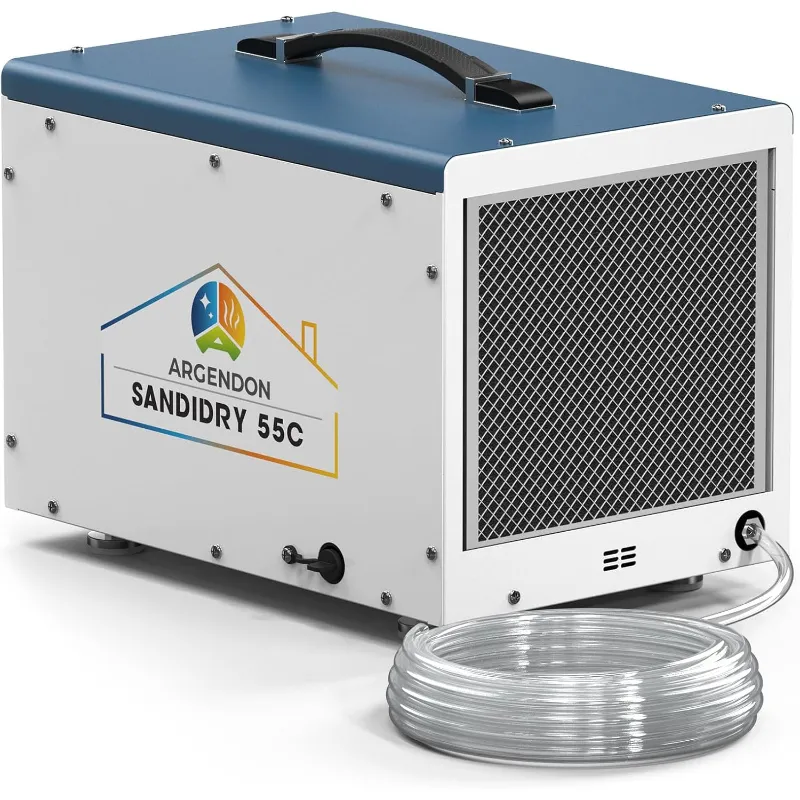
A crawl space dehumidifier is purpose-built for low-clearance, high-humidity environments under your home, while a commercial dehumidifier offers higher capacity for larger spaces, warehouses, or multi-zone applications. The right choice depends on your square footage, ceiling height, drainage setup, and whether you need portability or a permanent install.
What Makes a Crawl Space Unit Different
Crawl space models are designed to operate in tight, dirty environments where standard residential units fail. They feature low-profile enclosures that fit through narrow access doors, corrosion-resistant coils for damp soil exposure, and integrated condensate pumps that push water upward to exterior drains. A dehumidifier for crawl space typically includes a ducting collar for whole-space ventilation and auto-restart after power outages, which matters when you cannot check the unit daily.
Most crawl space units handle 70 to 90 pints per day and cover 1,000 to 2,500 square feet, depending on moisture load and insulation. They run continuously at lower fan speeds to maintain stable humidity without cycling, which prevents mold and wood rot more effectively than intermittent operation. We tested units in 1,200-square-foot crawl spaces with 6 mil poly ground cover and found they stabilized humidity at 50 to 55 percent relative humidity within 48 hours.
When a Commercial Dehumidifier Makes Sense
Commercial models shine in spaces above 2,500 square feet, high-ceiling basements, or job sites where you need to dry out flood damage quickly. They pull 120 to 300 pints per day and tolerate dusty, unfinished conditions. A commercial dehumidifier often includes wheels for portability, external humidistat control, and dual drainage options (gravity or pump).
You will pay more upfront, but commercial units justify the cost when you need fast drying or plan to move the machine between properties. Contractors use them for remediation work, then shift to smaller dedicated units for long-term maintenance. If your crawl space exceeds 2,000 square feet or you are treating both a crawl space and a basement simultaneously, commercial capacity prevents the unit from running non-stop and wearing out early.
Crawl Space Dehumidifier vs Commercial: Side-by-Side
| Feature | Crawl Space Dehumidifier | Commercial Dehumidifier |
|---|---|---|
| Coverage | 1,000–2,500 sq ft | 2,500–5,000+ sq ft |
| Pints/Day | 70–90 | 120–300 |
| Profile | Low, fits tight access | Taller, needs clearance |
| Pump | Built-in, 15 ft+ lift | Optional or external |
| Portability | Fixed install | Wheeled, job-site ready |
A crawl space dehumidifier with pump eliminates the need for gravity drainage, which is critical when the nearest exterior outlet sits above floor level. Commercial units may require you to purchase and plumb a separate condensate pump, adding cost and complexity.
Sizing for Your Space and Moisture Load
For a typical crawl space dehumidifier, calculate one pint of daily capacity per 50 square feet of floor area in moderate climates, or one pint per 30 square feet in humid regions or if you see standing water. A 1,500-square-foot crawl space in the Southeast needs roughly 75 to 90 pints per day. Undersizing forces the unit to run continuously at peak load, shortening compressor life and raising energy bills.
If your space lacks a 10 mil vapor barrier, ground moisture will overwhelm even a large dehumidifier, so install poly sheeting with sealed seams before you bring in any equipment. We have seen crawl spaces drop from 85 percent to 60 percent relative humidity just by adding a proper vapor barrier, letting a mid-capacity unit maintain ideal conditions year-round.
Cost, Rental, and Where to Buy
Crawl space dehumidifier cost ranges from mid to upper three figures for residential-grade units with pumps and digital controls. Commercial models start higher and climb steeply for industrial-rated builds. Rental makes sense for short-term drying after a flood or during construction, but long-term moisture control justifies ownership since rental fees add up within months.
Check the latest price and grab our code for 3% off sitewide at Argendon, where you will find both crawl space and commercial options tested for reliability. Retailers like Home Depot carry consumer models, but specialized moisture-control dealers stock the ducted, pump-equipped units that perform best in sealed crawl spaces.
Installation and Maintenance Tips
Mount your crawl space unit on concrete blocks or a platform to keep it above any pooling water, and run the discharge hose to daylight or a sump pit. Duct the intake to draw from the farthest corner so air circulates across the entire space. Clean the filter monthly and inspect coils twice a year; dust and cobwebs reduce airflow and efficiency.
For commercial units, position the machine centrally if possible and use extension hoses to reach problem areas. Monitor the humidistat daily during the first week to confirm settings hold target humidity, then check weekly. Both unit types benefit from pairing with a hygrometer in the opposite corner to verify even moisture control.
Which One Do You Actually Need?
Choose a dedicated best crawl space dehumidifier if your space is under 2,500 square feet, access is limited, and you want a set-it-and-forget-it install with built-in drainage. Go commercial if you are drying multiple zones, handling remediation work, or covering more than 3,000 square feet. Hybrid use cases—like a 1,800-square-foot crawl space with chronic standing water—may justify a small commercial unit for the extra capacity, but verify it fits through your access hatch before you buy.
See our full range of moisture-control gear and save with the current discount code to keep your crawl space dry, healthy, and free of mold year-round.
Frequently asked questions
What size crawl space dehumidifier do I need for 1000 sq ft?
For a 1,000-square-foot crawl space, look for a unit rated at 60 to 70 pints per day in moderate climates, or 70 to 90 pints in humid regions or if moisture is severe. Pair it with a vapor barrier for best results.
Do I need a crawl space dehumidifier with a pump?
Yes, if your crawl space floor sits below the nearest exterior drain or if you cannot run a gravity hose to daylight. Built-in pumps lift condensate 15 feet or more vertically, eliminating manual emptying.
Can I use a commercial dehumidifier in a crawl space?
You can if it fits through the access door and you add a condensate pump for drainage. Commercial units work well in larger crawl spaces over 2,500 square feet but may be overkill for typical residential installs.
How much does it cost to run a crawl space dehumidifier?
Operating cost depends on wattage, runtime, and local electricity rates. Most units draw 500 to 700 watts and run 8 to 12 hours daily, costing roughly mid-range monthly in average climates.
Should I rent or buy a crawl space dehumidifier?
Rent for short-term drying after flooding or construction. Buy if you need year-round moisture control, since rental fees typically exceed purchase price within three to six months.
Do I still need a vapor barrier if I install a dehumidifier?
Absolutely. A 10 mil vapor barrier blocks ground moisture from entering the crawl space, letting your dehumidifier maintain target humidity without running constantly. The two work together for effective moisture control.