
Do You Need a Vapor Barrier Before Installing a Crawl Space Dehumidifier?

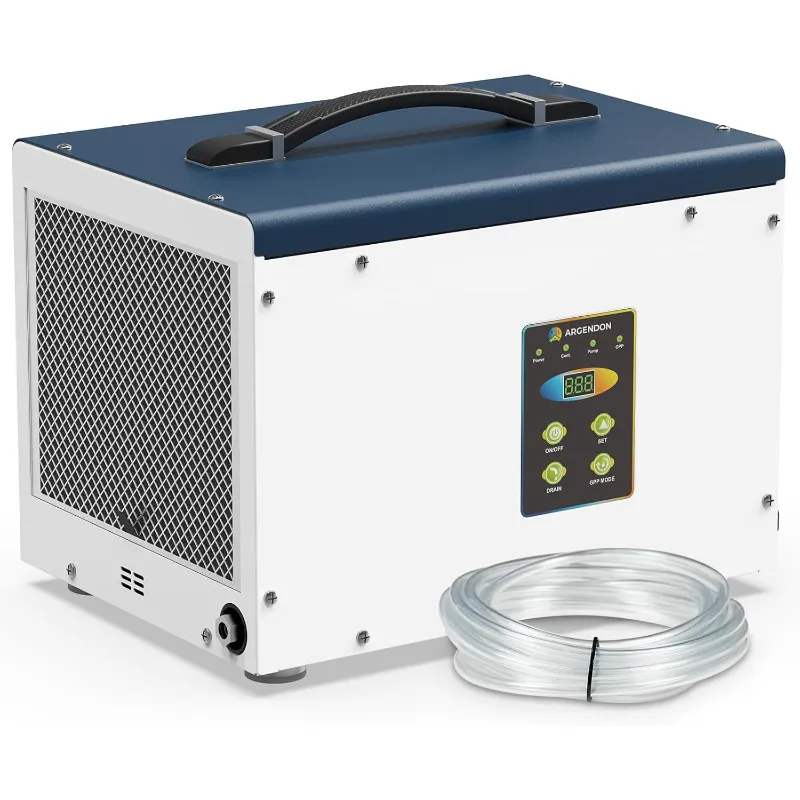
Do You Need a Vapor Barrier First?
Yes, we recommend installing a vapor barrier before adding a crawl space dehumidifier for the most effective moisture control. A 10 mil vapor barrier blocks ground moisture from entering your crawl space, which means your crawl space dehumidifier only has to manage airborne humidity instead of fighting a constant stream of moisture rising from the soil. That said, if your budget or timeline only allows one improvement right now, a dehumidifier alone will still deliver measurable results.
The ideal sequence is vapor barrier first, then dehumidifier. This combination tackles moisture at both the source and in the air, preventing mold, wood rot, and musty odors more completely than either solution alone.
Why Vapor Barriers Matter for Crawl Space Humidity
Bare soil releases water vapor continuously through a process called soil gas diffusion. Without a barrier, that moisture evaporates into your crawl space and raises relative humidity to levels where mold thrives (anything above 60 percent). According to Moisture Medic, properly sealed vapor barriers reduce ground moisture migration by up to 95 percent, which directly lowers the workload on your dehumidifier and cuts energy costs.
A quality barrier also:
- Prevents radon and other soil gases from entering your home
- Reduces pest infiltration by sealing cracks and gaps
- Protects floor joists and insulation from direct moisture contact
- Extends the lifespan of your dehumidifier by reducing runtime
When you pair a sealed 10 mil or thicker polyethylene barrier with a dehumidifier for crawl space use, you create a closed system that's far easier and cheaper to keep dry year-round.
When You Can Install a Dehumidifier Without a Barrier
If your crawl space already has a concrete slab or an existing vapor barrier in decent condition, you can skip straight to adding a dehumidifier. We also see cases where homeowners need immediate mold remediation and plan to install the barrier later—running a commercial dehumidifier first will dry out the space and make barrier installation safer and more effective.
Other scenarios where a dehumidifier-first approach makes sense:
- You rent the property and can't make permanent modifications
- The crawl space is temporarily flooded and needs emergency drying
- You're testing whether humidity is the main issue before committing to a full encapsulation
For homes dealing with standing water or active leaks, fix drainage and grading problems first. No amount of dehumidification will solve a crawl space that floods with every rainstorm. Once water intrusion is under control, check the latest price on both barriers and dehumidifiers to plan your full moisture strategy.
Choosing the Right Equipment for Your Space
Crawl space sizing drives both vapor barrier quantity and dehumidifier capacity. Measure your crawl space length and width to calculate square footage, then add 10 to 15 percent for overlap and wall coverage when ordering your barrier material.
For dehumidifiers, capacity matters more than price. A unit rated for 1000 sq ft will struggle in a 1500-square-foot crawl space, running constantly and wearing out faster. We recommend:
| Crawl Space Size | Minimum Capacity | Features to Prioritize |
|---|---|---|
| Up to 1000 sq ft | 70 pints/day | Auto-restart, digital humidistat |
| 1000-1500 sq ft | 90-110 pints/day | Built-in pump or gravity drain |
| 1500+ sq ft | 120+ pints/day | Commercial-grade, low-temp operation |
A crawl space dehumidifier with pump eliminates the need for manual bucket emptying and works even when your crawl space sits below your home's drain level. Bob Vila's expert-tested roundup highlights models that handle extreme humidity and low temperatures, which is critical since crawl spaces often stay cooler than living areas.
If you're comparing options, also look at warranty length, filter access, and whether the unit can operate below 50°F. Many standard household dehumidifiers freeze up in cold crawl spaces, while purpose-built models keep running through winter.
Installation Order and Best Practices
When you're ready to install both systems, follow this sequence for best results:
- Clean and prep the space – Remove debris, old insulation, and standing water. Treat any visible mold with an EPA-registered fungicide.
- Address drainage issues – Install or repair perimeter drains, downspout extensions, and grading to keep water away from the foundation.
- Lay the vapor barrier – Roll out your 10 mil vapor barrier across the entire floor, overlapping seams by 12 inches and running the material 6 to 8 inches up the foundation walls. Tape all seams and penetrations with contractor-grade seam tape.
- Seal vents and access doors – Close off outside air that brings in humidity. Use foam board or vent covers secured with adhesive and mechanical fasteners.
- Install the dehumidifier – Position your dehumidifier centrally on concrete blocks or a small platform (never directly on the barrier), and route the drain line to a sump pump, exterior drain, or condensate pump.
- Set the humidistat – Target 50 to 55 percent relative humidity. Lower settings waste energy, while higher settings risk mold growth.
After installation, monitor humidity with a standalone hygrometer for the first few weeks to confirm your system is working. Grab the code for 3 percent off your Argendon order if you're buying both barrier and dehumidifier together—the savings add up on larger crawl space projects.
Cost and Rental Considerations
Vapor barrier material typically runs $0.10 to $0.35 per square foot for the poly sheeting alone, plus tape, fasteners, and labor if you hire a contractor. Professional installation of both barrier and dehumidifier ranges from $1,500 to $4,000 depending on crawl space size, access difficulty, and regional labor rates.
For temporary needs, crawl space dehumidifier rental options exist through equipment rental chains and restoration companies, usually $50 to $100 per week. Rental makes sense for short-term drying after a flood or during construction, but if you need moisture control for more than a month or two, purchasing a unit becomes more economical. You'll also find better features and warranties on purchased equipment compared to rental-grade models that have seen heavy use.
When budgeting, factor in operating costs. A best crawl space dehumidifier running in a properly sealed space with a vapor barrier will cycle on and off as needed, using 300 to 700 kWh per year. The same unit working without a barrier may run continuously and double or triple your electricity expense. The upfront cost of the barrier pays back through lower energy bills and longer dehumidifier lifespan.
Long-Term Maintenance and Monitoring
Once your vapor barrier and dehumidifier are in place, plan to inspect your crawl space twice a year. Look for tears or pulled seams in the barrier, check that the dehumidifier drain is flowing freely, and clean or replace the air filter every three to six months depending on dust levels.
We also recommend:
- Testing humidity levels in different corners of the crawl space to ensure even coverage
- Inspecting wood joists and sill plates for new mold or water stains
- Confirming your dehumidifier's auto-restart function works after a power outage
- Upgrading to a model with remote monitoring if you want real-time alerts on your phone
A well-maintained system will keep your crawl space dry for decades, protecting your home's structural integrity and indoor air quality with minimal ongoing effort.
Frequently asked questions
Can I install a crawl space dehumidifier without sealing the vents?
You can, but open vents let in humid outdoor air that makes your dehumidifier work much harder and run continuously. Sealing vents as part of crawl space encapsulation dramatically improves efficiency and lowers operating costs.
How thick should a crawl space vapor barrier be?
We recommend at least 10 mil thickness for durability and puncture resistance. Thinner barriers tear easily during installation and won't last as long, while 12 to 20 mil options offer even better protection in high-traffic crawl spaces.
What size dehumidifier do I need for a 1500 square foot crawl space?
For 1500 square feet, look for a unit rated at 90 to 110 pints per day or higher, especially if you don't yet have a vapor barrier installed. Units designed for crawl spaces handle the extra moisture load and low temperatures better than standard basement models.
Will a vapor barrier alone keep my crawl space dry?
A vapor barrier blocks ground moisture but doesn't remove humidity already in the air or moisture entering through vents and leaks. Pairing it with a dehumidifier gives you complete moisture control by addressing both sources.
How often should I replace the filter on my crawl space dehumidifier?
Check and clean the filter every three to six months depending on dust and debris levels. A clogged filter reduces airflow and efficiency, making the unit work harder and use more energy.
Can I use a regular home dehumidifier in my crawl space?
Standard home dehumidifiers often fail in crawl spaces because they can't handle low temperatures, lack drainage pumps, and aren't built for continuous high-humidity operation. Purpose-built crawl space models are more reliable and cost-effective long-term.