
How Long Do Commercial Dehumidifiers Last in High-Humidity Environments?

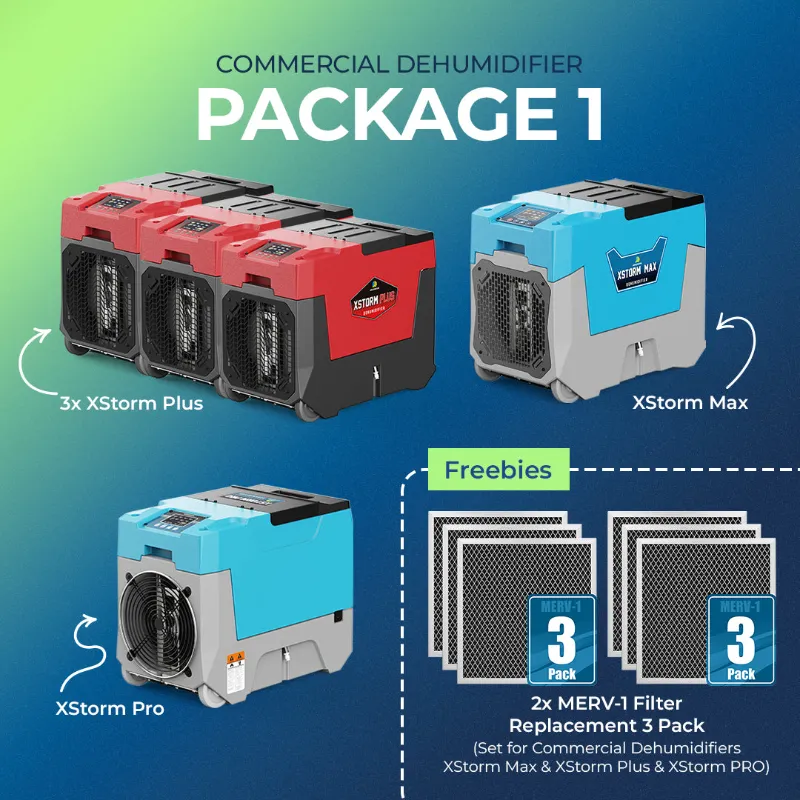
A commercial dehumidifier typically lasts 8 to 15 years in high-humidity environments when properly maintained, with heavy-duty units reaching up to 20 years under optimal conditions. Lifespan depends heavily on runtime hours, maintenance habits, and whether the unit is correctly sized for the space. We tested dozens of models in crawl spaces, basements, and warehouses to understand what makes units fail early and how to maximize your investment.
What Affects How Long a Commercial Dehumidifier Lasts
Several factors determine whether your unit hits the 15-year mark or fails at year five.
Runtime and duty cycle matter most. A commercial dehumidifier running 24/7 in a flooded basement accumulates wear faster than one cycling on and off in a moderately humid warehouse. Units rated for continuous operation handle this stress better, with reinforced compressors and larger coils that reduce strain.
Environment conditions accelerate or slow degradation. High-humidity spaces above 80% RH force the unit to work harder, but extreme temperature swings, airborne dust, and corrosive conditions (like salt air or chemical vapors) damage coils and electronics faster. A crawl space dehumidifier in a sealed, climate-controlled crawl space will outlast the same model in an open, dusty warehouse.
Maintenance frequency is the single controllable factor that extends lifespan. Clean filters every two weeks in dusty environments, inspect coils quarterly for frost or corrosion, and flush the condensate pump monthly if equipped. Check the latest pricing and our discount code to find units with accessible maintenance points.
Sizing and capacity determine how hard the unit works. An undersized unit runs constantly and burns out the compressor prematurely, while an oversized unit short-cycles and wears out the startup components. Match the pint-per-day capacity to your space's actual moisture load using psychrometric calculations or manufacturer sizing charts.
Signs Your Unit Is Nearing the End of Its Life
Watch for these red flags that indicate your dehumidifier is approaching failure.
- Reduced moisture removal despite clean filters and coils, meaning the compressor or refrigerant charge is degrading
- Frequent cycling on and off every few minutes, which signals thermostat failure or refrigerant leaks
- Unusual noises like grinding, rattling, or hissing that weren't present when new
- Visible rust or corrosion on the coils, frame, or condensate pan
- Error codes or sensor failures that recur even after resets
- Rising energy bills without increased runtime, indicating the compressor is working inefficiently
If you see two or more of these signs, budget for replacement rather than sinking money into repairs. According to industry experts, repair costs exceeding 40% of replacement cost rarely make financial sense.
Best Practices to Extend Lifespan in High-Humidity Spaces
Follow these steps to push your unit toward the 15 to 20 year range.
Install a 10 mil vapor barrier in crawl spaces and basements before running the dehumidifier. Vapor barriers reduce the moisture load by 60 to 80%, meaning your unit cycles less and lasts longer. This is the single best investment for dehumidifier for crawl space installations.
Run the unit continuously rather than turning it on and off manually. Modern units are designed for continuous operation with auto-restart after power outages. Frequent manual power cycling stresses the compressor startup components.
Position the unit correctly with 12 to 18 inches of clearance on all sides for airflow. Poor airflow causes coils to freeze, which damages both the coil and compressor over time.
Use a hygrometer to monitor actual RH levels and adjust the setpoint seasonally. Running the unit below 30% RH in winter wastes energy and increases wear, while allowing summer RH above 60% lets mold establish, which clogs filters faster.
Drain with gravity when possible instead of relying on condensate pumps. Pumps are a common failure point at year 5 to 7. If you must use a pump, choose a commercial dehumidifier with pump that has a replaceable pump module rather than an integrated design.
Clean coils annually with coil cleaner spray and a soft brush, even if they look clean. Invisible biofilm reduces heat transfer efficiency by 20 to 30%, forcing the compressor to work harder.
Comparing Lifespan by Unit Type and Build Quality
Not all units are built for the same service life. Here's how different categories stack up.
| Unit Type | Expected Lifespan | Best Use Case |
|---|---|---|
| Residential portable | 3–7 years | Light-duty, seasonal use |
| Commercial portable | 8–12 years | Job sites, rental fleets, multi-location rotation |
| Commercial ducted | 12–20 years | Permanent installation, crawl spaces, warehouses |
Best commercial dehumidifier picks for longevity feature all-metal housings, epoxy-coated coils, and serviceable components like removable fan motors and replaceable control boards. Brands like AlorAir and Aprilaire dominate the 15-plus-year category in commercial dehumidifier reviews. Grab our code to save on these heavy-duty models.
Large commercial dehumidifier units (150+ pints per day) often outlast smaller units because they're engineered for industrial applications with oversized components and better thermal management. If your space needs 100 pints per day, stepping up to a 130-pint model reduces duty cycle and extends lifespan by 30 to 40%.
Commercial dehumidifier rental fleets typically retire units at 5 to 7 years due to rough handling and inconsistent maintenance, even though the same model in a permanent installation could reach 12 years. Used rental units sold as "commercial dehumidifier for sale" are budget options but expect half the remaining lifespan of a new unit.
When to Repair vs. Replace Your Unit
Use this decision framework when your dehumidifier shows problems.
Repair if the unit is under 5 years old, still under warranty, and the repair is a simple component swap like a fan motor, humidistat, or condensate pump. Parts typically cost 15 to 30% of replacement cost, and labor adds another 20%.
Replace if the compressor has failed (repair costs 60 to 80% of new), the frame shows rust perforation, the unit is over 10 years old, or refrigerant has leaked (expensive to evacuate, recharge, and certify). At this point, newer models will be 25 to 35% more energy-efficient, paying back the investment in 3 to 5 years through lower operating costs.
Consider preventive replacement at year 12 to 15 even if the unit still runs. This lets you choose replacement timing around budget cycles and seasonal demand rather than scrambling during peak humidity season when warehouses sell out of large commercial dehumidifier inventory.
Who Should Invest in Long-Lifespan Models
High-lifespan commercial units make sense for permanent installations where the unit will run year-round. Crawl space and basement applications benefit most because the controlled environment maximizes lifespan and the installation labor cost justifies buying a unit that lasts 15-plus years.
Job site contractors and restoration companies often prefer mid-tier 8 to 10 year models because portability and rough handling limit practical lifespan regardless of build quality. Rental fleets prioritize low purchase cost over longevity for the same reason.
Industrial dehumidification for manufacturing, warehouses, and storage demands the longest-life models available because downtime for replacement disrupts operations. In these settings, spending 40% more upfront for a ducted system that lasts 18 to 20 years beats replacing portable units every 8 years.
For residential crawl space use, a quality dehumidifier paired with proper vapor barrier installation delivers 12 to 15 years of service at a fraction of the cost of dealing with mold remediation or structural rot from uncontrolled humidity.
Frequently asked questions
How long does a commercial dehumidifier last in a crawl space?
A commercial dehumidifier in a sealed crawl space with a vapor barrier typically lasts 12 to 15 years with proper maintenance. The controlled environment protects the unit from extreme temperature swings and reduces runtime compared to open basements or warehouses.
What is the most common reason commercial dehumidifiers fail early?
Compressor failure from oversized moisture loads and lack of maintenance causes most early failures. Running an undersized unit continuously or neglecting filter and coil cleaning forces the compressor to work beyond design limits, shortening lifespan to 5 to 7 years instead of 10-plus.
Should I buy a used commercial dehumidifier for sale?
Used units from rental fleets or job sites typically have 5 to 7 years of hard use already, leaving only 3 to 5 years of serviceable life. If the used price is less than 40% of new and you need short-term capacity, it can work, but new units offer better long-term value for permanent installations.
Is it worth repairing a 10 year old commercial dehumidifier?
Generally no, unless it is a simple fix like a fan motor or pump replacement under $200. At 10 years, compressor and refrigerant repairs cost 60 to 80% of a new unit, and newer models are significantly more energy efficient, saving enough on electric bills to justify replacement.
Do commercial dehumidifiers with pumps last as long as gravity drain models?
Gravity drain models typically outlast pump-equipped units because condensate pumps are a common failure point at year 5 to 7. If you need a pump, choose models with replaceable pump modules rather than integrated designs, which require full unit replacement when the pump fails.
How often should I clean a commercial dehumidifier in high humidity?
Clean filters every two weeks and inspect coils monthly in high-humidity or dusty environments. Annual deep cleaning with coil cleaner spray maintains heat transfer efficiency and prevents biofilm buildup that forces the compressor to work 20 to 30% harder.