
How to Choose the Right Dehumidifier for Your Crawl Space Size

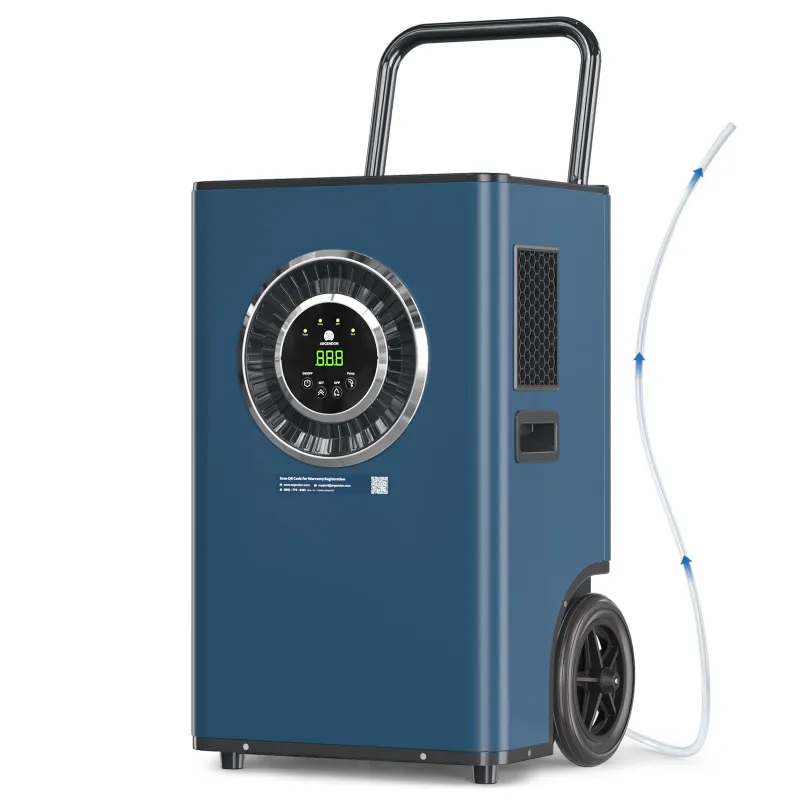
How to Match Capacity to Your Space
A crawl space dehumidifier that's too small will run constantly without controlling humidity, while an oversized unit wastes energy and cycles on and off too frequently. The right capacity depends on three factors: your crawl space square footage, ceiling height, and current moisture level. Most residential crawl spaces between 500 and 2,000 square feet need a unit rated for 70 to 135 pints per day, though severe moisture problems or taller spaces may require more.
Start by calculating your crawl space area (length × width). Then assess moisture severity: look for standing water, condensation on surfaces, or a musty smell. A moderately damp 1,000-square-foot crawl space typically needs a crawl space dehumidifier rated for 90 to 110 pints per day, while a wet space of the same size may require 120+ pints. If you're unsure about current pricing or want to apply our exclusive discount, grab the code before you buy.
Coverage Area vs. Pint Capacity
Manufacturers list two key specs: pint capacity (how much moisture the unit removes in 24 hours) and coverage area (maximum square footage). A crawl space dehumidifier for 1500 square feet usually requires at least 100 pints per day of capacity, assuming moderate dampness and standard 3- to 4-foot ceiling height. For smaller spaces, a unit rated for 1000 sq ft will typically handle 500 to 1,200 square feet depending on conditions.
Pay attention to the testing standard. Older units list capacity at 80°F/60% RH, while newer Energy Star models use 65°F/60% RH, which better reflects actual crawl space conditions. A dehumidifier for crawl space rated at 90 pints under the new standard will outperform an older 110-pint model tested at higher temperatures. Always check which standard the manufacturer uses.
| Coverage Area | Moderate Moisture | Severe Moisture |
|---|---|---|
| 500-800 sq ft | 70-80 pints/day | 90-100 pints/day |
| 1,000-1,500 sq ft | 90-110 pints/day | 120-135 pints/day |
| 1,500-2,500 sq ft | 120-140 pints/day | 150+ pints/day |
Built-In Pumps and Drainage
Most crawl spaces lack a floor drain, so you'll need either a unit with a built-in pump or a separate condensate pump. A crawl space dehumidifier with pump can push water vertically 15 to 20 feet, letting you drain into a sump pit, utility sink, or exterior discharge line. Models without pumps require gravity drainage to a lower point or frequent bucket emptying, which isn't practical for enclosed crawl spaces.
Look for a pump-equipped unit if your drain point sits above the dehumidifier or more than a few feet away. Some commercial dehumidifier models include heavy-duty pumps that handle longer horizontal runs, useful for larger or irregularly shaped crawl spaces. Factor in hose routing when planning installation; most units include 10 to 20 feet of drain hose.
Adjusting for Ceiling Height and Ventilation
Standard capacity charts assume 3- to 4-foot ceilings. If your crawl space exceeds 4 feet, increase the recommended capacity by 10 to 15 percent to account for the extra air volume. A 1,200-square-foot space with a 5-foot ceiling effectively behaves like a 1,500-square-foot space with standard height.
Sealed crawl spaces (encapsulated with a 10 mil vapor barrier and closed vents) dry faster and need less capacity than vented crawl spaces, where humid outdoor air constantly enters. If you're encapsulating, you can often size down one capacity tier. Vented crawl spaces in humid climates may require a tier up, especially during summer. Expert testing confirms that encapsulation paired with the right dehumidifier delivers the best long-term moisture control.
Energy Efficiency and Runtime
Larger-capacity units cost more upfront but often run fewer hours per day, which can offset the price difference through lower electricity bills. Check the Energy Factor (liters removed per kWh) rather than just pint capacity. A unit with an EF of 2.5 or higher qualifies as efficient; models below 2.0 will cost significantly more to operate year-round.
Crawl space units run 24/7 in humid climates, so a model that draws 5 amps instead of 7 amps saves roughly 150 kWh per month. Over a year, that's $180 to $250 in many regions. Check the latest pricing to compare cost per pint of capacity across models, and remember that a slightly more expensive, efficient unit often pays back within two years.
When to Rent vs. Buy
A crawl space dehumidifier rental makes sense for short-term water removal after a flood or during construction drying, but buying pays off if you need year-round humidity control. Rental costs typically run $75 to $150 per week, so a month-long rental equals the cost of an entry-level unit. For ongoing moisture management, ownership wins.
If you're testing whether a dehumidifier solves your problem before committing to encapsulation, a rental offers a low-risk trial. Many suppliers stock high-capacity units you can compare side by side. Just remember that rental-grade machines often lack the pump and low-temperature features you'd want in a permanent installation. For typical residential needs, buying a purpose-built unit and applying our discount delivers better value than repeated rentals.
Real-World Sizing Examples
800 sq ft, moderate dampness, 3-foot ceiling: A 70- to 80-pint model handles this comfortably. Expect the unit to run 8 to 12 hours daily once humidity stabilizes.
1,200 sq ft, standing water in corners, 4-foot ceiling: Start with a 120-pint unit to knock down heavy moisture, then consider whether a smaller unit can maintain target humidity after the initial dry-down.
1,800 sq ft, encapsulated with vapor barrier, mild humidity: A 90- to 100-pint model will likely suffice because the barrier blocks ground moisture. Monitor the first month and adjust if humidity stays above 55%.
Always oversize slightly if you're between capacity tiers or if your crawl space has irregular geometry, multiple support piers, or poor air circulation. Undersizing costs more in wasted runtime and incomplete drying than the upfront savings. Manufacturers like Alorair and others publish detailed sizing calculators, but the table above covers most residential scenarios. For professional assessment, Moisture Medic and similar services offer remote or on-site consultations that factor in local climate and construction details.
Installation and Placement Tips
Position your unit centrally if possible, with at least 12 inches of clearance on all sides for airflow. Elevate it on concrete blocks or a platform to keep it above any minor pooling and to simplify drain hose routing. Run the drain line with a consistent downward slope (minimum ¼ inch per foot) if relying on gravity, or route it to your sump pump or exterior discharge if using the built-in pump.
Set the target humidity to 50 to 55 percent. Lower settings waste energy, while higher settings allow mold risk. Most units include a built-in humidistat, but verify accuracy with a standalone hygrometer during the first week. Check and clean the filter monthly, and inspect the drain line quarterly to prevent clogs. A well-sized, well-maintained unit will run quietly for years with minimal intervention.
Frequently asked questions
What size crawl space dehumidifier do I need for 1000 sq ft?
A 1,000-square-foot crawl space typically requires a unit rated for 90 to 110 pints per day under moderate moisture conditions. If you see standing water or heavy condensation, step up to 120 pints per day.
Can I use a regular dehumidifier in my crawl space?
Standard household dehumidifiers lack the low-temperature operation, built-in pumps, and durable construction needed for crawl spaces. Purpose-built crawl space models handle colder, damper conditions and include drainage features that household units do not.
How much does it cost to run a crawl space dehumidifier year-round?
Expect $15 to $40 per month in electricity, depending on unit efficiency, local rates, and humidity load. Energy Star models with an Energy Factor above 2.5 cost significantly less to operate than older or less efficient units.
Do I need a dehumidifier with a built-in pump?
Yes, if your crawl space lacks a floor drain below the unit or if the nearest drain point is more than a few feet away. A built-in pump can push water vertically 15 to 20 feet, eliminating the need for gravity drainage or manual emptying.
Should I rent or buy a crawl space dehumidifier?
Buy if you need year-round moisture control; rental costs exceed purchase price within a month. Renting makes sense only for short-term drying after a flood or during construction.
How do I know if my dehumidifier is too small?
If the unit runs 20+ hours a day without lowering humidity below 60 percent, or if moisture reappears quickly after the unit cycles off, you need more capacity. Persistent musty odors and visible condensation also signal undersizing.