
What Do 2B Drumsticks Feel Like? Weight and Balance Explained

What Do 2B Drumsticks Feel Like? Weight and Balance Explained
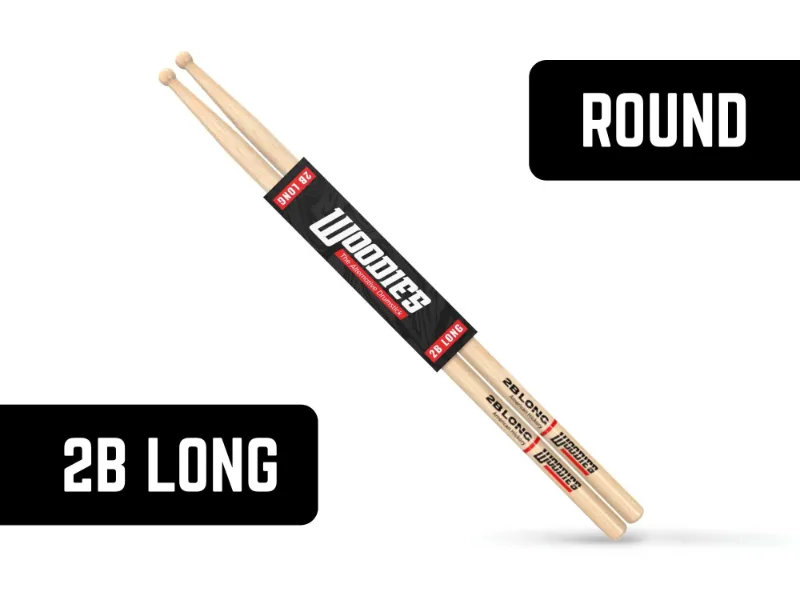
When you're holding 2b drumsticks, you're working with some of the heaviest, most powerful sticks in the standard lineup. Compared to lighter options like 7a drumsticks, 2B models feel noticeably heavier in the hand, with a forward-weighted balance that delivers more punch and projection. The difference in weight and balance between stick sizes directly affects your control, endurance, and the sound you pull from your kit.
We've tested dozens of drumstick models to understand how size, taper, and tip shape influence feel and performance. In this guide, we break down what 2B drumsticks actually feel like, how they compare to popular alternatives like 5a drum stick and 5b drumsticks options, and which drummers benefit most from each size.
Understanding Drumstick Weight and Diameter
Drumstick sizing follows an inverse logic: the lower the number, the thicker and heavier the stick. A 2B model measures roughly 0.630 inches in diameter, making it one of the beefiest standard sizes. For context, 7a drum sticks sit around 0.540 inches, while drum sticks 5a land in the middle at approximately 0.565 inches.
That extra girth translates to substantially more weight. A typical 2B stick weighs between 60 and 70 grams, while a 7A usually clocks in around 42 to 48 grams. The difference becomes obvious within the first few measures: 2B models require more grip strength and deliver a denser, louder tone across drums and cymbals.
- 2B: heaviest standard option, maximum volume and durability
- 5B: versatile middle ground, suitable for rock and pop
- 5A: lighter than 5B, favored for jazz and studio work
- 7A: lightest common size, ideal for finesse and speed
You'll find variations within each category depending on wood type, taper, and manufacturer, but diameter remains the most reliable predictor of overall heft. When you check the latest price on any stick size, pay attention to length and taper as well, since those factors shape balance.
How Balance Point Affects Feel and Control
Balance point, the spot where a stick rests evenly on your finger, determines how the weight distributes during play. Most 2B drumsticks feature a balance point closer to the middle or slightly forward, giving them a front-heavy feel that powers through loud passages but demands more wrist and forearm engagement.
Lighter sticks like 7a drumsticks often balance further back toward the butt, making rapid single-stroke rolls and ghost notes easier to execute with less fatigue. The 5a drum stick strikes a compromise, offering enough mass for rimshots and back beats without the bulk of a 2B.
Taper, the gradual narrowing from shoulder to tip, plays a huge role here. A long, gradual taper shifts the balance rearward and increases rebound, while a short, aggressive taper pushes weight forward and produces a darker, more articulated tone. If you're switching from 7A to 2B, expect the balance shift to feel dramatic at first; your muscle memory will adapt within a few practice sessions.
| Stick Size | Typical Diameter | Weight Range | Balance Feel |
|---|---|---|---|
| 2B | ~0.630 in | 60-70 g | Forward, powerful |
| 5B | ~0.595 in | 52-60 g | Centered, versatile |
| 5A | ~0.565 in | 48-54 g | Neutral to rear |
| 7A | ~0.540 in | 42-48 g | Rear, nimble |
Nylon tip drumsticks add a small amount of weight to the front end compared to wood tips, which can subtly alter the balance and brighten cymbal articulation.
Comparing 2B, 5A, and 7A Drumsticks
The jump from 7a drumsticks to 2B is the widest leap most drummers make. If you're accustomed to the speed and agility of a 7A, the 2B will feel like picking up a baseball bat by comparison. The extra mass translates to louder rimshots, fuller tom resonance, and less risk of breaking a stick during heavy rock or metal passages.
A 5a drum stick sits in the sweet spot for many players. It offers enough weight to drive cymbals and cut through a band mix without the forearm fatigue that can set in after long sessions with 2B models. Jazz drummers and session players often gravitate toward 5A because it supports dynamic range, delicate brush-like cymbal work scales up to solid back beats when needed.
For orchestral, marching, or any application where sheer volume matters, 2B models dominate. Rock and metal kits with heavy cymbals and deep toms reward the extra heft, and the increased surface area helps sticks survive rimshots and cross-sticking. On the flip side, if you play intricate hi-hat patterns or fast jazz comping, 7a drum sticks let your hands move faster with less effort.
- 2B best for: rock, metal, marching, heavy hitters
- 5A best for: studio work, jazz, pop, all-around versatility
- 7A best for: light jazz, orchestral, speed, finesse
When drummers ask about 7a drumsticks vs 5a, the answer hinges on volume requirements and endurance. A 7A lets you play longer with less fatigue, but a 5A or 2B will project better in loud environments.
Tip Shape, Material, and Tone
Tip geometry influences attack and sustain more than any other stick feature. Wood tips produce a warmer, darker cymbal sound with softer attack, while nylon drumsticks deliver brighter, more defined articulation that cuts through dense mixes.
On a 2B stick, the larger diameter often pairs with a barrel, oval, or teardrop tip to maximize surface contact with drums and cymbals. This combination yields a full-bodied tone with pronounced low-mid frequencies. Smaller sticks like 7a drumsticks nylon tip options keep the tip compact, which tightens the focus and brightens the ping.
If you're comparing stick brands, tip consistency matters as much as diameter. Grab the code to test a few pairs side by side and notice how taper, tip, and wood density all contribute to the final feel. Hickory remains the industry standard for its balance of weight, density, and shock absorption, though maple and oak variants offer lighter or heavier alternatives.
Who Should Use 2B Drumsticks vs Lighter Models
Choose 2B drumsticks if you play loud music, need maximum durability, or want the fattest tone your kit can produce. Rock, metal, and marching drummers benefit most, as do players with larger hands who appreciate the extra girth. The added weight also helps if you tend to break lighter sticks frequently.
Switch to 5a drum stick or 5b drumsticks models if you need versatility across styles or want a stick that supports both finesse and power without exhausting your hands. Studio drummers and gigging musicians who play multiple genres often keep a 5A or 5B as their workhorse.
Opt for 7a drumsticks when speed, control, and endurance outweigh volume concerns. Jazz, funk, and orchestral players rely on the lighter weight to execute ghost notes, fast singles, and intricate ride cymbal patterns. Younger or smaller drummers often find 7A models easier to manage as they build technique.
If you're still exploring, consider picking up 2nd sticks in a few sizes to compare directly. What feels best depends on your hands, your kit, and the music you play. Many drummers keep multiple pairs on hand, switching between a heavy 2B for rock sets and a nimble 7A for quieter gigs. Check out the selection and experiment to find your ideal match.
Tips for Testing and Switching Stick Sizes
When you move between stick sizes, give yourself at least a few hours of play time to adjust. The balance and weight differences will feel exaggerated at first, but your hands adapt quickly once muscle memory catches up.
Start your practice session with warm-ups that emphasize rebound control: single-stroke rolls, double strokes, and paradiddles. Pay attention to how much force you need to achieve the same volume across different stick sizes. With 2B drumsticks, you'll rely more on the stick's mass; with 7a drumsticks, you'll need faster hand speed to match the same projection.
- Test each size on all parts of your kit, not just the snare
- Notice how tip shape affects cymbal wash and definition
- Track fatigue levels during longer playing sessions
- Compare durability if you play rimshots frequently
If you're debating between the best 7a drumsticks and heavier models, trust your hands. The right stick should feel like a natural extension of your arm, not a tool you have to fight. Comfort and control always trump conventional wisdom about what you "should" play for a given style.
Frequently asked questions
Are 2B drumsticks heavier than 7A?
Yes, 2B drumsticks are significantly heavier than 7A models. A typical 2B weighs 60 to 70 grams with a diameter around 0.630 inches, while a 7A weighs 42 to 48 grams and measures about 0.540 inches in diameter.
Can beginners use 2B drumsticks?
Beginners can use 2B drumsticks, but they may cause faster fatigue due to their weight. Most teachers recommend starting with a 5A or 5B to build technique and endurance before moving to heavier models.
What music styles work best with 7A drumsticks?
7A drumsticks excel in jazz, orchestral, and any style requiring speed, finesse, and dynamic control. Their lighter weight allows for faster hand movement and less fatigue during intricate patterns and ghost notes.
Do nylon tip drumsticks change the balance?
Nylon tips add a small amount of weight to the front of the stick compared to wood tips, which can shift the balance point slightly forward. The effect is subtle but may brighten cymbal tone and increase tip durability.
Should I buy multiple drumstick sizes?
Many drummers keep multiple sizes for different gigs and styles. A heavy 2B works well for loud rock sets, while a lighter 5A or 7A suits quieter or more technical playing, giving you flexibility across musical contexts.
How long does it take to adjust to a new stick size?
Most drummers adapt to a new stick size within a few practice sessions, typically two to four hours of play time. Your hands will adjust to the balance and weight differences as muscle memory develops.