
Why 48V Lithium Golf Cart Batteries Outperform Traditional Lead Acid

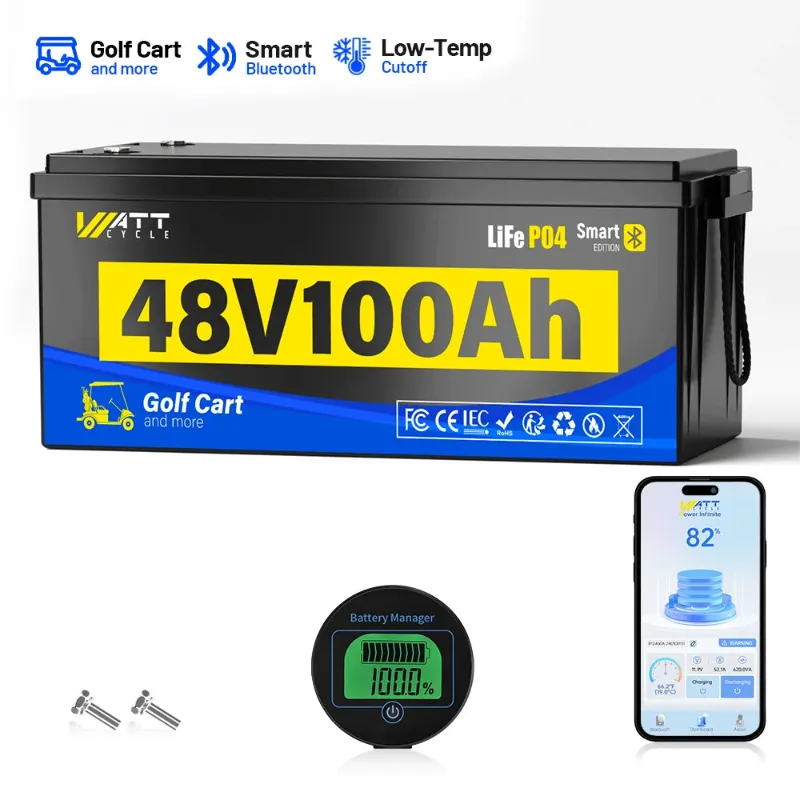
Why 48V Lithium Golf Cart Batteries Outperform Traditional Lead Acid
48v lithium golf cart batteries outlast lead acid by 3,000 to 5,000 cycles, charge in two to three hours instead of eight, and weigh half as much while delivering consistent voltage throughout each discharge. We've tested both chemistries across recreational and commercial golf carts, and the performance gap is undeniable. If you're weighing an upgrade or building a new cart, here's what the switch to lithium actually delivers.
Lifespan and Cycle Life: The Real Cost Difference
Traditional flooded lead acid batteries give you 500 to 1,000 cycles before capacity drops below 80%. 48 volt golf cart batteries built with LiFePO4 chemistry deliver 3,000 to 5,000 cycles under the same conditions. That's four to five times longer.
Over a ten-year ownership period, you'll replace lead acid packs three to four times, while a single lifepo4 battery set lasts the entire span. When you factor in replacement labor, downtime, and disposal fees, lithium wins on total cost even with a higher upfront price. Check the latest pricing to see current offers on WattCycle's golf cart battery options.
Weight and Power Density for Better Performance
A typical 48V lead acid pack weighs 300 to 400 pounds. The equivalent lithium pack weighs 150 to 200 pounds, cutting cart weight by 40 to 50%. That weight savings translates to:
- Longer range per charge (less energy spent moving the batteries themselves)
- Faster acceleration and hill climbing
- Reduced wear on suspension, tires, and frame
Lithium chemistry also maintains flat voltage across the discharge curve. Your cart runs at full speed until the pack is nearly empty, while lead acid voltage sags progressively, slowing the cart as charge depletes.
Charging Speed and Efficiency
Lead acid packs require eight to twelve hours for a full charge and suffer from sulfation if left partially charged. Best 48v lithium golf cart batteries charge in two to four hours with a lifepo4 battery charger, and you can top off anytime without harming the cells.
Lithium accepts charge at higher rates (often 0.5C to 1C), so a 100Ah pack can safely absorb 50 to 100 amps. Lead acid typically maxes out at 0.2C. Fast charging means less downtime between rounds or shifts, critical for commercial fleets and rental operations.
Modern lithium packs include a battery management system (BMS) that balances cells, prevents overcharge, and cuts off at safe temperature limits. This built-in intelligence eliminates guesswork and extends pack life.
Zero Maintenance vs. Weekly Water Checks
Flooded lead acid demands weekly distilled water top-ups, terminal cleaning, and equalization charges. Skip a few weeks and you'll see permanent capacity loss. Sealed AGM batteries avoid watering but still require careful charging and lose capacity faster than lithium.
Wattcycle batteries and other quality lithium packs are sealed, maintenance-free units. No water, no corrosion, no equalization. Install them and forget them until it's time to charge.
Usable Capacity and Depth of Discharge
Lead acid batteries lose lifespan rapidly if discharged below 50% state of charge. You buy a 200Ah pack but only use 100Ah. Lithium allows 80 to 100% depth of discharge without damage, so a 100Ah lithium pack delivers the same usable energy as a 200Ah lead acid set.
This usable capacity advantage means you can downsize your lithium pack (and save cost and weight) while maintaining or exceeding the runtime of your old lead acid setup. A 48v lithium golf cart battery with 150Ah usable matches or beats a 300Ah lead acid pack in real-world range.
Temperature Performance and Safety
Lead acid performance drops steeply below 32°F and above 95°F. Lithium maintains 80% or more of rated capacity across a wider temperature range, though extreme cold does reduce available energy temporarily. Quality packs include low-temperature charging cutoffs to protect cells.
LiFePO4 chemistry (the standard for golf cart lithium packs) is the safest lithium variant. It resists thermal runaway, tolerates overcharge better than other lithium types, and doesn't release oxygen during failure modes. Lithium rv batteries and golf cart packs share this chemistry, making them a proven choice for high-vibration, outdoor applications.
Conversion Kits and Drop-In Compatibility
Many operators ask about lithium golf cart batteries 48v conversion kits. Most modern lithium packs are designed as drop-in replacements for lead acid. You'll need:
- A lithium-compatible charger (or a 48v lithium golf cart battery with charger bundle)
- Correct terminal orientation and hold-down brackets
- Optional BMS integration with your cart's controller
Some carts require a firmware update or resistor change to recognize lithium's flat voltage curve. WattCycle's support team can confirm compatibility for your specific make and model before you order.
If you're running a mixed fleet with 24v battery or wattcycle 12V 100Ah packs in utility vehicles or RVs, the same performance benefits apply. Grab our discount code to save 5% across the entire battery lineup.
Environmental Impact and Disposal
Lead acid recycling is mature and effective, but the process is energy-intensive and releases sulfur dioxide. Lithium packs contain no heavy metals, last three to five times longer (reducing manufacturing demand), and are increasingly recycled for cobalt, lithium, and other materials.
The longer lifespan alone cuts the environmental footprint per mile driven. One lithium pack replaces four lead acid packs over its life, reducing shipping emissions, packaging waste, and disposal trips.
Who Should Upgrade and When
Upgrading to 48v lithium golf cart batteries makes the most sense if you:
- Run a commercial fleet where downtime costs money
- Store carts seasonally (lithium self-discharge is under 3% per month vs. 10% for lead acid)
- Want maximum range and performance from a lightweight setup
- Prefer zero maintenance and long replacement intervals
If your current lead acid pack is near end of life, now is the time to switch. Retrofitting mid-cycle is harder to justify unless you need the performance or weight savings immediately. For owners of recreational vehicle batteries or custom builds, lithium offers flexibility in layout and capacity that lead acid can't match.
We've seen strong results from both DIY conversions and factory lithium carts. US 48V105 Lithium-Ion Battery | U.S. Battery Mfg. and WattCycle offer proven options with multi-year warranties. Read 48v lithium golf cart battery reviews from other fleet operators to confirm compatibility and support quality before you buy.
Lithium technology has matured past the early-adopter phase. The performance, cost-per-cycle, and convenience advantages are clear, and prices continue to drop as production scales. Whether you're running a single cart or a fifty-unit fleet, the upgrade pays for itself in fewer replacements, less labor, and better on-course performance.
Frequently asked questions
How long do 48v lithium golf cart batteries last compared to lead acid?
Lithium packs deliver 3,000 to 5,000 charge cycles, while lead acid typically lasts 500 to 1,000 cycles. That's four to five times longer lifespan under the same usage conditions.
Can I use my existing charger with a lithium golf cart battery?
Most lead acid chargers are not compatible with lithium packs. You need a lithium-specific charger or a LiFePO4-compatible profile to avoid damaging the battery management system and ensure proper cell balancing.
Are lithium golf cart batteries worth the higher upfront cost?
Yes, when you account for the longer lifespan, zero maintenance, and fewer replacements over ten years. Lithium costs less per cycle and eliminates water top-ups, equalization charges, and disposal fees.
What capacity lithium pack replaces a 200Ah lead acid setup?
A 100 to 120Ah lithium pack provides the same usable energy, because lithium allows 80 to 100% depth of discharge while lead acid should only be discharged to 50% to preserve lifespan.
Do lithium batteries work in cold weather golf carts?
LiFePO4 batteries maintain 80% or more capacity in cold weather but should not be charged below freezing. Quality packs include a BMS that disables charging when temperatures drop too low to protect the cells.
How much weight can I save by switching to a 48V lithium battery?
Lithium packs weigh 150 to 200 pounds compared to 300 to 400 pounds for equivalent lead acid, cutting battery weight by 40 to 50% and improving acceleration, range, and handling.