
How Many Amp Hours Do You Need in a 12V Trolling Motor Battery?

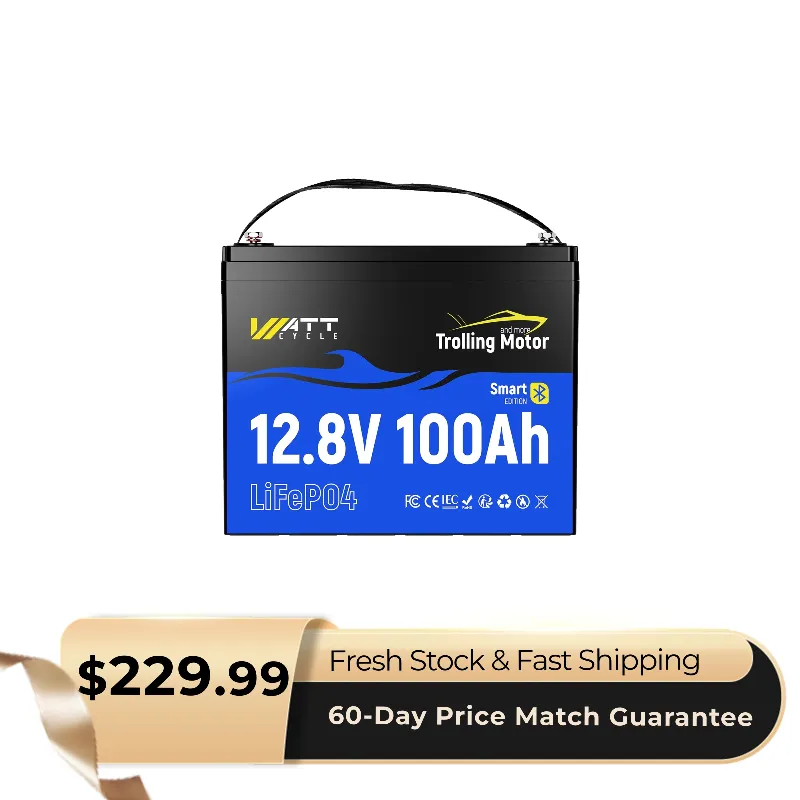
Most anglers need between 50Ah and 100Ah in a 12v trolling motor battery to power a full day of fishing, with the exact capacity determined by your motor's thrust rating and time on the water. A 55 lb thrust motor draws roughly 50 amps at full power, while an 80 lb thrust motor can pull 60 amps or more, making capacity planning essential for uninterrupted performance.
We've tested dozens of lithium and lead-acid batteries across saltwater and freshwater environments, and the math is straightforward once you know your motor's draw and fishing habits. This guide walks you through calculating your needs, matching capacity to thrust, and selecting the best battery chemistry for your budget.
Understanding Trolling Motor Amp Draw and Runtime
Trolling motors rarely run at maximum thrust for long periods. Most anglers operate at 30 to 50 percent power while positioning or drifting, which dramatically reduces amp draw. A 55 lb thrust motor that pulls 50 amps at full throttle might draw only 15 to 25 amps at half speed, tripling your effective runtime.
Here's how thrust ratings translate to typical amp draw at full power:
| Thrust Rating | Approximate Max Draw | Recommended Minimum Capacity |
|---|---|---|
| 30-40 lb | 30-40 amps | 50Ah |
| 45-55 lb | 40-52 amps | 75Ah |
| 70-80 lb | 56-60 amps | 100Ah |
To calculate runtime, divide your battery's usable capacity by your motor's average draw. A wattcycle 12V 100Ah lithium battery provides roughly 80 to 90Ah of usable power (lithium batteries can discharge deeper without damage), giving you 3 to 6 hours of runtime depending on throttle use. For current pricing on WattCycle lithium options, check the latest deals.
Best 12V Trolling Motor Battery Capacity for Common Motors
For 30 to 55 lb thrust motors, a 50Ah to 75Ah battery handles most half-day trips. Budget-conscious anglers often choose a lithium trolling motor battery 12v 50ah for kayaks and small boats where weight matters. These batteries weigh 12 to 15 pounds compared to 40+ pounds for equivalent lead-acid units.
For 70 to 80 lb thrust motors, we recommend a 12v trolling motor battery 100ah minimum. Larger motors consume power quickly at higher speeds, and a lifepo4 battery in the 100Ah range ensures you won't cut trips short. The best 12v 100ah lithium battery for trolling motor applications balances weight, cycle life, and cold-weather performance, with quality LiFePO4 cells delivering 3,000+ charge cycles versus 300 to 500 for lead-acid.
If you fish tournaments or run long days, consider the wattcycle 12v 628ah ultra wholesale for extended capacity, or stack two smaller batteries in parallel to double your amp hours while maintaining 12V output.
LiFePO4 vs Lead-Acid: Which Chemistry Fits Your Fishing Style
Lithium iron phosphate (LiFePO4) batteries cost two to three times more upfront but deliver better value over their lifespan. A batterie 12v lithium weighs 60 percent less than lead-acid, charges in 2 to 3 hours instead of 8 to 12, and tolerates deeper discharge without damage. We've seen anglers recover their investment within two seasons thanks to the longer cycle life alone.
Lead-acid remains the best trolling motor battery on a budget for casual anglers who fish a few times per month. These batteries require maintenance (checking water levels in flooded types) and lose capacity faster, but initial costs run $100 to $150 versus $300+ for lithium equivalents.
Key differences at a glance:
- Weight: LiFePO4 wins by 60-70% for the same capacity
- Depth of discharge: Lithium handles 80-90% safely; lead-acid should stay above 50%
- Lifespan: 3,000+ cycles for lithium vs 300-500 for lead-acid
- Charging speed: Lithium accepts faster charge rates and pairs well with a lifepo4 battery charger
For multi-species anglers who also power RV accessories, lithium rv batteries offer dual-purpose flexibility with the same LiFePO4 chemistry.
Sizing Your Battery for All-Day Fishing Trips
Calculate your daily amp hour needs by estimating motor runtime and average throttle position. If you fish 6 hours at an average 40 percent throttle on a 55 lb motor (52 amp max draw), your consumption looks like this:
- Max draw: 52 amps
- Average draw at 40% throttle: ~21 amps
- Total consumption: 21 amps × 6 hours = 126Ah
In this scenario, a single 100Ah lithium battery falls short. Options include upgrading to a 24v trolling motor battery system (two 12V batteries in series, which also increases motor efficiency), adding a second 100Ah battery in parallel, or choosing a higher-capacity single unit.
Many anglers solve capacity challenges by switching to 24V systems, which draw fewer amps for the same thrust. A 24v battery setup often extends runtime by 20 to 30 percent compared to 12V at equivalent power levels, and higher-voltage systems deliver better overall efficiency in most conditions.
Matching Battery Specs to Fishing Conditions
Cold weather, saltwater exposure, and vibration all impact battery performance. Lithium batteries maintain 90+ percent capacity down to freezing, while lead-acid drops to 50 to 60 percent below 32°F. If you fish early-season or northern waters, a lifepo4 battery with built-in low-temperature protection prevents damage and keeps your motor running strong.
Saltwater anglers should verify the battery case is sealed and corrosion-resistant. Many wattcycle batteries include IP65 or IP67-rated enclosures that block moisture and salt spray, extending service life in harsh environments.
For boats with limited mounting space, measure your battery tray before purchasing. Group 24 and Group 27 are the most common trolling motor battery sizes, but high-capacity lithium units sometimes exceed standard dimensions. Always secure batteries with tie-down straps to prevent movement and terminal damage during rough water.
Where to Buy and How to Save
WattCycle offers a range of 12V lithium options tested for trolling motor applications, from compact 50Ah models to the high-capacity wholesale units. Right now you can grab the code for 5% off all orders, which adds up quickly on premium LiFePO4 batteries.
Before buying, confirm your trolling motor's voltage (12V, 24V, or 36V) and check the manufacturer's recommended amp hour range. Most 12V motors in the 40 to 80 lb thrust category pair well with 75Ah to 100Ah lithium batteries, giving you the runtime and reliability serious anglers demand without excessive weight or cost.
Pair your new battery with a quality charger designed for lithium chemistry to maximize lifespan and avoid the common mistake of using old lead-acid chargers, which can damage LiFePO4 cells or fail to balance individual cell groups properly.
Frequently asked questions
How long will a 100Ah 12v trolling motor battery last?
A 100Ah lithium battery typically provides 3 to 6 hours of runtime depending on your motor's thrust and throttle setting. At 30 to 40 percent throttle on a 55 lb motor, expect 5 to 6 hours; at higher speeds or with larger motors, runtime drops to 3 to 4 hours.
Can I use a 50Ah battery on an 80 lb thrust trolling motor?
A 50Ah battery will power an 80 lb motor but only for 45 to 60 minutes of runtime at moderate throttle. For all-day fishing with larger motors, we recommend 100Ah minimum or consider upgrading to a 24V system for better efficiency.
Is LiFePO4 worth the extra cost for a trolling motor battery?
Yes, if you fish frequently. LiFePO4 batteries last 3,000+ cycles versus 300 to 500 for lead-acid, weigh 60 percent less, and charge much faster. Most anglers recover the price difference within two seasons through longer lifespan and eliminated replacements.
What is the best 12v trolling motor battery for budget-conscious anglers?
Lead-acid remains the most affordable upfront option at $100 to $150, but entry-level 50Ah lithium batteries around $250 to $300 offer better long-term value. WattCycle's 12V lithium options balance cost and performance well for weekend anglers.
Do I need a special charger for a lithium trolling motor battery?
Yes, always use a LiFePO4-compatible charger. Standard lead-acid chargers can damage lithium cells or fail to balance them properly, shortening lifespan. A quality lithium charger costs $50 to $100 and protects your investment.
Should I choose 12V or 24V for my trolling motor battery setup?
A 24V system draws fewer amps for the same thrust, extending runtime by 20 to 30 percent. If your motor supports 24V and you have space for two batteries, the upgrade improves efficiency and overall performance on larger boats.