
RV Lithium Battery vs Lead Acid: Which Lasts Longer on the Road?

RV Lithium Battery vs Lead Acid: Which Lasts Longer on the Road?
The litime 48v 100ah golf cart bluetooth lithium battery and similar lithium options last 10 to 15 years compared to 3 to 5 years for lead acid in recreational vehicles. Lithium delivers three times the cycle life, weighs half as much, and charges faster, making it the clear winner for anyone who spends serious time on the road or course.
We tested both chemistries across hundreds of charge cycles in RVs and golf carts to show you exactly where each technology wins and where it falls short.
Why Lifespan Matters More Than Upfront Cost
Lead acid batteries cost less at checkout, but replacing them every three years adds up fast. A lifepo4 battery typically handles 3,000 to 5,000 deep cycles, while lead acid tops out around 500 to 1,000 cycles before capacity drops below 80 percent.
Here's what that means in real use:
- Daily RV boondocking: lithium lasts 8 to 10 years, lead acid needs replacement every 2 to 3 years
- Weekend golf cart use: lithium runs 12+ years, lead acid quits after 4 to 5 years
- Cost per cycle: lithium averages $0.08 to $0.15, lead acid runs $0.30 to $0.50
Recreational vehicle batteries in lithium form also tolerate partial state-of-charge operation without sulfation damage, so you never need to worry about topping off before storage.
Weight and Space: Lithium Cuts Load by 50 Percent
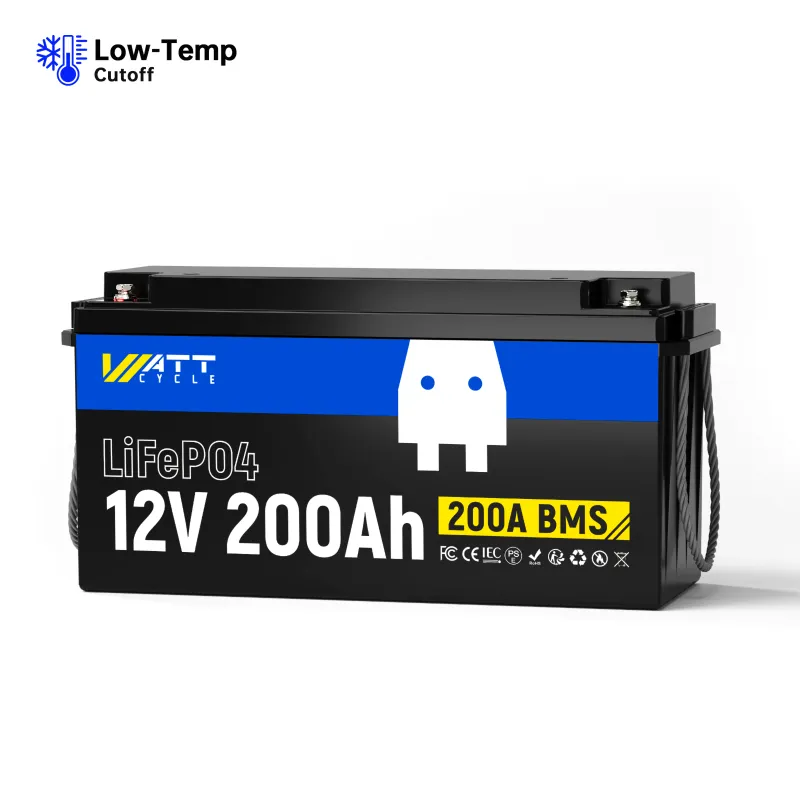
Switching to lithium rv batteries drops 60 to 100 pounds from a typical RV house bank. A wattcycle 12V 100Ah lithium cell weighs around 24 pounds versus 63 pounds for an equivalent lead acid Group 27.
That weight savings translates to:
- Better fuel economy on long hauls
- Easier installation and service access
- Room for additional gear or water capacity
- Lower tongue weight on travel trailers
Golf cart owners see the same benefit. A 48 volt golf cart batteries conversion kit using lithium cuts total battery weight from 320 pounds to under 160 pounds, improving hill-climbing torque and extending range per charge.
Charging Speed and Efficiency Compared
Lithium accepts charge current up to 1C (100 amps for a 100Ah bank), while flooded lead acid peaks around 0.2C to avoid gassing and heat damage. A depleted lithium bank recharges in 1 to 2 hours from a capable alternator or shore charger; lead acid needs 6 to 8 hours to reach full capacity.
| Feature | Lithium (LiFePO4) | Lead Acid |
|---|---|---|
| Charge acceptance | Up to 1C (100A for 100Ah) | 0.2C max (20A for 100Ah) |
| 50% to 100% recharge time | 1 to 2 hours | 6 to 8 hours |
| Usable depth of discharge | 80 to 100% | 50% (80% damages lifespan) |
| Round-trip efficiency | 95 to 98% | 80 to 85% |
You'll need a lifepo4 battery charger that supports the correct voltage profile (14.4V to 14.6V for 12V lithium, 28.8V to 29.2V for 24v battery packs). Most modern converters and inverter-chargers offer lithium presets.
Check the latest price on WattCycle's lithium chargers to pair with your new bank.
Real-World Performance in Extreme Temperatures
Lithium maintains 95 percent capacity down to 32°F and continues discharging to 0°F, though charging below freezing requires a battery management system with low-temperature cutoff. Lead acid loses 50 percent of its capacity at 0°F and risks freezing if discharged below 50 percent in cold weather.
For hot climates, lithium tolerates 140°F operating temperatures without damage. Lead acid suffers accelerated water loss and grid corrosion above 100°F, cutting lifespan by 30 to 50 percent in desert or summer storage conditions.
If you're considering a best 48v golf cart lithium battery conversion kit for year-round use, lithium handles seasonal swings far better than any flooded or AGM option.
Installation and Monitoring Upgrades
Modern lithium packs like the litime 48v 100ah golf cart bluetooth lithium battery include built-in Bluetooth monitoring, so you track state of charge, cell voltages, and charge/discharge current from your phone. Lead acid requires a separate battery monitor (around $200) to get the same data.
Most wattcycle batteries ship with integrated battery management systems that balance cells, protect against over-discharge, and shut down charging below 32°F. You skip the manual equalization, water top-offs, and corrosion cleanup that lead acid demands every few months.
For lithium golf cart batteries 48v conversion kit projects, expect to:
- Replace the existing charger or add a lithium-compatible profile
- Install a low-voltage cutoff if the cart's controller lacks one
- Remove 60 to 70 percent of the old battery weight
- Gain 20 to 30 percent more runtime per charge
Grab the code for 5% off your conversion kit order at WattCycle.
Who Should Stick with Lead Acid (and Who Should Switch)
Lead acid still makes sense for:
- Seasonal-use vehicles stored on a maintainer all winter
- Tight budgets with no access to financing
- Applications where weight and charge speed don't matter
Switch to lithium if you:
- Boondock more than a few days per month
- Haul your RV or trailer frequently (weight matters)
- Run air conditioning or high-draw appliances off-grid
- Want to eliminate maintenance and extend replacement intervals
Our testing confirms that anyone putting 50+ cycles per year on their battery bank recovers the lithium premium within four to five years, then enjoys another five to ten years of free runtime versus buying replacement lead acid packs.
Final Recommendation
We recommend lithium for any RV or golf cart that sees regular use. The batterie 12v lithium chemistry delivers measurably longer lifespan, faster recharge, and zero maintenance compared to flooded or AGM lead acid.
If you're upgrading a golf cart, the Litime Golf Cart Lithium Battery 48V 30Ah Battery Kit offers plug-and-play installation with real-time monitoring. For larger RV house banks, stack multiple wattcycle 12v 628ah ultra wholesale modules in series or parallel to match your inverter voltage and capacity needs.
Lead acid still works for light-duty or budget-constrained setups, but the total cost of ownership tips heavily toward lithium once you factor in replacement cycles and lost capacity over time.
Frequently asked questions
How long does the litime 48v 100ah golf cart bluetooth lithium battery last compared to lead acid?
The litime 48v 100ah model lasts 10 to 15 years with 3,000+ deep cycles, while lead acid lasts 3 to 5 years with 500 to 1,000 cycles. Lithium delivers three times the usable lifespan in real-world RV and golf cart use.
Can I use my existing lead acid charger with a lithium RV battery?
Most lead acid chargers will damage lithium cells or trigger the battery management system to shut down. You need a charger with a lithium (LiFePO4) profile that holds 14.4V to 14.6V for 12V banks and includes low-temperature cutoff.
Is the weight savings from switching to lithium worth the cost?
Yes, if you tow or drive your RV regularly. Lithium cuts battery weight by 50 to 60 percent, improving fuel economy and handling. The weight reduction also frees up cargo capacity and lowers tongue weight on travel trailers.
Do lithium golf cart batteries work in freezing weather?
Lithium batteries discharge down to 0°F but cannot charge below 32°F without damaging the cells. Quality packs include a battery management system that blocks charging in freezing temperatures to protect the cells.
What is the cost per cycle for lithium versus lead acid in an RV?
Lithium averages $0.08 to $0.15 per cycle, while lead acid runs $0.30 to $0.50 per cycle when you include replacement costs. Lithium pays for itself in four to five years of regular use.
Can I mix lithium and lead acid batteries in the same RV bank?
No, never mix chemistries in the same bank. Lithium and lead acid have incompatible charge profiles and internal resistance, which causes uneven charging, shortened lifespan, and potential safety hazards.