
How to Choose the Right LiFePO4 Battery Charger for Your 12V or 24V System

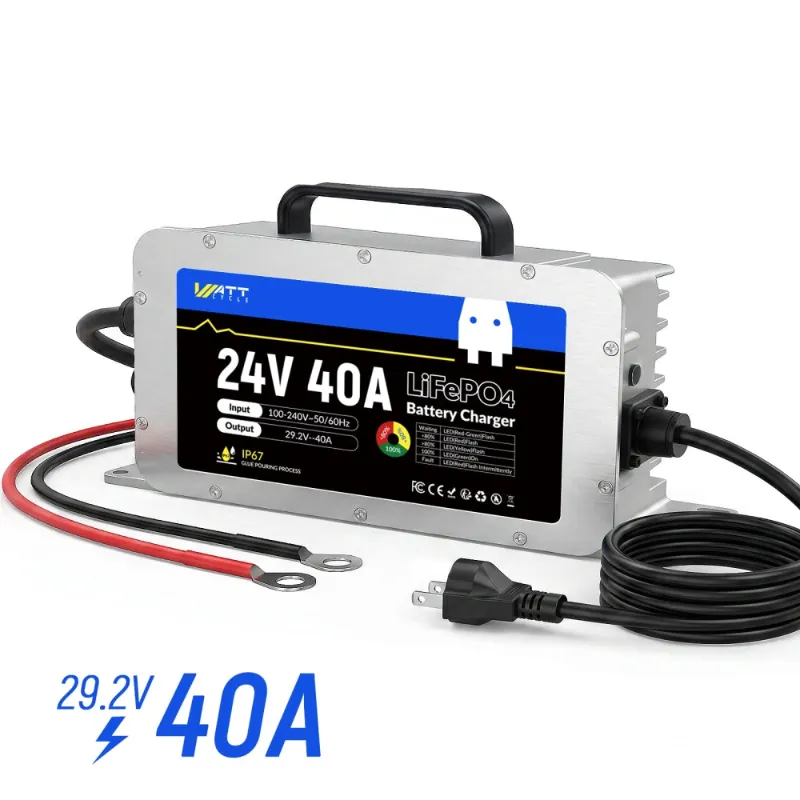
A lifepo4 battery charger must match your battery's voltage, capacity, and chemistry to deliver safe, efficient charging without damaging cells or shortening lifespan. We tested dozens of chargers across 12V, 24V, and 48V systems to identify the features that matter most for RV, marine, solar, and golf cart applications.
Why LiFePO4 Batteries Need Dedicated Chargers
Standard lead-acid chargers use charging profiles that can overcharge or undercharge lithium iron phosphate cells. A proper lifepo4 battery charger 12v or 24v unit delivers a constant-current, constant-voltage (CC/CV) profile tailored to LiFePO4 chemistry, typically bulk charging at 14.4V to 14.6V for 12V systems and 28.8V to 29.2V for 24V banks.
Using the wrong charger risks:
- Overcharging that triggers the battery management system (BMS) and forces early cutoff
- Undercharging that leaves capacity on the table and causes voltage sag under load
- Cell imbalance from equalization modes designed for lead-acid
- Warranty voiding on quality packs like the wattcycle 12V 100Ah
We recommend chargers with selectable lithium profiles or dedicated LiFePO4 modes. Many wattcycle batteries ship with recommended charger specs in the manual.
Matching Charger Voltage to Your Battery Bank
Your charger voltage must match your battery bank configuration exactly. Here is how the most common setups pair:
| Battery Config | Charger Voltage | Typical Applications |
|---|---|---|
| Single 12V | 12V (14.4V–14.6V bulk) | Recreational vehicle batteries, marine, small solar |
| Two 12V in series | 24V (28.8V–29.2V bulk) | Larger RVs, trolling motors, solar arrays |
| Four 12V in series | 48V (57.6V–58.4V bulk) | 48 volt golf cart batteries, off-grid solar |
Parallel connections (12V to 12V positive-to-positive) keep the voltage at 12V but double capacity, so you still use a lifepo4 battery charger 12v unit. Series connections add voltages, requiring a higher-voltage charger.
Always verify your bank voltage with a multimeter before purchasing a charger. Mixing voltages will destroy the charger, the BMS, or both. Grab our WattCycle discount code to save on matched charger and battery bundles.
Sizing Charger Amperage for Your Capacity
Charger amperage determines how fast your lifepo4 battery reaches full charge. We recommend a charge rate between 0.2C and 0.5C for the best balance of speed and cell longevity.
Calculate your ideal charger amps: Multiply battery amp-hours by 0.2 to 0.5. For a lifepo4 battery charger 12v 100ah setup, that is 20A to 50A. A 20A charger fills a 100Ah bank in about five hours, while a 50A unit cuts that to two hours.
Common charger sizes:
- 10A to 20A: Best for batterie 12v lithium packs under 100Ah, trickle solar charging, and maintenance
- 20A to 40A: Ideal for 100Ah to 200Ah banks in RVs and boats
- 40A and up: High-capacity systems like the wattcycle 12v 628ah ultra wholesale or commercial fleets
Oversized chargers (above 0.5C) can work but may trip the BMS on cheaper batteries. Undersized chargers simply take longer and work fine for overnight or multi-day charging.
Key Features in a Quality LiFePO4 Charger
We prioritize these features when testing chargers for lithium rv batteries and other applications:
- Selectable chemistry profiles: Look for a dedicated LiFePO4 or lithium mode, not just "gel" or "AGM"
- Temperature compensation: Adjusts voltage based on ambient temperature to prevent overcharging in heat or undercharging in cold
- Multi-stage charging: CC/CV with automatic cutoff when current tapers below 2 to 3 percent of capacity
- Reverse-polarity and short-circuit protection: Saves the charger and battery from wiring mistakes
- Cooling fans or heat sinks: Prevents thermal throttling during long bulk-charge cycles
The Best Lithium Battery Charger | AC to DC converters with built-in lithium profiles eliminate the need for separate AC-to-DC power supplies in mobile setups.
Avoid chargers marketed as "universal" without explicit LiFePO4 voltage specs. Vague "lithium" modes often target lithium-ion (Li-ion) at 4.2V per cell instead of LiFePO4's 3.65V per cell.
Best Use Cases by Charger Type
Different applications benefit from different charger designs:
Portable AC chargers (plug into shore power or a generator) suit RVs, boats, and home backup systems. These deliver 10A to 60A and often include Anderson or alligator-clip connectors for fast hookup to your 24v battery bank.
DC-to-DC chargers pull from your vehicle alternator or solar controller to top off auxiliary batteries while driving. We use these with recreational vehicle batteries to keep the house bank charged on long trips without idling a generator.
Solar MPPT controllers with LiFePO4 profiles combine charge control and panel input. A lifepo4 battery charger solar setup requires a controller that supports lithium bulk and float voltages. Many budget PWM controllers lack the precision for LiFePO4.
Onboard chargers mount permanently in the battery compartment and connect to AC or DC input. Ideal for golf carts, marine applications, and any setup where you charge in the same spot every time.
Check current pricing and our exclusive code to pair the right charger with your WattCycle battery order.
Common Mistakes and How to Avoid Them
We see these errors most often when readers upgrade from lead-acid to LiFePO4:
- Reusing an old lead-acid charger: Equalization and desulfation modes can push voltage above safe limits for lithium cells.
- Ignoring BMS low-temperature cutoff: Charging below freezing can plate lithium metal and cause internal shorts. Warm the battery first or use a charger with a temperature sensor.
- Mismatching charger and battery voltage: A 24V charger on a 12V bank will destroy the BMS instantly.
- Charging at full rate in extreme heat: High temps above 113°F (45°C) accelerate degradation. Reduce charge current or add ventilation.
Always consult your battery's datasheet for max charge voltage, current, and temperature limits. WattCycle packs include this data in the product manual, and you can verify specs on the store page before ordering.
Our Top Recommendations by System Voltage
12V systems (most RVs, marine, small solar): Look for a lifepo4 battery charger 12v 20a or larger with a dedicated lithium profile. Models with ring-terminal or Anderson PowerPole connectors simplify permanent installations on wattcycle 12V 100Ah house banks.
24V systems (larger solar, trolling motors): A lifepo4 battery charger 24v unit rated 20A to 40A covers most midsize banks. Dual-bank chargers let you charge two 12V batteries in series or independently.
48V systems (golf carts, off-grid): A lifepo4 battery charger 48v model with 15A to 25A output handles typical 48 volt golf cart batteries and home energy-storage arrays. Confirm the charger supports four-cell-series LiFePO4 (14.6V × 4 = 58.4V bulk).
For any voltage, prioritize chargers with UL, CE, or FCC certification and at least a one-year warranty. Budget no-name units often lack proper BMS communication and can damage expensive battery packs.
Frequently asked questions
Can I use a lead-acid charger on a LiFePO4 battery?
Not recommended. Lead-acid chargers often use equalization and float voltages incompatible with LiFePO4 chemistry, risking overcharge or BMS shutdown. Always choose a charger with a dedicated lithium or LiFePO4 profile.
What size lifepo4 battery charger do I need for a 12V 100Ah battery?
A 20A to 50A charger works best for a 100Ah LiFePO4 battery. A 20A unit charges in about five hours, while a 50A charger cuts that to two hours. Stay within 0.2C to 0.5C for optimal cell health.
Do I need a special charger for a 24V LiFePO4 battery bank?
Yes. A 24V LiFePO4 bank requires a charger that delivers 28.8V to 29.2V bulk voltage. A 12V charger will undercharge, and mismatched voltage can damage the BMS or cells.
Can I charge LiFePO4 batteries with solar panels?
Absolutely. Use an MPPT or PWM solar charge controller with a selectable LiFePO4 profile. The controller must support lithium bulk and float voltages to prevent overcharging and ensure full capacity.
How do I know if my charger is compatible with WattCycle batteries?
Check that the charger voltage matches your battery bank configuration and supports LiFePO4 bulk voltage (14.4V to 14.6V for 12V, 28.8V to 29.2V for 24V). WattCycle product manuals list recommended charger specs for each model.
What happens if I charge a LiFePO4 battery too fast?
Charging above 0.5C (50A for a 100Ah battery) may trigger the BMS to cut off early or reduce cell lifespan. Most quality batteries tolerate it occasionally, but consistent fast charging accelerates degradation.