
5 Reasons Digital Night Vision Beats Traditional Green Optics

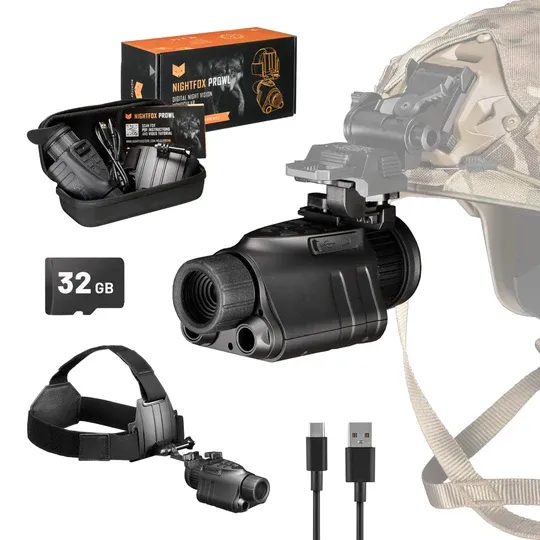
If you have been shopping for digital night vision goggles, the short answer is yes: for most hunters, airsofters, and property owners, digital units now beat traditional green tube optics on price, versatility, and everyday usability. Tube-based intensifiers still win in some pro contexts, but the gap has narrowed enormously, and for typical budgets digital is the smarter buy. Here are the five reasons we reach for digital first.
1. You Get Real Night Vision Without the Tube Tax
Traditional green optics rely on an image intensifier tube, and that tube is the single most expensive component in the device. A decent Gen 2 or Gen 3 tube optic can cost several times what a capable digital unit does. Digital night vision swaps the tube for a CMOS sensor, the same basic tech family as the camera in your phone, which slashes the price without making the device useless after dark.
- Digital units deliver usable, clear images in near-total darkness when paired with an IR illuminator
- Entry-level digital options like the nightvision range cost a fraction of a comparable tube optic
- The money you save can go toward a better mount, a binoculares upgrade, or batteries
If you want to see exactly what a digital unit costs today, check the latest price on our coupon page before you buy anywhere else.
2. Digital Works in Daylight and Records Footage
This is the single biggest practical advantage. Point a traditional tube optic at daylight and you risk damaging the intensifier tube permanently. Digital sensors have no such weakness, so one device handles dusk scouting, night hunting, and midday trail checks.
Most modern digital units also record. Built-in video capture means you can document wildlife activity, review your shot placement, or grab proof for an insurance claim. Tube optics almost never include this without expensive add-ons.
- No risk of bright-light damage, ever
- Built-in photo and video recording on most models
- Instant playback on the device or transfer to a phone or laptop
For a deeper technical comparison of the two technologies, this guide on the difference between digital night vision goggles and tube optics is worth a read.
3. Infrared Illuminators Make Darkness Disappear
Digital night vision pairs beautifully with infrared light. Every serious digital unit includes or supports an IR illuminator, and because the sensor is tuned to the IR spectrum, the beam acts like an invisible flashlight. With a dedicated infrared torch added to your kit, you can extend detection range well past what the built-in illuminator manages.
Green tube optics also use IR, but the experience differs in two important ways:
| Feature | Digital + IR | Traditional tube + IR |
|---|---|---|
| Bright light exposure | Harmless | Can burn the tube |
| IR output visible to others | Very faint | Similar |
| Adjustment to range | Often stepless | Fixed or stepped |
The practical takeaway: with digital, you control your own light. You are not depending on ambient starlight or moonlight the way bare tube optics often do.
4. Digital Night Vision Goggles Are Simpler to Live With
Caring for an intensifier tube is a job in itself. Tubes hate impact, bright light, and moisture, and replacement costs can approach the price of a new unit. Digital devices shrug off conditions that would end a tube optic's life, which matters if your gear lives in a rucksack or gets mounted on a helmet during airsoft games.
- No tube means no tube maintenance and no tube replacement bills
- Digital units tolerate rain, bumps, and rapid temperature swings far better
- Battery management is straightforward: standard rechargeables or USB charging, depending on the model
If you want a rugged setup for head-mounted use, look at purpose-built units in our digital night vision goggles selection, or a monocular night vision format if you prefer to keep one eye free. For helmet rigs, a dedicated thermal monocular for helmet is another strong digital option that pairs detection with heat signature.
5. Features That Tube Optics Simply Cannot Match
Because digital units process the image rather than just amplifying light, manufacturers can layer in features that intensifier tubes physically cannot offer:
- Digital zoom for closer views without swapping lenses
- Colour modes and contrast settings tuned per environment
- Wi-Fi streaming to a phone for hands-free viewing on some models
- Adjustable IR power to balance range against battery life
- Recording and geotagging for scouting records
A quality binoculars with night vision model gives you both eyes' comfort with all of these features built in, something a tube-based binocular unit rarely delivers at a comparable price. If you are browsing more broadly, night vision pro units in the current line-up show how far the feature set has come.
Where Traditional Green Optics Still Wins
We are not saying tube optics are obsolete. If you need maximum detection range, true helmet-mounted aviation-style performance, or military-grade tube specs, intensifier technology still leads, and it explains the eye-watering night vision goggles military grade price you see on Gen 3 hardware. Pro security and professional hunting guides may still justify the spend. Browse specialist retailers such as US Night Vision to see where the high end sits.
But for everyone else, digital covers the real-world jobs at a fraction of the cost. If you want the newest digital units at the best price we have verified, grab the code for 5% off sitewide before you check out.
Quick Buyer Checklist
Before you order any digital unit, confirm:
- Detection range claim versus your realistic use (garden, field edge, woodland)
- IR illuminator included, or budget for a separate torch
- Recording capability if footage matters to you
- Mount compatibility if you plan helmet or rifle use
- Battery type and runtime for your typical session length
Digital night vision has stopped being the budget compromise and started being the sensible default. Match the format to your use, add a good IR source, and you will have gear that outperforms green optics on every practical measure that matters to most buyers.
Frequently asked questions
Are digital night vision goggles better than traditional green tube optics?
For most users, yes. Digital units cost less, work in daylight, record video, and need far less maintenance. Traditional tube optics still win on maximum range and pro-level performance, but the practical gap for typical hunting and airsoft use has closed significantly.
Can digital night vision be used during the day?
Yes. Digital sensors have no fragile intensifier tube, so bright daylight cannot damage them. This is one of the biggest advantages over tube-based optics, which can be permanently harmed by daylight exposure.
How far can a digital night vision monocular see?
It depends on the model and the IR illuminator used. Most units handle property perimeter and field-edge work well, and adding a dedicated infrared torch extends detection further than a built-in illuminator alone. Check the manufacturer's stated range against your realistic use case.
Do digital night vision devices record video?
Most do, and it is one of the key features digital units offer that tube optics rarely match at a similar price. If recording matters to you, confirm it is built in before you buy rather than assuming.
What maintenance does digital night vision gear need?
Very little. Without a fragile intensifier tube there is no tube maintenance or replacement cost. Keep lenses clean, manage your batteries, and avoid dunking the unit unless it is rated waterproof, and a digital device will handle conditions that would end a tube optic's life.
Are cheap digital night vision goggles worth buying?
They are the cheaper route by a wide margin, because the expensive image intensifier tube is replaced by a CMOS sensor. That price difference is why many buyers now start digital, especially when our Nightfox discount code can trim the cost further.