
The Complete Beginner's Guide to Buying Your First Night Vision Device

# The Complete Beginner's Guide to Buying Your First Night Vision Device
Buying your first night vision device can feel overwhelming. Generation numbers, magnification levels, IR illuminators, thermal versus digital — the jargon comes at you fast, and prices range from under £100 to several thousand. The good news? You don't need to understand everything to make a smart first purchase. You just need to understand the basics, know what you'll actually use the device for, and avoid the common mistakes beginners make.
This guide walks you through everything step by step, whether you're shopping for wildlife watching, airsoft, hunting, security, or just the thrill of seeing clearly after dark. And if you want to grab a bargain while you're at it, Nightfox currently offers 5% OFF sitewide — check the latest code on the Nightfox discount code page before you buy.
---
What Is Night Vision, Exactly?
Night vision devices amplify tiny amounts of ambient light — starlight, moonlight, even the glow from distant towns — and turn it into a visible image. That's why traditional night vision images look green (or white in modern units): the device is displaying amplified light, not creating it.
There are two broad technologies you'll encounter:
- Image intensification (analogue night vision) — amplifies existing light through a photocathode and tube. This is "true" night vision.
- Digital night vision — uses a highly sensitive CMOS sensor, like a camera that excels in darkness. Cheaper, more versatile, and often records video.
- Thermal imaging — detects heat instead of light. It's a different category entirely (more on that below).
If you're just starting out, a nightvision device from a reputable brand will handle 90% of what beginners need.
---
Step 1: Decide What You'll Actually Use It For
This is the single most important question, and most beginners skip it. Your use case determines everything else:
- Wildlife watching and stargazing: A handheld night-vision monocular is ideal — light, simple, and comfortable for long viewing sessions.
- Hunting and scouting: Many hunters prefer the flexibility of a monocular night vision unit paired with a good infrared torch for scanning dense cover.
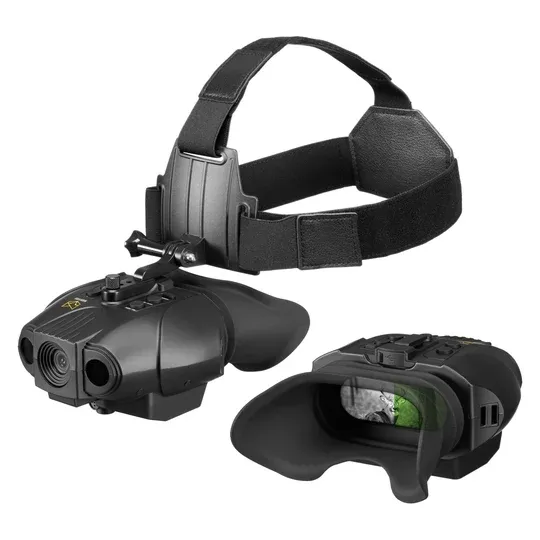
- Airsoft and tactical use: Look at infrared goggles or a night vision monocular with head mount so you keep both hands free.
- Property security and pest control: Digital night vision goggles or binocular-style units with recording are great for identifying what's moving around at 2 a.m.
- Long-range observation: Binoculars with night vision offer better depth perception for static observation.
Not sure which format suits you? Our own night vision pro range guide covers the differences in more depth.
---
Step 2: Monocular, Binocular, or Goggles?
Night Vision Monocular — the beginner favourite
A monocular is a single-tube device you hold to one eye. For most first-time buyers, it's the best choice, and it's why the meaning prowl style of compact monocular has become so popular.
Why start with a monocular night vision device:
- Cheaper — one tube means one tube's worth of optics and sensor.
- Lighter — often under 400g, easy to carry all night.
- Versatile — handheld, tripod-mountable, or head-mountable on many models.
- Preserves natural night adaptation in your unaided eye.
This is why nearly every "best monocular night vision" round-up — including this one from HuntingMark on the best night vision monoculars for scouting after dark — recommends a monocular as the smart entry point. Even military users favour the format: the classic PVS-14 pattern monocular night vision device military units have used for decades is still the benchmark, and you can see modern equivalents at retailers like Custom Night Vision's monocular range (PVS-14, Tanto, RVM-14, MH-14).
If you want hands-free use, choose a model that supports a head mount — search for "best night vision monocular with head mount" reviews and check that the mount is included or available separately.
Night Vision Binoculars
Binoculares and dedicated binoculars with night vision use two tubes or a single tube split to both eyepieces. They're more comfortable for extended glassing sessions and give better depth perception, but they cost more and weigh more. Great second purchase; rarely the best first one.
Night Vision Goggles
Goggles (like digital night vision goggles or headset-style infrared goggles) are worn rather than held. Ideal for airsoft, navigation on foot, or any activity where you need both hands. Many beginner goggles are digital, which keeps the price accessible.
Thermal Monoculars — a different animal
A thermal vision monocular detects heat signatures rather than light. It sees through total darkness, light fog, and foliage, which makes it superb for detecting animals — but it shows shapes and heat, not detail, so many hunters pair thermal detection with night vision for identification. If your budget allows only one device, start with night vision; add thermal later. For hands-free thermal work there are also dedicated options like a thermal monocular for helmet mounting.
---
Step 3: Understand the Key Specs
You don't need a physics degree — just know what these five terms mean:
1. Detection vs identification range. Marketing lists often quote detection range (spotting *something* is there). Identification range — actually telling a fox from a cat — is much shorter. Judge devices on realistic identification distance.
2. IR illuminator. Every night vision device needs some light. Built-in IR illuminators throw an invisible beam that extends your range in pitch-black conditions. A separate high-power infrared torch is one of the best value upgrades you can make — it can double your effective range.
3. Digital vs tube generation. Gen 1 analogue tubes are largely superseded by digital sensors at entry level. Digital units often record video, survive daylight, and cost less — perfect for beginners.
4. Magnification. More isn't better. High magnification narrows your field of view and makes handheld viewing shaky. 1x to 3x is the sweet spot for most users.
5. Battery life and recording. If you'll be out for hours, check runtime. Built-in recording is great for wildlife sightings and security evidence — digital night vision goggles usually include it.
For spec comparisons across popular models, the staff picks at NightVision4Less: Best Night Vision Monoculars – Top 5 are a useful reference point.
---
Step 4: Set a Realistic Budget
Here's the honest breakdown for first-time buyers:
- Under £150: Entry digital monoculars. Good for garden wildlife, camping, and casual use. Manage expectations on range.
- £150–£400: The sweet spot. Solid monocular night vision units with decent IR illuminators, recording, and head-mount compatibility.
- £400–£1,000: Higher-resolution sensors, better low-light performance, and rugged builds — where serious hobbyists land.
- £1,000+: Tube-based analogue units, helmet-mounted setups, and thermal. Brilliant, but overkill for a first device.
Remember: whatever you spend, the Nightfox discount code page currently lists 5% OFF sitewide, which on a £300 device covers your IR torch upgrade.
---
Step 5: Avoid These Beginner Mistakes
- Buying maximum magnification. You'll end up with a shaky, narrow image. Start at 1x–3x.
- Ignoring the IR illuminator. Without infrared light, even great devices struggle in total darkness. Budget for a dedicated infrared torch.
- Confusing thermal with night vision. Thermal finds heat; night vision shows detail. They complement each other but aren't interchangeable.
- Buying goggles first. Handheld night-vision monocular units teach you the fundamentals cheaper. Move to goggles or a head-mounted thermal monocular for helmet setup once you know what you need.
- Forgetting daylight safety. Analogue tube devices can be damaged by bright light. Digital units are daylight-safe — another reason they suit beginners.
---
Our Quick Recommendations
- Best first device: A compact monocular night vision unit — the best balance of price, weight, and capability.
- Best for airsoft/tactical: Digital night vision goggles with a head strap.
- Best for wildlife recording: A digital night-vision monocular with built-in video, plus an infrared torch.
- Best for long observation: Binoculars with night vision on a tripod.
- Best upgrade later: A thermal vision monocular for detection, used alongside your night vision for ID.
Whichever route you take, start with the Nightfox nightvision range and apply the current 5% sitewide discount from the coupon page.
---
Final Thoughts
Your first night vision device doesn't need to be your last — or your most expensive. Start with a quality monocular, add a good IR torch, learn how your device behaves in different conditions, and upgrade based on real experience rather than spec sheets. Six months from now, you'll know exactly whether you want more range, hands-free operation, or a thermal sidekick — and you'll have had dozens of nights of enjoyment getting there.
Ready to buy? Check today's 5% OFF sitewide offer on the Nightfox discount code page and get out after dark.
Frequently asked questions
What is the best night vision device for a beginner?
A monocular is usually the best first purchase. A monocular night vision device is lighter, cheaper, and more versatile than binoculars or goggles, and it keeps one eye adapted to the dark. Look for a model with a built-in IR illuminator and, if you want hands-free use, head-mount compatibility.
Is thermal better than night vision?
Night vision amplifies existing light to produce a detailed image, while a thermal vision monocular detects heat signatures and works in total darkness, fog, and light foliage. Thermal is better for detection; night vision is better for identification. Many users eventually own both.
Can I use night vision during the day?
Not necessarily. Analogue devices can be damaged by bright daylight, but digital night vision goggles and digital monoculars are daylight-safe and often include video recording — making them a practical choice for first-time buyers.
How far can a cheap night vision monocular see?
Most devices reach 100–300 metres for detection in good conditions, but identification range (telling what you're looking at) is shorter. A separate infrared torch is one of the cheapest ways to extend your effective range in total darkness.
Is there a Nightfox discount available?
Yes — Nightfox currently offers 5% OFF sitewide. Get the latest code from the Nightfox discount code page and apply it at checkout before you buy.