

# 5 Signs Your Pool Cue Needs Repair (and How to Fix It)
If you play pool regularly, your cue takes a beating. From scuffed tips to warped shafts, even the best sticks wear down over time — and knowing how to fix a pool cue yourself can save you money, protect your game, and keep your equipment in top shape for years.
The good news? Most common cue problems are easy to diagnose and repair at home. In this guide, we'll walk through the five most common signs your cue needs attention, how to fix each one, and when it makes more sense to upgrade.
---
Sign #1: The Tip Is Flat, Glazed, or Falling Off
The cue tip is the hardest-working part of your cue. After months of striking cue balls, tips compress, harden, and lose their dome shape. A glazed or flat tip causes miscues, inconsistent spin, and poor draw control — one of the most frustrating issues in billiards 8 ball play.
How to fix it:
- Scuff the tip. Use a tip scuffer or rasp to rough up a glazed surface and restore texture.
- Re-shape the tip. Rotate a tip shaper around the edge to restore a dime-radius dome.
- Replace it if needed. If the tip is under 2mm thick or peeling off, remove it with a razor, clean the ferrule, glue on a fresh tip, clamp it for 24 hours, then shape it.
A full Cue Repair Kit has everything you need to fix a pool cue tip — glue, clamps, shapers, and replacement tips — for far less than a trip to a professional repair shop.
---
Sign #2: The Ferrule Is Cracked or Dirty
The ferrule — the white ring just below your tip — absorbs impact and protects the shaft. Cracks here are serious: continue playing on a cracked ferrule and the damage can spread into the shaft itself.
How to fix it:
- Minor cracks: Fill with a small amount of cyanoacrylate (CA) glue and let it cure before sanding smooth.
- Major cracks: The ferrule should be replaced. This is one repair worth doing with a proper kit or, if you're not confident, a local cue maker.
- Always clean it: A dirty ferrule spreads chalk onto your shaft. Wipe it down after every session.
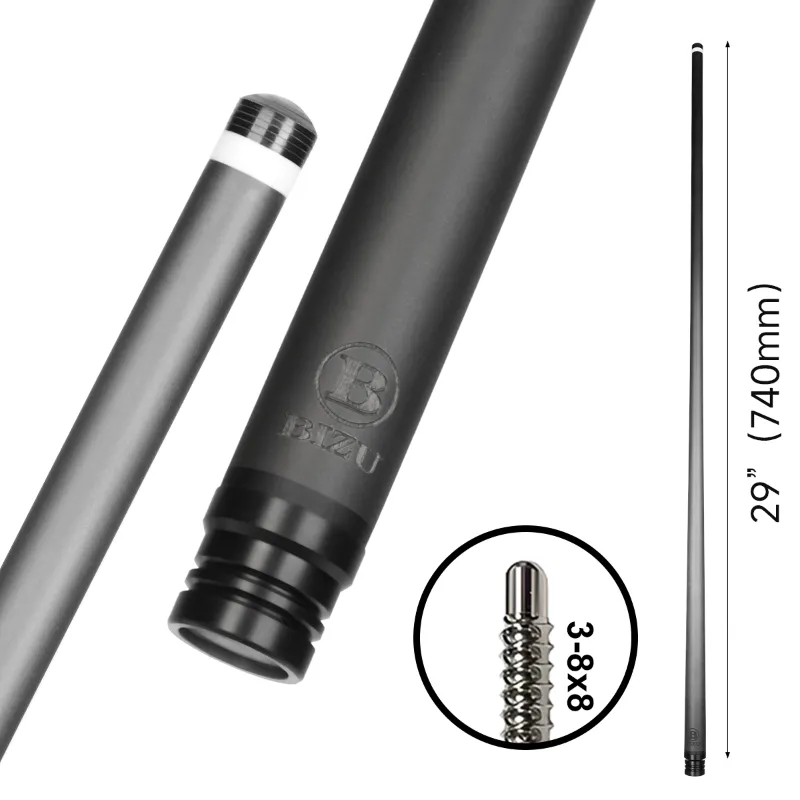
If your ferrule is damaged beyond repair, it may be time to consider a modern upgrade — a carbon fiber cue uses advanced composite ferrules and low-deflection technology that resists wear far better than traditional maple setups.
---
Sign #3: The Joint Is Loose or Wobbly
A two-piece cue that wobbles at the joint will wreck your stroke accuracy. You'll feel it as a slight click or movement on every shot.
How to fix it:
- Clean the threads. Chalk dust and debris build up in joint threads. Use a soft brush or compressed air to clean both halves.
- Apply joint wax or wax paper. For pin-and-collar joints, a light coat of joint wax tightens the fit and protects the threads.
- Check the pin. A bent or worn pin should be replaced by a professional.
Never over-tighten your cue — it strips threads and cracks collars. Snug is enough.
---
Sign #4: The Shaft Is Warped
Roll your cue on a flat table and watch the tip. If it bounces or has a visible gap when it points up and down, you've got a warp. A badly warped cue makes accurate shots nearly impossible.
How to fix it:
- Slight warps (up to 1/8"): Some players have success with a shaft straightener tool or careful controlled heat-and-pressure treatment.
- Severe warps: Honestly? Replace it. A warped maple shaft rarely stays straight, and the repair cost often approaches the price of a new stick.
This is where upgrading makes sense. If you're replacing a shaft anyway, a carbon fiber cue is warp-proof, weather-resistant, and plays smoother than wood — it's the long-term fix for the warping problem.
If you're newer to the game and don't want to over-invest yet, a quality beginner cue stick or a solid good beginner pool cue gets you dependable, straight equipment without a big outlay — and both play far better than any house cue.
---
Sign #5: The Butt, Wrap, or Bumper Is Damaged
Cracked butt caps, peeling Irish linen wraps, and missing bumpers seem cosmetic — but they're not. A missing bumper lets moisture and debris into the butt, and a damaged wrap changes how you grip the cue.
How to fix it:
- Missing bumper: Glue in a replacement rubber bumper — included in most repair kits.
- Peeling wrap: Remove the old wrap, clean the handle, and rewrap with fresh linen, or sand and finish bare for a wrapless feel.
- Loose butt cap: Re-glue with epoxy and clamp overnight.
If the damage is to the forearm or butt sleeve inlays, a repair shop is your best bet. But for break cues — which take the most violent impact of any cue you own — inspect regularly and replace when worn. A dedicated break cuebreak cue protects your playing cue from that constant pounding, extending the life of both.
---
Your Basic Cue Repair Toolkit
To fix a pool cue at home, you'll want:
- Replacement cue tips + tip glue
- Tip clamp
- Tip shaper and scuffer
- Razor blade
- Soft cloth and shaft cleaner
- Joint wax
- Replacement bumpers
One well-stocked Cue Repair Kit covers all of this and pays for itself after a single tip replacement.
When to Repair vs. When to Replace
| Problem | Repair or Replace? |
|---|---|
| Glazed/flat tip | Repair (scuff/shape) |
| Thin or missing tip | Repair (replace tip) |
| Dirty ferrule | Repair (clean) |
| Cracked ferrule | Replace ferrule or upgrade shaft |
| Loose joint | Repair (clean/wax) |
| Bent pin | Professional repair |
| Slight warp | Try straightening |
| Severe warp | Replace the cue |
Practice With Confidence
Equipment maintenance matters most when you're actually playing. Grab a quality billiards 8 ball set, keep your cue in shape, and you'll notice the difference immediately — cleaner strikes, better spin, and fewer miscues.
Before you buy: check our Bizu Billiards discount page for the current offer — 6% OFF all orders — and apply the code at checkout on any cue, repair kit, or accessory in this guide.
---
Final Thoughts
Learning to fix a pool cue is one of the easiest ways to level up as a player. A well-maintained tip, tight joint, and straight shaft will do more for your game than any accessory — and most fixes take less than 30 minutes with the right kit. Inspect your cue after every few sessions, address problems early, and when it's time to upgrade, choose quality equipment that lasts.
 Shopping at BIZU BILLIARDS? See today's verified BIZU BILLIARDS discount code
Frequently asked questions
How do I fix a pool cue tip at home?
The most common fix is replacing a worn or flat cue tip. Remove the old tip, clean the ferrule, glue on a new tip, clamp it for 24 hours, then shape it into a dome. A quality cue repair kit includes everything you need.
Can you fix a warped pool cue?
Light warps (up to about 1/8 inch) can sometimes be corrected with a shaft straightener or careful heat-and-pressure treatment. Severe warps are rarely worth fixing — replacing the cue is usually cheaper and more reliable.
How often should I replace my pool cue tip?
Replace the tip when it's worn down to about 2mm thick, cracking, peeling from the ferrule, or so compressed and glazed that scuffing no longer restores grip on the cue ball.
Why is my two-piece pool cue wobbling at the joint?
Yes — a loose joint is usually caused by dirt or debris in the threads or a dry pin. Clean both halves, apply joint wax, and tighten snugly (never forcefully). If the pin itself is bent, have it professionally replaced.
What tip hardness should I use?
For a playing cue, medium-soft to medium tips are the most popular balance of control and durability. Break cues use harder tips to withstand powerful impact.