

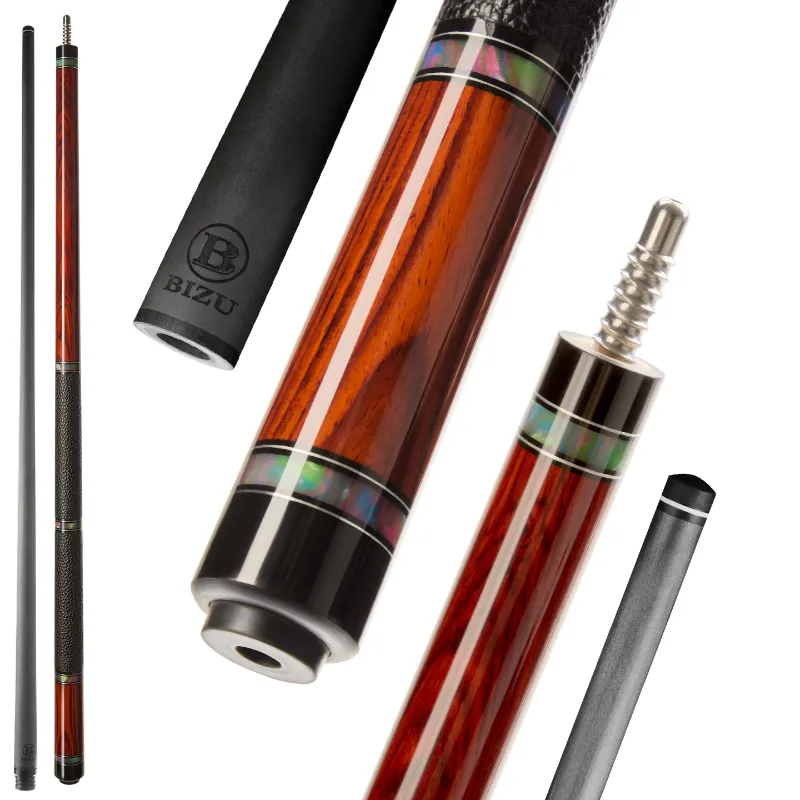
A carbon fiber cue is rapidly replacing traditional wood in pool halls and tournaments because it eliminates warping, delivers identical performance in any humidity, and lasts decades without maintenance. While wood cues demand constant care and still bend over time, carbon fiber stays perfectly straight and performs the same whether you play in Arizona or Florida. We've tested both materials extensively, and the performance gap is real.
What Makes Carbon Fiber Cue Construction Different
Carbon fiber cue sticks are built from woven carbon strands set in epoxy resin, creating a shaft that's both lighter and stiffer than maple or ash. The manufacturing process layers thousands of carbon fibers in precise orientations, then cures them under heat and pressure. The result is a shaft with near-zero flexibility variance from tip to joint.
Traditional wood cues absorb moisture, expand in summer, contract in winter, and gradually warp even with careful storage. Carbon fiber is chemically inert to humidity, so your carbon fiber cue plays identically in a damp basement or a dry desert climate. That consistency translates directly to predictable ball contact and spin control.
The material also dampens vibration differently. Wood transmits more feedback up the shaft, which some players prefer for feel. Carbon fiber absorbs more shock at impact, resulting in a quieter hit and less hand sting on mis-hits. Neither is objectively better, but the difference is immediately noticeable when you switch.
Performance Advantages Over Wood
Carbon fiber delivers three measurable benefits: deflection consistency, durability, and weight distribution. Deflection, the amount a shaft bends during your stroke, directly affects accuracy on off-center hits. Carbon fiber shafts deflect less and more predictably than wood, making english and draw shots easier to control.
Durability is where carbon fiber dominates. A wood cue can crack from a hard break, warp from leaning against a wall, or lose its finish from hand oils. Carbon fiber is nearly indestructible. We've seen carbon break cue models take thousands of full-power breaks without a single structural issue. You will not dent, scratch, or warp a carbon shaft under normal play.
Weight distribution is more customizable. Manufacturers can tune the balance point by varying fiber density and resin ratio, creating low-deflection shafts that still feel substantial. Many carbon models weigh 18 to 19 ounces, right in the sweet spot for control without fatigue.
For pricing on specific models and to grab the discount code, check the current offerings. The initial cost is higher than wood, but the lifespan more than justifies it.
Who Should Switch to Carbon Fiber
Carbon fiber cues suit three player profiles particularly well: beginners learning fundamentals, serious players chasing consistency, and anyone in extreme climates.
If you're shopping for a good beginner pool cue, carbon fiber removes variables that slow learning. New players struggle enough with stroke mechanics without fighting a warped shaft or unpredictable deflection. A carbon beginner cue stick behaves the same every session, so you can focus on technique instead of compensating for equipment.
Intermediate and advanced players benefit from the repeatability. Once you dial in how a carbon shaft deflects, that knowledge applies forever. Wood cues change character as they age, forcing you to constantly readjust. Carbon eliminates that drift.
Climate matters more than most players realize. If you store cues in a garage, play outdoors, or live anywhere with high humidity swings, wood will warp eventually. Carbon fiber ignores temperature and moisture, making it the only practical choice for challenging environments.
The trade-off is feel. Some players find carbon too stiff or too quiet, missing the organic feedback of wood. If you value traditional aesthetics and tactile response over pure performance, wood may still be your preference. But for measurable consistency and durability, carbon wins.
Maintenance and Longevity Comparison
Carbon fiber cues require almost no maintenance. Wipe the shaft with a dry cloth after play to remove chalk dust, and you're done. No oiling, no sanding, no humidity control. The finish will not wear off because carbon fiber has no finish, just the raw material surface.
Wood cues demand regular care. You need to clean the shaft with a dedicated cleaner, burnish it to close pores, and oil it periodically to prevent drying. Even with perfect maintenance, wood eventually develops flat spots from bridge hand contact and microscopic warping from humidity cycles. Most wood cues need professional truing every few years.
Longevity is where the value proposition becomes clear. A quality carbon fiber cue will outlast you. Barring catastrophic damage like running it over with a car, the shaft will perform identically in 20 years. Wood cues, even high-end models, degrade. The hit softens, the straightness drifts, and the finish yellows. If you check the latest price on a carbon model and divide it by decades of use, the cost per year is negligible.
Repairability favors wood slightly. If you crack a wood shaft, most cue repair shops can fix it. Carbon fiber is harder to repair, though it's also far less likely to break. For minor issues, a fix a pool cue kit works on ferrules and tips regardless of shaft material, since those components are identical across cue types.
Carbon Fiber for Breaking vs Playing
Carbon fiber shines in break cues because it channels maximum energy into the rack without absorbing impact. A stiff carbon break cue transfers more force than wood, resulting in bigger spreads and more ball movement. The material also survives the repeated high-impact stress that destroys wood break cues.
Many players use carbon exclusively for breaking and switch to wood for their playing cue. That hybrid approach captures carbon's durability where it matters most while preserving the feel of wood for finesse shots. Others prefer carbon for both, valuing the consistency of using identical deflection characteristics across all shots.
For casual games of billiards 8 ball, the difference is less pronounced. Wood performs fine for recreational play where sub-millimeter accuracy is not critical. But if you're practicing daily or competing, carbon's predictability accelerates improvement.
The break cue decision is simpler: carbon is objectively better unless you have a strong aesthetic preference. Wood break cues are consumable items that crack and warp under hard use. Carbon break cues last indefinitely.
Cost vs Value Over Time
Carbon fiber cues cost 50% to 200% more than comparable wood cues upfront. Entry-level carbon models start around the price of mid-range wood cues, while high-end carbon matches premium wood pricing. The sticker shock is real, but the lifetime cost comparison flips the equation.
A wood cue needs replacement or major refurbishment every 5 to 10 years depending on use and care. Carbon fiber requires none of that ongoing cost. Add in the performance consistency, which helps you improve faster and compete more effectively, and the value proposition becomes compelling.
For players who already own a wood cue they love, adding a carbon beginner cue stick as a backup or loaner makes sense. You keep the feel you prefer while having a bombproof option for outdoor play, travel, or lending to friends. For new players building their first serious setup, starting with carbon means you will never need to replace the shaft.
To see current bundle deals and apply our exclusive discount, visit the Bizu Billiards discount code page before checkout. The 6% savings brings carbon pricing closer to premium wood territory, making the upgrade decision easier.
Making the Switch: What to Expect
Switching from wood to carbon fiber takes an adjustment period of 10 to 20 hours of play. The shaft feels different in your bridge hand, smoother and slightly cooler. The hit sounds different, more muted with less crack. And the deflection behaves differently, requiring you to recalibrate your aim on english shots.
Start by using your carbon cue exclusively for a week or two rather than switching back and forth. Your muscle memory needs consistent input to adapt. Focus on center-ball hits first, then gradually reintroduce spin as you internalize the new deflection pattern.
Most players report that after the adjustment period, their accuracy improves and stays more consistent session to session. The cue performs the same whether you played yesterday or took a month off, which accelerates skill retention.
If you try carbon and genuinely dislike it after a fair trial, wood is not going anywhere. But for the majority of players who make the switch, carbon fiber becomes the permanent choice. The performance advantages are too significant to ignore once you experience them firsthand.
 Shopping at BIZU BILLIARDS? See today's verified BIZU BILLIARDS discount code
Frequently asked questions
Do carbon fiber cues feel different than wood when shooting?
Yes, carbon fiber feels smoother and transmits less vibration, resulting in a quieter hit with reduced feedback. Most players adjust within 10 to 20 hours of play.
Will a carbon fiber cue warp in humid climates?
No, carbon fiber is unaffected by humidity, temperature, or moisture. It maintains perfect straightness in any climate, unlike wood which absorbs moisture and warps over time.
Are carbon fiber break cues worth the extra cost?
Absolutely. Carbon fiber transfers more energy to the rack and withstands thousands of hard breaks without cracking or warping, while wood break cues are consumable items that degrade quickly.
Can I use the same tip on a carbon fiber cue as on wood?
Yes, tips and ferrules are identical regardless of shaft material. Any standard pool cue tip works on carbon fiber, and replacement follows the same process as wood cues.
How long does a carbon fiber cue last compared to wood?
Carbon fiber cues last decades without performance degradation, while wood cues typically need replacement or major refurbishment every 5 to 10 years even with proper maintenance.
Is a carbon fiber cue good for beginners learning pool?
Yes, carbon fiber is excellent for beginners because it eliminates variables like warping and inconsistent deflection, allowing new players to focus purely on developing proper stroke mechanics.