

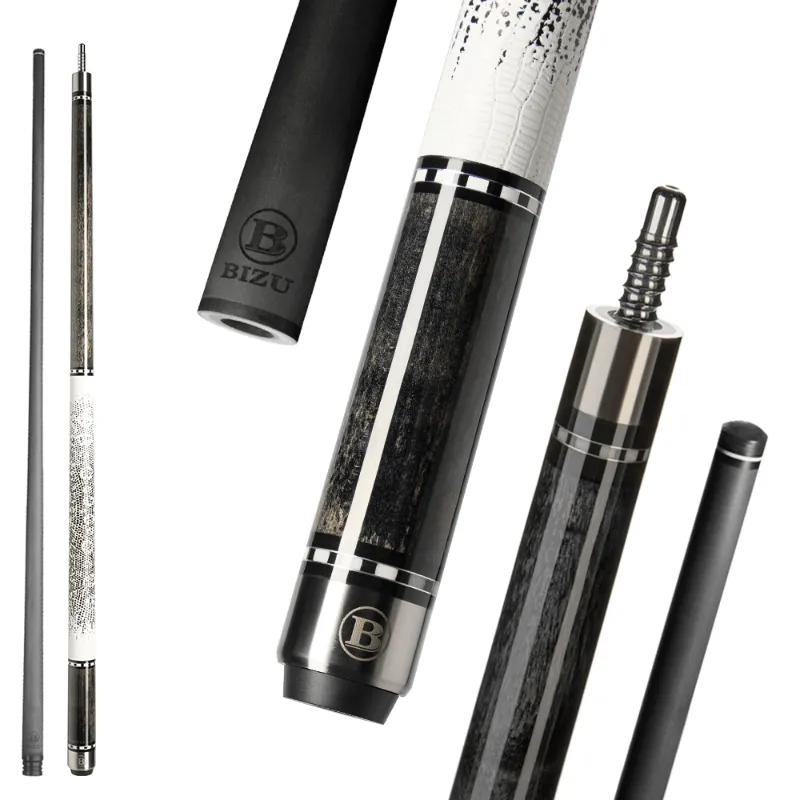
# What Makes a Good Beginner Pool Cue? A Shopper's Checklist
Buying your first pool cue can feel overwhelming. Walk into any billiards shop — or scroll through an online catalog — and you'll face hundreds of options at wildly different prices. The good news? You don't need to spend a fortune to get a cue that will genuinely improve your game. You just need to know what actually matters.
This checklist walks you through everything that makes a good beginner pool cue, so you can shop with confidence and avoid the house-cue graveyard at your local pool hall.
Why You Shouldn't Keep Using House Cues
House cues get abused. They're chalked improperly, banged on tables, stored in humid corners, and played with by hundreds of people. The tips are often rock-hard or glazed over, the ferrules crack, and the shafts warp from poor storage.
When you play with your own cue, you get three immediate advantages:
- Consistency — Your cue feels the same every time you shoot, which builds muscle memory faster.
- Better contact — A fresh tip holds chalk properly, reducing miscues.
- Confidence — Sounds silly, but owning your equipment makes you take practice more seriously.
The Beginner Pool Cue Checklist
Here's exactly what to look for, item by item.
✅ 1. The Right Weight: 18–20 Ounces
Cue weights typically range from 17 to 21 ounces. For most beginners, 19 ounces is the sweet spot, with lighter players or those with smaller hands often preferring 18 oz.
Contrary to intuition, a heavier cue doesn't help you hit harder — good power comes from smooth technique, not muscle. A cue that's too heavy tires out your arm and ruins your stroke over long sessions. Start at 19 oz and adjust from there.
✅ 2. A Straight Shaft (Seriously, Check This)
This sounds obvious, but warped shafts are the #1 hidden problem in cheap cues. Here's how to check:
- The roll test: Place the cue on the table and roll it slowly. Watch the tip — it should not wobble or hop up and down.
- Sight down the shaft: Hold it at eye level and look from butt to tip for bends.
A warped cue will sabotage your accuracy no matter how good the materials are. Every beginner cue stick beginner cue stick we recommend passes a straightness check before it ever ships.
✅ 3. Quality Tip: Soft to Medium Leather
The tip is where all your energy transfers to the ball. Cheap cues often come with hard, glossy tips that barely hold chalk.
- Soft tips grip the ball better for spin but wear faster.
- Medium tips are the best all-around choice for beginners.
If your tip glazes over or flattens out, you don't need a new cue — you need a fix a pool cue repair kit with a new tip, some glue, and a shaper. Learning basic cue maintenance is a rite of passage for every player.
✅ 4. Maple vs. Carbon Fiber Shafts
The classic choice is hard rock maple — proven, affordable, and forgiving. It's what 90% of pros learned on.
Carbon fiber shafts are the newer technology: they don't warp, they're more consistent in humid conditions, and they reduce deflection (squirt) so your side-spin shots go where you aim. They cost more, but a carbon fiber cue can be a smart long-term investment if you're serious about improving.
Our take: Start with maple if you're on a budget. Upgrade to carbon fiber when you're hooked (you will be).
✅ 5. A Break Cue? Maybe Later — Or Now If You Play Often
Should a beginner buy a dedicated break cue? If you play more than a couple of times a month, honestly — yes. Breaking puts enormous stress on your playing shaft's tip and joint. A dedicated break cue keeps your main cue in playing condition for years longer. If you're just starting out, wait a few months. Your playing cue can handle casual breaking.
✅ 6. Joint Type and One-Piece vs. Two-Piece
Two-piece cues are the standard for good reason: they're portable and easier to store properly. Look for:
- Stainless steel joints — durable and hit solidly.
- Wood-to-wood joints — slightly softer feel, preferred by some traditionalists.
Avoid one-piece cues unless you never plan to transport your cue. They're cheap for a reason.
✅ 7. Grip and Wrap: Linen, Leather, or No Wrap
- Irish linen wrap — the classic choice, absorbs sweat, great feel.
- No wrap (bare wood or composite) — cheaper, and some players prefer the smooth feel.
For a first cue, linen is the safe bet. Whatever you choose, make sure the grip doesn't slip in a sweaty hand — that's a stroking killer.
✅ 8. The Butt and Bumper
Check that the butt cap and bumper are intact. The bumper protects your cue when you rest it on the floor, and cracked butts are a sign of rough handling (or cheap construction).
What a Good Beginner Pool Cue DOESN'T Need
Save your money. Skip:
- ❌ Fancy inlays and points — pure aesthetics, zero performance
- ❌ Exotic woods — no beginner needs a cocobolo finger joint
- ❌ Low-taper gimmicks — standard pro taper is all you need
- ❌ Anything under ~$40 new — that's house-cue territory
Practice Smart With Your New Cue
A cue alone won't make you better — practice will. A few tips:
- Start with straight-in shots before you attempt angles or spin.
- Chalk before every shot. It's free insurance against miscues.
- Play structured games, not just mindless shooting. A classic game of billiards 8 ball is one of the best skill-builders because it forces you to plan position for your next shot.
- Protect your investment: store your cue vertically or in a case, away from heat and humidity.
Don't Forget the Deal
Before you check out, grab the current Bizu Billiards offer: 6% OFF All Orders through our discount code page. It stacks on whatever cue you choose — one more reason today's a good day to buy.
Quick-Buy Recommendations
| Your Situation | Best Pick |
|---|---|
| Total beginner, tight budget | beginner cue stick |
| Want the best value all-arounder | good beginner pool cue |
| Ready for a long-term upgrade | carbon fiber cue |
| Play frequently, want to protect your shaft | break cue |
| Cue tip worn out or damaged | fix a pool cue |
Final Word
A good beginner pool cue comes down to five things: the right weight, a straight shaft, a quality tip, solid construction, and honest value. Nail those and you'll have a cue that grows with your game instead of holding it back. Check the discount code page for the current 6% off offer, pick your cue from the table above, and start building the stroke that will carry you for years.
 Shopping at BIZU BILLIARDS? See today's verified BIZU BILLIARDS discount code
Frequently asked questions
What weight pool cue should a beginner use?
For most beginners, 19 ounces is ideal. It provides enough mass for a solid stroke without tiring your arm. Lighter players or those with smaller hands may prefer 18 oz.
Is a carbon fiber cue worth it for a beginner?
You can expect to pay more, but the benefits are real: carbon fiber shafts never warp, perform consistently in humidity, and reduce deflection on side-spin shots. Casual players can stick with quality maple and save.
How do I know when my cue tip needs replacing?
Replace your tip when it becomes flat, glazed, or too thin to shape. A cue repair kit makes this an easy 15-minute job and greatly extends the life of your cue.
Do I need a separate break cue?
Yes — a dedicated break cue protects your playing cue's tip and joint from break damage. If you play frequently, it's a worthwhile second purchase.