

# The Ultimate Guide to Upgrading from a Starter Cue Stick
Every pool player starts somewhere. For most of us, that somewhere was a battered house cue pulled off the wall rack—or an inexpensive starter cue that came bundled with a starter table. Those cues serve their purpose, but at some point, every improving player hits a ceiling. Your shots become less predictable, your draw doesn't quite come off, and you start wondering why your game feels inconsistent.
The answer is usually simple: it's time to upgrade your cue. In this guide, we'll walk you through exactly when to upgrade, what to look for in your next cue, and which upgrades deliver the most value at every stage of your development. Whether you're hunting for your first good beginner pool cue or ready to make the jump to a premium carbon fiber cue, we've got you covered.
*Bonus: BIZU Billiards is currently offering 6% OFF All Orders—check their discount code page before you check out.*
---
Why Your Starter Cue Is Holding You Back
Starter cues are designed to be forgiving on the wallet, not on your game. Here's what you're typically working with:
1. Inferior Straightness
Cheaper cues are often warped from the factory or warp quickly due to low-grade wood that hasn't been properly seasoned. Even a slight bend changes how the cue tip contacts the ball, introducing unwanted spin and deflection.
2. Low-Density Maple Tips
Stock tips on beginner cues are frequently as hard as a rock or spongy soft, with little attention paid to consistent density. That means inconsistent contact and unpredictable english.
3. Poor Weight Distribution
A quality cue balances 12–13 inches behind the tip-to-forearm junction. Cheap cues often feel "tip-heavy," making it harder to develop a smooth, controlled stroke.
4. Generic Ferrules and Joints
Loose joints and low-quality ferrules create energy loss at impact—the difference between a crisp, penetrating hit and a dull, mushy one.
None of these flaws are your fault. But they'll absolutely cap your progress if you don't address them.
---
When Should You Upgrade? 5 Clear Signs
You don't need to be a professional to justify a better cue. Watch for these signals:
- You play more than once a week. Regular play with a warped or low-quality cue builds bad habits.
- Your shots are inconsistent but your stroke feels good. If the fundamentals are there but results vary wildly, the equipment is often the culprit.
- You've started practicing spin. Draw, follow, and english demand a cue with a responsive tip and low deflection shaft.
- You're breaking with your playing cue. This destroys tips and ferrules fast (more on dedicated break cues below).
- You simply care more. Motivation matters. Owning equipment you're proud of makes you want to practice.
---
Your Upgrade Path: What to Buy and When
Stage 1: A Proper Beginner Cue Stick (Your First Real Cue)
If you're moving up from a house cue, don't skip the entry level—just buy a *good* entry level. A quality beginner cue stick gives you the fundamentals: a straight, hand-selected maple shaft, a layered tip that actually holds chalk, and a solid joint that transfers energy cleanly.
What to look for:
- Weight: 19 oz is the sweet spot for most players (18.5–20 oz range is fine)
- Tip: 12.5–13mm layered leather tip
- Shaft: Hard rock maple, hand-spliced or machine-spliced butt
- Straightness: Roll it on the table—it should spin true with no wobble
If you want a second opinion on entry-level options, our good beginner pool cue guide breaks down the criteria in detail. Either way, expect to spend modestly here—but *deliberately*. The goal isn't the cheapest cue; it's the most reliable cheap cue.
Stage 2: A Dedicated Break Cue (The Upgrade Nobody Regrets)
Here's a mistake almost every intermediate player makes: they buy a beautiful new playing cue and then use it to break. Break shots slam the tip into a rack of fifteen balls at maximum speed, compressing the tip, denting the ferrule, and loosening the joint over time.
A dedicated break cue solves this completely. Built with a harder tip, stiffer shaft, and reinforced joint, it's engineered to take the abuse of the break so your playing cue doesn't have to. It's typically one of the most affordable "upgrades" on this list—and one of the highest impact.
Pro tip: A proper break cue can genuinely improve your break itself. The stiffer shaft delivers more power transfer, and many players see their spread immediately improve.
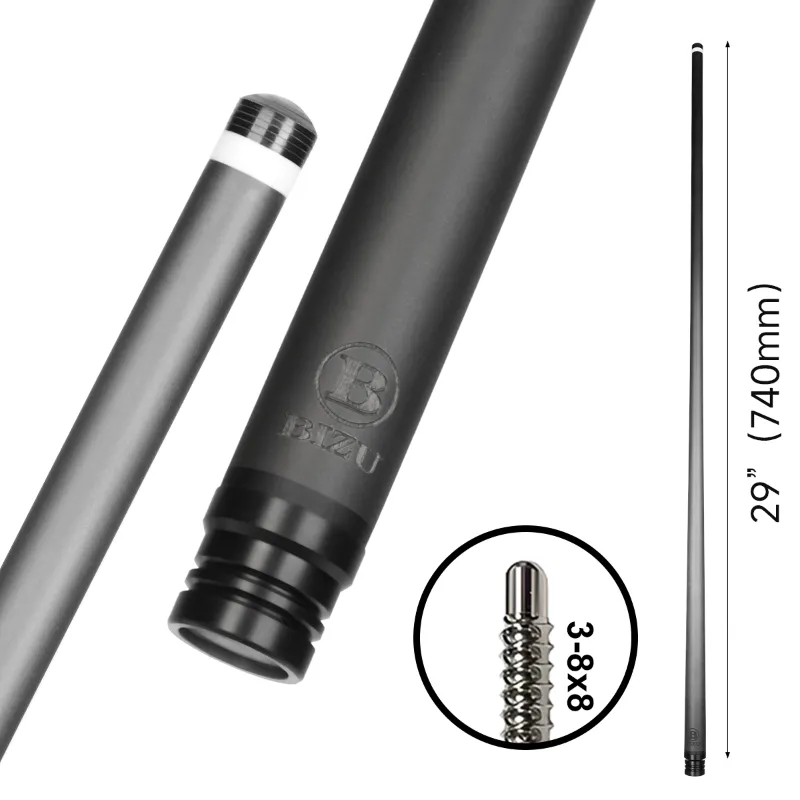
Stage 3: Carbon Fiber (The Modern Performance Jump)
Carbon fiber shafts have transformed the game in the last decade. Compared to traditional maple, a carbon fiber cue offers:
- Lower deflection: Less cue-ball squirt means your aim stays truer when applying side spin. This is the single biggest performance benefit.
- Total moisture immunity: No warping, ever. Humid basements, hot cars, cold garages—carbon doesn't care.
- Consistent density: Every shaft plays the same, shot after shot, year after year.
- Reduced maintenance: No burnishing, no conditioning, no worries.
Carbon isn't cheap, but if you've reached the point where your maple cue feels like the limiting factor, this is where the biggest performance leap lives. Many players describe switching to carbon as "finally seeing what the game is supposed to feel like."
Stage 4: Small but Mighty Accessories
Don't overlook the details:
- A quality cue case: Protects your investment from warping and tip damage. If you've spent money on a cue, protect it.
- Chalk you actually like: A consistent chalk changes how often your miscue and how well your spin takes.
- A billiards 8 ball for practice: Practice isn't only about shots. A regulation billiards 8 ball set for your home table means you can work on break speed, cue ball control, and rack-specific patterns any time you want—no bar trip required.
---
Don't Toss the Old Cue: Fix It
Before you relegate your starter cue to the closet, consider repairing it. A fix a pool cue repair kit lets you re-tip, replace a ferrule, or recondition the shaft at a fraction of the cost of a new cue. This is worthwhile for two reasons:
- A backup cue is invaluable. Joints loosen, tips flatten mid-session, and lending a cue to a friend shouldn't mean handing over your $400 upgrade.
- Repair skills pay off forever. Learning to change a tip properly means you can maintain your good cues yourself and keep them playing like new.
Keep the old cue as your travel cue, your "house cue for friends," or your emergency backup. It still has a role to play.
---
How to Choose: A Simple Decision Framework
Still not sure what to buy first? Use this quick priority list:
| Your Situation | Best First Purchase |
|---|---|
| Coming from a house cue | Good beginner pool cue or beginner cue stick |
| Already own a decent playing cue | Dedicated break cue |
| Playing 3+ times a week, want the most performance | Carbon fiber cue |
| Home table, want to practice more | Billiards 8 ball set + practice time |
| Two cues, one has a dead tip | Fix a pool cue repair kit |
The general rule: fix what's broken, protect what's expensive, and upgrade what limits your game. In that order.
---
Caring for Your New Cue
Once you upgrade, protect that investment:
- Store it vertically or in a case—never leaning against a wall, which invites warp.
- Never break with your playing cue. Seriously. This is the #1 tip-killer.
- Chalk before every shot. It prevents miscues and extends tip life dramatically.
- Keep your hands and cue clean. Oils from your hands degrade shaft finish and affect glide through your bridge.
- Re-tip when needed. A tip under 2mm or with visible glazing should be replaced—your repair kit handles this.
---
Final Thoughts: The Cue Is the Extension of Your Hand
Unlike a better table or fancier accessories, your cue touches every single shot you take. That's why upgrading from a starter cue is the most impactful equipment decision a developing player can make.
Start with a reliable beginner cue stick, add a break cue to protect it, practice with a proper billiards 8 ball set at home, keep a fix a pool cue kit on hand, and when you're ready for the biggest performance jump of your life, step up to a carbon fiber cue.
And before you buy anything: grab the current BIZU Billiards offer of 6% OFF All Orders via their discount code page. Every dollar saved on equipment is a dollar for table time—and table time is the real upgrade.
Now go roll some balls. Your game will thank you.
 Shopping at BIZU BILLIARDS? See today's verified BIZU BILLIARDS discount code
Frequently asked questions
What should I look for in a beginner cue stick?
Most players benefit from a reliable beginner cue stick in the 19 oz range with a straight maple shaft and a quality layered tip. Roll it on the table to check for warping before you buy.
Do I really need a separate break cue?
Yes. Breaking with your playing cue compresses the tip, dents the ferrule, and loosens the joint over time. A dedicated break cue is built with a harder tip and stiffer shaft to absorb that abuse.
Is a carbon fiber cue worth the extra cost?
Carbon fiber offers lower deflection, total warp resistance, and consistent performance in any climate. It's worth it if you play frequently and want maximum accuracy on spin shots; maple remains fine for casual players.
How do I know when my cue tip needs replacing?
Replace your tip when it wears below about 2mm, becomes glazed or shiny, or starts miscuing even with fresh chalk. A cue repair kit makes this an easy at-home job.
What should I do with my old starter cue?
Keep it as a backup, travel cue, or a cue for friends to borrow. You can also fix it with a repair kit—re-tipping and ferrule replacement restore most starter cues to playable condition.
Is there a discount for BIZU Billiards gear?
Yes—BIZU Billiards currently offers 6% OFF All Orders. Visit the discount code page to get the code before checking out.