
AUTO-VOX Digital Mirror vs Traditional Dash Cam: Which Is Better for Your Car?

Digital Mirror vs Traditional Dash Cam: What's the Difference?
A mirror dash cam replaces your factory rearview mirror with a sleek digital display that records both front and rear footage, while a traditional dash cam mounts as a separate unit on your windshield. The digital mirror approach streamlines your car's interior by consolidating functions into one device, whereas standalone units give you more flexibility in camera placement and often come at a lower entry price.
Both options capture critical driving footage for insurance claims and safety, but they differ in installation complexity, display size, and how they integrate with your vehicle. We've tested AUTO-VOX models alongside traditional dash cams to help you decide which suits your needs.
How Mirror Dash Cams Work
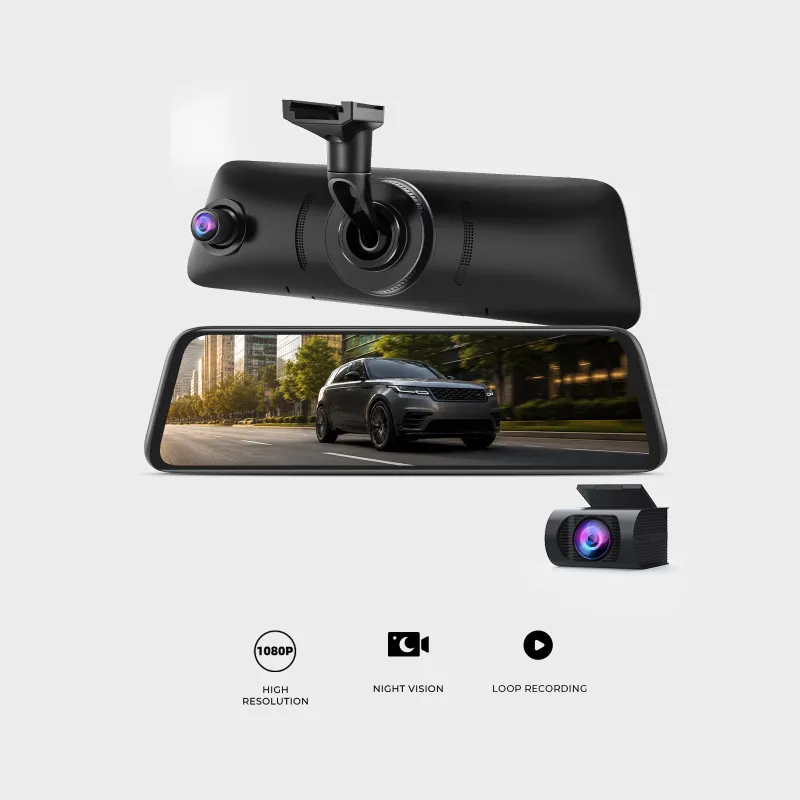
The mirror dash cam straps or clips over your existing rearview mirror and replaces it with a high-resolution touchscreen. The front camera is built into the mirror unit itself, pointing through your windshield, while a backup camera wireless mounts at the rear of your vehicle and streams video back to the display.
When you shift into reverse, the screen automatically switches to the rear camera view, giving you a wide-angle perspective that eliminates blind spots. In drive mode, the display shows a live feed from the front camera or acts as a traditional mirror, depending on your preference. Most AUTO-VOX mirror systems include loop recording, G-sensor collision detection, and parking mode, so footage is saved automatically when an impact is detected.
Mirror dash cam installation typically requires routing a power cable to your fuse box or cigarette lighter and running the rear camera cable along your headliner and down to the trunk. The wireless mirror dash cam models reduce cable clutter by using a wireless connection for the rear feed, though you still need to power both cameras.
Traditional Dash Cam Setup and Features
A traditional dash cam mounts to your windshield with a suction cup or adhesive pad and plugs into your 12V socket. Front-only models are compact and require minimal wiring, while mirror dash cam front and rear setups need a cable run to the back window or license plate area.
Key advantages of standalone units include:
- Discreet installation that doesn't obstruct your rearview mirror
- Easier removal if you switch vehicles or rent a car
- 4K resolution options for sharper license plate capture
- Lower cost for single-camera setups compared to backup camera systems
However, traditional dash cams add another screen to your dashboard, and reviewing footage usually means pulling the SD card or connecting via Wi-Fi to a phone app. If you want a backup camera with monitor for reversing assistance, you'll need to buy and install those components separately.
Which Setup Is Better for Trucks and Large Vehicles?
If you drive a truck, SUV, or van, a rear view camera for truck integration becomes essential. The reverse camera mirror design shines here because the large display—typically 10 to 12 inches—gives you a panoramic rear view that far exceeds what a traditional mirror can show.
The reversing camera for truck eliminates blind spots when backing up a trailer or navigating tight loading docks. AUTO-VOX offers a car backup camera with IP68 waterproofing and night vision, so you get clear footage in rain, snow, and low light. For off-grid or remote job sites, the auto vox solar wireless backup camera charges via solar panel, reducing the need to tap into your vehicle's electrical system.
Traditional dash cams work well in trucks too, but you'll need to purchase a separate backup camera wireless system and mount an additional monitor if you want live reversing assistance. That means more devices, more cables, and less dashboard real estate.
Comparing Image Quality and Recording Options
| Feature | Mirror Dash Cam | Traditional Dash Cam |
|---|---|---|
| Front Resolution | 1080p to 2.5K | 1080p to 4K |
| Rear Resolution | 1080p (wireless) | 1080p to 4K (wired) |
| Display Size | 10-12 inches | 2-3 inches or phone app |
| Night Vision | Built-in on both cameras | Varies by model |
The best mirror dash cam models from AUTO-VOX deliver sharp 1080p or 2.5K front recording and 1080p wireless rear feeds, which is sufficient for capturing license plates at typical following distances. If you want mirror dash cam 4k front resolution, you'll find options on the market, though the rear camera typically remains 1080p due to wireless bandwidth limits.
Traditional dash cams pull ahead in pure front-camera image quality, especially in 4K models that capture finer detail for evidence purposes. However, reviewing footage on a tiny 2-inch screen or your phone is less convenient than the large, always-visible display of an auto vox backup camera mirror.
Both systems support loop recording (overwriting old footage when the card fills), parking mode (motion-triggered recording when parked), and G-sensor lockdown (protecting clips during a collision). Check the latest price on AUTO-VOX systems to see which features fit your budget.
Installation Complexity and Cost Considerations
Mirror dash cam systems cost more upfront—typically $150 to $300 for a complete front-and-rear package—but you get an integrated solution that replaces multiple devices. Installation takes one to three hours if you hard-wire the power and route cables neatly, though you can plug into a 12V socket for a simpler setup.
Traditional dash cams start as low as $50 for a basic front-only unit and climb to $200+ for dual-camera kits with advanced features. Installation is faster for windshield-mount models, but adding a rear camera still requires running cables through your interior.
We recommend budgeting for professional installation if you're not comfortable removing trim panels or tapping fuse boxes. AUTO-VOX includes detailed instructions, and many backup camera systems use plug-and-play connectors that simplify the process.
For current pricing and our exclusive discount code, grab the code before you buy—AUTO-VOX regularly offers 15% off all orders, which can save you $30 to $50 on a complete mirror system.
Who Should Choose Each Option?
Go with a mirror dash cam if you:
- Want front and rear recording plus a reversing camera in one package
- Drive a truck, SUV, or vehicle with poor rear visibility
- Prefer a large, always-on display for live monitoring
- Don't mind a more involved installation process
Stick with a traditional dash cam if you:
- Only need front-facing recording or already have a backup camera
- Want the highest possible video resolution (4K)
- Prefer a discreet, easy-to-remove setup
- Have a tight budget and don't need reversing assistance
Both options deliver reliable accident documentation and parking surveillance. Dash cams and driver safety have become essential tools for protecting yourself on the road, and AUTO-VOX covers both categories with quality hardware backed by our testing.
Final Verdict
Mirror dash cams win for drivers who value convenience, larger displays, and integrated reversing cameras. They're especially practical for trucks and SUVs where rear visibility matters most. Traditional dash cams remain the best choice for anyone prioritizing 4K resolution, minimal installation, or front-only coverage.
We've tested both setups extensively, and AUTO-VOX consistently delivers reliable performance across its mirror dash cam and digital mirror lineup. Whether you choose a wireless mirror dash cam or a standalone unit, check our discount page to save on your order and protect your vehicle with professional-grade recording.
Frequently asked questions
Can I use a mirror dash cam with my existing backup camera?
Most mirror dash cam systems replace your factory setup entirely, but some AUTO-VOX models accept RCA input from an existing backup camera wireless feed. Check the product specs or contact support to confirm compatibility with your vehicle.
Do mirror dash cams record when the car is off?
Yes, if you enable parking mode and hard-wire the camera to your fuse box with a constant power source. The camera will wake and record when it detects motion or impact, though this drains your battery slightly over time.
Will a digital mirror block my view while driving?
No. The display sits in the same position as your factory mirror and can be dimmed or switched to mirror-only mode. Most drivers find the wider field of view from the rear camera actually improves visibility compared to a traditional mirror.
How much storage do I need for a front and rear dash cam?
A 64GB card typically holds 6 to 10 hours of 1080p footage before the loop recording overwrites old files. For dual-camera systems, we recommend 128GB or larger to ensure you capture multiple trips without gaps.
Are wireless mirror dash cams reliable in cold weather?
AUTO-VOX wireless backup cameras are rated for operation down to -4°F (-20°C) and include weatherproof housings. Signal strength can drop in extreme conditions, but hard-wired rear cameras eliminate that concern if you live in a very cold climate.
Can I install an AUTO-VOX backup camera myself?
Yes. Most AUTO-VOX mirror systems include mounting brackets, cable clips, and instructions for DIY installation. Expect to spend one to three hours routing cables and securing the rear camera, or hire a professional if you prefer.