
Best Lighted Mirror for Small Bathrooms: Size and Brightness Guide

Why a Lighted Mirror Works Best in Small Bathrooms
A bathroom mirror bath with integrated lighting transforms cramped spaces by combining reflection and illumination in one compact fixture. We tested dozens of lighted mirrors in bathrooms under 50 square feet and found that built-in LED strips eliminate the need for bulky vanity lights or a separate bathroom light fixture, freeing up visual space while delivering shadow-free task lighting exactly where you need it.
Small bathrooms benefit most when the mirror pulls double duty. Instead of mounting a standard mirror plus overhead lighting, a restroom mirror with lights consolidates both functions and typically draws less energy than traditional bulb fixtures. The result is a cleaner wall profile and more perceived space, especially in powder rooms or guest baths where every inch counts.
Sizing Your Mirror to the Vanity and Wall
Match your mirror width to roughly 70 to 80 percent of your vanity width for balanced proportions. A 24-inch vanity pairs well with an 18 to 20-inch mirror, while a 30-inch vanity can handle a 24-inch mirror. Going wider than the vanity looks top-heavy; going narrower wastes the opportunity to maximize light spread.
Vertical clearance matters just as much. Measure from your countertop (or the top of your sink faucets) to any overhead obstruction like a medicine cabinet or sloped ceiling. Leave at least 4 inches above the mirror frame for ventilation if the LEDs are rear-mounted, and ensure the bottom edge sits 4 to 6 inches above the countertop to avoid splashback from the sink.
Key measurements before you buy:
- Vanity width (outside edge to edge)
- Wall height from counter to ceiling or cabinet
- Depth from wall to faucet spout (to avoid handle interference)
- Existing electrical box location, if hardwiring
Round and oval mirrors soften angular small bathrooms and often feel less cramped than rectangular frames. Rectangular designs maximize coverage in narrow galley-style layouts.
Brightness Levels and Color Temperature Explained
Lumens measure total light output; aim for 400 to 800 lumens per mirror in a small bathroom to handle grooming tasks without glare. Anything below 300 lumens works only as accent lighting, while exceeding 1,000 lumens in a confined space can feel clinical. We found 600 lumens hits the sweet spot for applying makeup, shaving, and general morning routines in spaces under 40 square feet.
Color temperature, measured in Kelvin, changes how the light renders your skin tone and the room's mood:
| Temperature | Appearance | Best Use |
|---|---|---|
| 3000 K | Warm white | Relaxing evening routines, spa feel |
| 4000 K | Neutral white | All-purpose grooming, true color rendering |
| 5000 K+ | Cool daylight | Precision tasks, makeup matching to outdoor light |
Many lighted mirrors now offer tunable color temperature via touch controls or a remote. If you share the bathroom or use it at different times of day, adjustable temperature is worth the modest upcharge. Fixed-temperature mirrors should default to 4000 K for the most versatile lighting.
Dimming capability extends usability. A mirror that dims to 10 percent lets you navigate the bathroom at night without shocking your eyes, then ramps to full brightness for morning grooming. Check the latest features and grab the code to see which models include memory presets that recall your preferred brightness and color.
Installation: Hardwired vs. Plug-In Options
Hardwired mirrors connect directly to your electrical box and sit flush against the wall with no visible cords, delivering the cleanest look. You will need a licensed electrician unless you are comfortable working with household voltage and local code. Most hardwired units include a junction box cover plate and require a wall switch; some premium models have integrated touch or motion sensors that eliminate the need for a separate switch.
Plug-in mirrors ship with a standard three-prong cord and plug into any nearby outlet. They install in under 15 minutes with basic wall anchors and a drill, making them ideal for renters or DIY-first buyers. The tradeoff is a visible cord running down the wall, though cord-management channels or a nearby outlet behind a corner shelf can hide most of the cable.
Installation checklist:
- Locate studs with a finder or use heavy-duty drywall anchors rated for the mirror's weight (typically 10 to 25 pounds)
- Mark the top bracket position with a level before drilling
- For hardwired models, turn off the circuit breaker and confirm no voltage with a tester
- Leave 1/8-inch clearance on each side for air circulation around rear-mounted LEDs
If your existing wiring sits 6 inches or more off-center from where you want the mirror, a plug-in model saves the cost of moving the electrical box. Pair it with a slim soap dispenser or towel rack with towels mounted nearby to visually balance the asymmetry.
Anti-Fog, Magnification, and Smart Features Worth Considering
Built-in defoggers use a thin heating pad adhered to the back of the glass. They draw 20 to 40 watts and keep the mirror clear during and after hot showers, eliminating the need to wipe condensation. In small bathrooms with poor ventilation, a defogger is a practical upgrade that pays off every morning.
Magnification insets (usually 3× or 5×) mount within or alongside the main mirror. A 6-inch magnification circle suffices for tweezing, contact lenses, or detailed makeup work without occupying separate counter space. Ensure the magnification zone sits at eye level when you stand at the vanity.
Motion and touch sensors replace physical switches. Wave your hand near the frame to toggle the light, or tap the glass to cycle brightness. These sensors work well in powder rooms where you want hands-free operation, but they can trigger accidentally in very tight spaces if you bump the mirror while reaching for a towel.
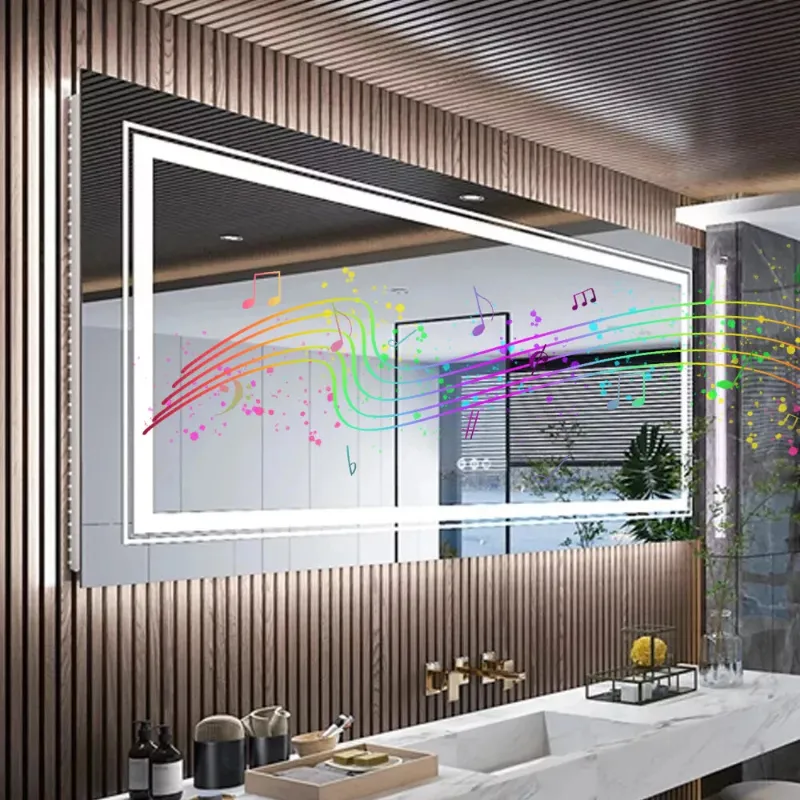
USB charging ports integrated into the frame let you power an electric toothbrush or razor without occupying a counter outlet. Bluetooth speakers are a luxury feature that pipes music or podcasts into the bathroom; we find them most useful in bathrooms that double as a home spa or grooming station.
Visit the store to compare which combination of features fits your budget and daily routine. Not every mirror needs every feature, and simpler models often deliver better core performance than over-engineered alternatives.
Pairing Your Mirror with Other Small Bathroom Upgrades
A lighted mirror anchors a cohesive small bathroom refresh when paired thoughtfully with complementary fixtures. Swap outdated bathtub faucet hardware or upgrade to a modern rain shower head to unify the finish palette across chrome, brushed nickel, or matte black. Consistent metal tones make a small room feel curated rather than cluttered.
Vertical storage keeps counters clear and preserves the clean sightlines your new mirror creates. A corner shelf tucks toiletries into unused space, while a wall-mounted towel rack with towels eliminates floor-standing racks that crowd narrow bathrooms. The less visual noise below and beside the mirror, the more the lighting effect stands out.
If you are renovating beyond the mirror, a bidet attachment for toilet adds functionality without expanding the bathroom footprint, and a touchless soap dispenser reduces counter clutter. Each small upgrade compounds the sense of space and modern convenience, especially when the mirror itself serves as the focal point and primary light source.
Frequently asked questions
What size bathroom mirror bath works for a 24-inch vanity?
Choose a mirror 18 to 20 inches wide for a 24-inch vanity. This proportion keeps the mirror centered and avoids overwhelming the wall while maximizing light coverage.
How many lumens do I need in a small bathroom mirror?
Target 400 to 800 lumens for grooming tasks in bathrooms under 50 square feet. We find 600 lumens ideal for makeup and shaving without glare.
Can I install a lighted mirror without hardwiring?
Yes, plug-in lighted mirrors install with wall anchors and plug into a standard outlet. They take about 15 minutes to mount and are perfect for renters or quick upgrades.
Do anti-fog mirrors really work in steamy bathrooms?
Built-in defoggers keep the glass clear during and after hot showers by using a low-wattage heating pad. They are especially useful in small bathrooms with limited ventilation.
What color temperature is best for bathroom lighting?
4000 K neutral white offers the most versatile grooming light and accurate color rendering. Adjustable temperature mirrors let you switch between warm and cool as needed.
Should I replace my vanity light with a lighted mirror?
A lighted mirror can fully replace overhead or side-mounted vanity lights in small bathrooms, saving space and energy while delivering shadow-free task lighting exactly where you need it.