
Bidet Toilet Seat vs Bidet Attachment: Which One Should You Buy?

Bidet Toilet Seats Bidet vs Bidet Attachment: The Core Difference
Bidet toilet seats bidet options replace your entire toilet seat and offer heated seats, adjustable warm water, air dryers, and remote controls, while bidet attachments slip under your existing seat and deliver a no-frills spray at a fraction of the cost. If you want a spa-like experience with precise temperature control and multiple wash modes, a bidet toilet seats bidet is the clear winner. For a budget-conscious upgrade that still eliminates toilet paper waste, a bidet attachment for toilet delivers effective cleaning without the bells and whistles.
The choice comes down to your budget, bathroom setup, and how much comfort you value. We tested both categories to help you decide which fits your needs, and you can grab the code for 10% off either option at Index Bath.
What You Get With a Bidet Toilet Seat
A bidet toilet seat replaces your current seat entirely and connects to both your water supply and a standard electrical outlet. Here's what separates it from an attachment:
- Heated seat that warms to your preferred temperature, ideal for cold mornings
- Warm water spray with adjustable temperature, powered by either a tank heater or instant on-demand heating
- Multiple spray modes including posterior, feminine, and oscillating or pulsating patterns
- Air dryer that reduces or eliminates the need for toilet paper
- Remote control or side panel for intuitive one-handed operation
- Soft-close lid and often a night light or deodorizer
The Wirecutter team highlights models from TOTO and Bio Bidet for their consistent warm water and user-friendly controls. TOTO's WASHLET line pioneered many of these features and remains a benchmark for build quality.
Installation takes 30 to 60 minutes. You'll remove your old seat, attach a T-valve to the fill line, mount the bidet seat, and plug it in. Most units fit standard two-piece toilets, but always measure your bowl dimensions before buying.
What You Get With a Bidet Attachment
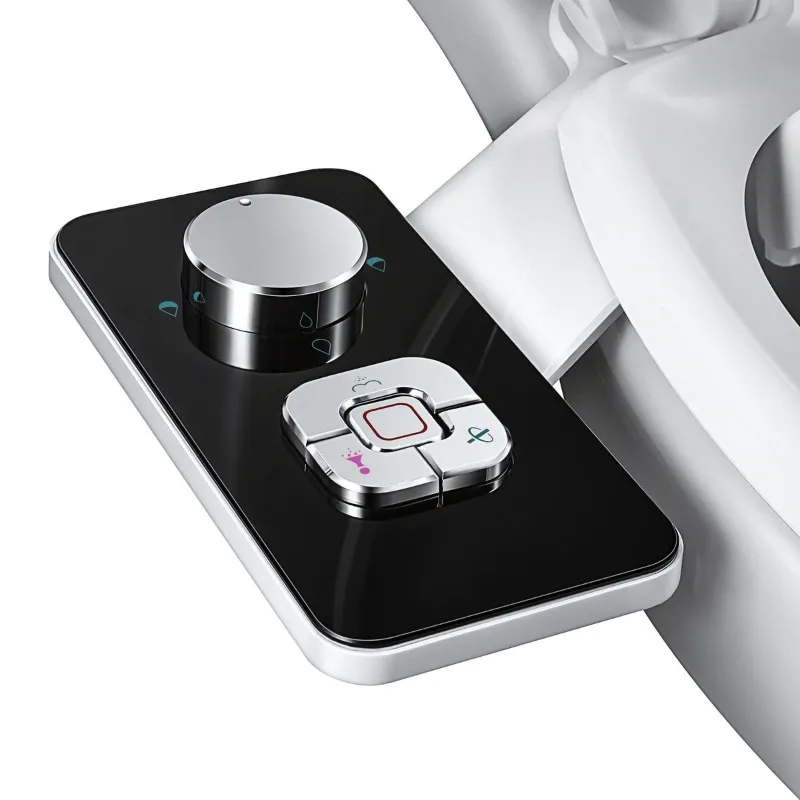
A bidet attachment mounts between your existing toilet seat and the bowl rim, requiring no electricity and relying entirely on your cold water line. Here's the feature set:
- Single or dual nozzle for posterior and feminine wash
- Manual pressure dial to control spray intensity
- Cold water only in basic models, or optional warm water if you splice into your sink's hot-water line with a dual-inlet attachment
- No seat replacement so you keep your current lid and hinges
- Slim profile that adds less than half an inch of height
Consumer Reports rates top attachments on spray coverage, ease of cleaning, and durability. Cold water is bracing in winter, but many users adapt within a week. If you want warm water, look for a dual-inlet model and run a second hose from your sink or add a T-valve to the hot line under your vanity.
Installation is simpler than a full seat: turn off the water, remove the seat, place the attachment plate, reattach the seat on top, connect the hose, and turn the water back on. Total time is 15 to 20 minutes with no electrical work.
Cost, Installation, and Long-Term Maintenance
Budget is often the deciding factor. Here's how the two compare on upfront and ongoing costs:
| Feature | Bidet Toilet Seat | Bidet Attachment |
|---|---|---|
| Price range | Mid to high tier | Budget-friendly entry |
| Installation | 30–60 min, requires outlet | 15–20 min, no outlet needed |
| Water | Cold + heated | Cold (or warm with dual-inlet) |
| Electricity | ~$4–8/month | $0 |
| Maintenance | Descale tank, replace filters annually | Rinse nozzle monthly |
For current pricing on both categories, check the latest price at Index Bath. A full seat pays for itself over time by cutting toilet paper spending, but the attachment delivers faster ROI if you're on a tight budget.
Both options require occasional nozzle cleaning. Attachments have fewer moving parts, so they rarely break. Bidet seats have electronic components that can fail after five to ten years, though most brands offer one- to three-year warranties.
Comfort, Hygiene, and User Experience
Comfort is where bidet toilet seats bidet models shine. The heated seat alone transforms your morning routine in winter, and warm water is gentler than a cold jet. Air dryers reduce towel or paper use, though most users still pat dry for speed.
Attachments trade comfort for simplicity. The cold spray is effective and many users report feeling cleaner than with paper alone, but it lacks the temperature control and drying features. If multiple people share the bathroom, a seat's programmable user presets and remote control make switching preferences seamless, while an attachment's manual dial requires each person to adjust on the fly.
Hygiene-wise, both self-clean their nozzles before and after each use. Seats with stainless-steel or UV-sterilized nozzles offer an extra layer of sanitation. Attachments are easier to remove for deep cleaning since they weigh less and have fewer electrical connections.
Which One Fits Your Bathroom and Lifestyle?
Choose a bidet toilet seat if you:
- Want heated seating, warm water, and an air dryer
- Have an outlet within three feet of your toilet
- Prioritize comfort and are willing to invest more upfront
- Share the bathroom with family members who have different preferences
Choose a bidet attachment if you:
- Need a low-cost entry into bidet hygiene
- Lack an outlet near the toilet or rent and want minimal modification
- Don't mind cold water or are willing to add a dual-inlet for warm
- Want fast installation and minimal maintenance
Both options pair well with other bathroom upgrades. If you're already renovating, consider pairing your bidet with a rain shower head or bathroom mirror bath to complete the refresh. For smaller touches, a soap dispenser or towel rack with towels rounds out the space.
Our Recommendation
We recommend starting with a bidet attachment if you've never used a bidet or if budget is your top concern. It delivers the core hygiene benefit at the lowest price and lets you test whether you'll use it daily. If you love the attachment and want more comfort, upgrade to a full seat within a year or two.
If you already know you want heated water and a seat, skip the attachment and go straight to a full bidet seat. The upfront cost is higher, but the feature gap is wide enough that most users never look back. Grab the code at Index Bath for 10% off your order, whether you choose a seat or an attachment.
Both paths reduce waste, improve hygiene, and pay for themselves over time. The right choice depends on how much comfort and automation you value in your daily routine.
Frequently asked questions
Can I install a bidet toilet seat without an electrical outlet nearby?
No, most bidet toilet seats require a grounded outlet within three feet to power the heater, dryer, and controls. If you lack an outlet, a bidet attachment is a better fit since it uses only your water line.
Do bidet attachments work on all toilet shapes?
Most attachments fit standard round and elongated bowls, but measure your bolt spacing and bowl width first. One-piece toilets and wall-hung models may require a universal mounting plate.
How long do bidet toilet seats typically last?
Quality bidet seats last five to ten years with regular descaling and filter changes. Electronic components like the heating element or control board may fail first, so check the warranty length before buying.
Is cold water from a bidet attachment uncomfortable?
Cold water feels bracing at first, but most users adapt within a week. If you live in a cold climate, look for a dual-inlet attachment that connects to both hot and cold lines for adjustable temperature.
Can I use a bidet toilet seat or attachment with a septic system?
Yes, both options are safe for septic systems since they reduce toilet paper use. Less paper means less load on your tank, which can extend pump-out intervals.
Which option saves more toilet paper over time?
Bidet toilet seats with air dryers eliminate nearly all paper use, while attachments typically reduce consumption by 75 to 90 percent. Both deliver significant savings and environmental benefits.