

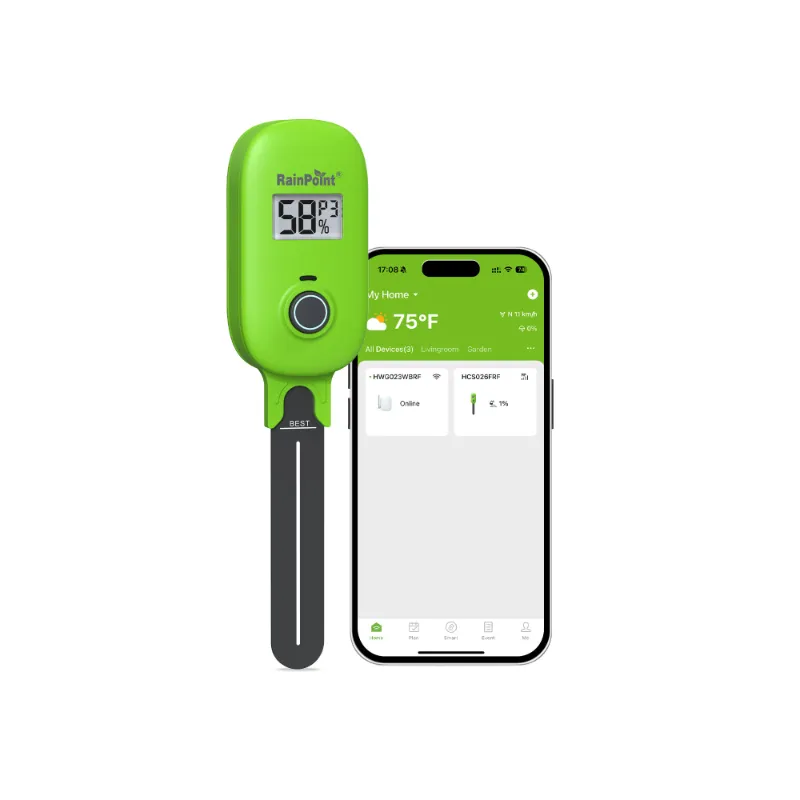
A soil moisture sensor takes the guesswork out of watering by measuring water levels in your soil so you never accidentally drown or dry out your plants. Whether you're caring for a few indoor houseplants or managing a full outdoor garden, the right sensor paired with a watering system prevents overwatering—the number one killer of potted plants—and saves water at the same time.
How a Soil Moisture Sensor Works
A soil moisture sensor detects the amount of water present in soil using two metal probes. When soil contains more moisture, it conducts electricity better between the probes; when soil is dry, conductivity drops. The sensor reads this electrical signal and displays it as a moisture level, usually on a digital screen or through a connected app.
Two main types exist: basic analog sensors that you check manually, and WiFi-enabled smart sensors that send readings to your phone. A basic soil moisture sensor works great for a few pots or small garden beds. If you're managing multiple zones or travel frequently, a rainpoint wifi water timer paired with a moisture-sensing system lets you monitor and adjust watering remotely.
Why You Need One for Indoor Plants
Indoor potted plants sit in enclosed soil where water doesn't evaporate as naturally as outdoor soil does. Most plant deaths indoors happen because owners water on a fixed schedule rather than checking actual soil moisture. Overwatered soil becomes waterlogged, root rot sets in, and the plant dies within weeks.
A soil moisture probe inserted into the pot gives you a real reading in seconds. You'll quickly learn your plant's actual watering pattern—often much less frequent than you'd guess. Many plant owners find they need to water only every 10–14 days once they start checking soil moisture, not the weekly schedule they assumed.
Outdoor Garden and Irrigation Applications
For outdoor gardens, a soil moisture sensor integrates with your watering setup to automate when to turn water on and off. Pair one with a garden watering system, a sprinkler hose, or a water timer to create an automated irrigation workflow.
When combined with a smart timer like the rainpoint wifi water timer, the sensor tells the timer when soil has dried to a target level, the timer activates the garden drip irrigation system, and water flows until soil moisture climbs back to your preferred range. This approach is especially useful during heat waves or when you're away, and it cuts water waste by 20–50% compared to fixed schedules.
For outdoor raised beds, container gardens, or even lawn sections, a soil humidity sensor paired with a garden irrigation system keeps everything perfectly hydrated without daily manual checks.
Choosing Between Manual and Smart Sensors
| Sensor Type | Best For | Cost Range | WiFi Control |
|---|---|---|---|
| Basic analog or digital probe | Indoor plants, small gardens | Budget-friendly | No—manual checks |
| WiFi-enabled moisture sensor | Multiple zones, outdoor gardens, travel | Higher | Yes—app access, auto timers |
A basic moisture sensor works best if you have a handful of houseplants in one location. You check it by hand, see if soil is dry or wet, and water accordingly. Setup takes seconds.
A WiFi-enabled sensor makes sense if you manage a garden watering system across multiple beds, want remote monitoring, or plan to automate watering with a rainpoint wifi water timer. These systems sync with an app, log watering history, and let you adjust settings from your phone.
Setting Up and Installing Your Sensor
Most soil moisture sensors insert directly into soil to a depth of 2–4 inches. Insert the probe at the base of the plant, away from the main stem, roughly where roots absorb water. For garden beds, place sensors in different zones—near the drip line where water reaches—and space them so each one represents a section of the garden.
Once installed, let the sensor rest in the soil for a few minutes so readings stabilize. Calibrate if your sensor offers this option: test it in very wet soil (freshly watered) and very dry soil (left for days) so you learn what "0" and "100" feel like for your specific soil type.
Pair your sensor with a water timer or indoor plant watering system by connecting to the app (if WiFi-enabled) or manually checking readings on a display. Set your target moisture range—most plants prefer soil that's moist but not soggy, around 50–70% moisture.
When to Water Based on Sensor Readings
Once you have a soil moisture sensor installed, watering decisions become simple:
- Readings below 30%: soil is dry, water now
- Readings 30–70%: ideal range for most plants, check again in 1–2 days
- Readings above 70%: soil is wet, hold off watering
- Readings above 85%: risk of overwatering, ensure drainage is working
For outdoor gardens with a garden drip irrigation system or sprinkler hose, connect the sensor to an automatic timer so watering starts and stops based on real soil moisture rather than a clock.
Maintenance and Sensor Care
Clean your soil moisture probe every 2–3 weeks if it's in a pot, or once a month outdoors. Buildup of salt deposits or mineral deposits can affect readings. Simply wipe the metal probes with a dry cloth.
Check battery levels monthly if your sensor is battery-powered. Most WiFi sensors run 6–12 months on batteries; when levels drop, the app will alert you. Keep WiFi sensors in range of your home network—typically 30–50 feet through walls.
For outdoor sensors exposed to rain or humidity, keep electrical connectors clean and dry. Store battery-powered sensors indoors over winter if you live in a freezing climate, as extreme cold can damage electronics.
Ready to stop guessing about watering? Check the latest price and grab our 10% discount code on soil moisture sensors and complete watering systems. RainPoint's sensor and timer combinations work together to eliminate water waste and keep every plant thriving.
 Shopping at RainPoint US? See today's verified RainPoint US discount code
Frequently asked questions
How accurate is a soil moisture sensor?
Most modern soil moisture sensors are accurate within 5–10% of actual soil moisture content. Accuracy depends on soil type, mineral content, and sensor quality. WiFi sensors tend to be more reliable than basic analog probes, and calibrating your sensor in your specific soil type improves readings.
Can I use one soil moisture sensor for my entire garden?
One sensor works for a small garden bed or a few pots in one location. For a large garden with varying soil types or sun exposure, use 2–3 sensors in different zones so you get accurate readings for each area's unique water needs.
What's the best soil moisture sensor for indoor plants?
A basic or WiFi-enabled soil moisture sensor works equally well indoors. Choose a basic model if you have fewer than 10 pots, or a WiFi sensor if you want remote monitoring and plan to connect it to an automatic watering system like an indoor plant watering system.
Do I need a water timer with my soil moisture sensor?
Not required, but highly recommended. A water timer paired with a soil moisture sensor automates watering so you don't have to check manually every day. WiFi-enabled timers make this especially convenient for outdoor gardens or travel situations.
How deep should I insert a soil moisture sensor?
Insert the probe 2–4 inches into soil, at the root zone where most water uptake occurs. For potted plants, push it down at an angle toward the center of the pot; for garden beds, place it where your drip irrigation reaches.
Can a soil moisture sensor work with a sprinkler hose or drip irrigation system?
Yes. Connect your sensor to a smart water timer, set your target moisture range, and the timer will automatically turn your sprinkler hose or garden drip irrigation system on and off based on soil readings.