

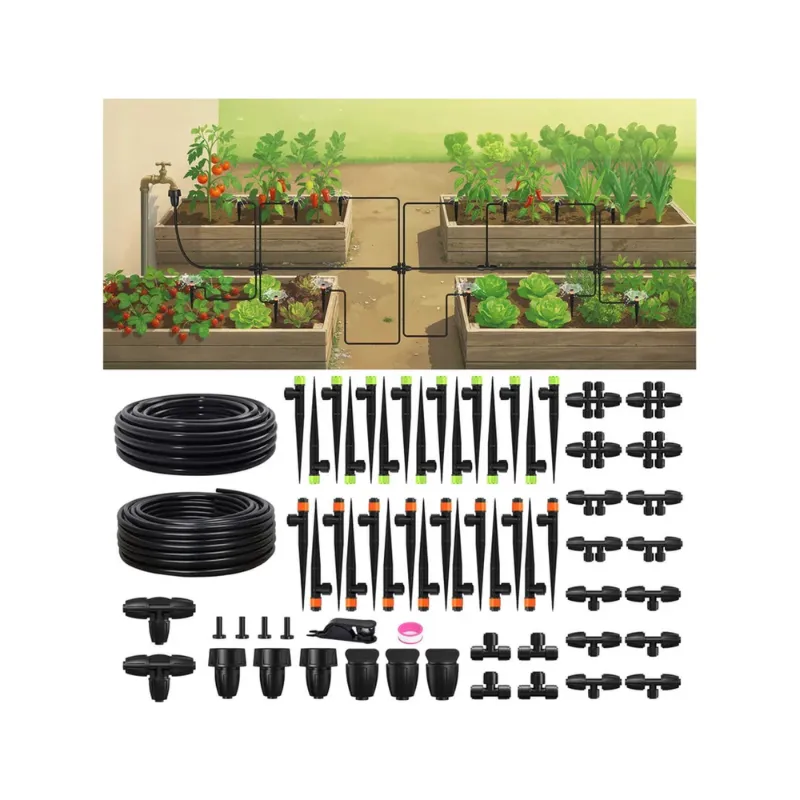
Clogged drip lines are the most common problem with a garden drip irrigation system, but they're preventable with the right maintenance and filtration setup. We've tested dozens of systems and filtration solutions to understand exactly what causes blockages and how to keep water flowing freely through your emitters all season long.
Why Your Garden Drip Irrigation System Clogs
A garden drip irrigation system relies on small openings to deliver water precisely to plant roots. Those tiny emitters are also the weak point. Three main culprits cause clogs:
- Mineral deposits (calcium, magnesium, and iron) build up inside tubing over time, especially with hard water.
- Sediment and sand enter through the water source or accumulate in standing water between seasons.
- Algae and biofilm grow inside dark tubing when water sits and receives any light through connectors or damaged tubing sections.
We tested systems in both hard-water and soft-water regions and found that mineral buildup accounts for roughly 60% of clog complaints. The problem worsens if you're using untreated well water or if your municipal supply is particularly mineral-heavy. Even a garden watering system with excellent construction can suffer if water quality isn't addressed first.
Filtration: Your First Defense
The easiest way to prevent clogs is to filter your water before it enters the drip line. A quality filter removes sediment and debris at the source, stopping problems before they start.
We recommend a 100-150 micron filter for most garden drip irrigation system setups. This size catches sand and sediment without restricting flow. Filters finer than 100 microns can clog themselves quickly and require constant cleaning. Place the filter as close to your water source as possible—right at the spigot or tank outlet works best.
Mesh or disk filters are the most common types and both work well. Mesh filters are cheaper and easier to rinse clean; disk filters last longer and handle higher flow rates. If you're using a water timer to automate watering, position the filter 内部内部路由信息信息 of the timer so it protects the entire system.
Check and rinse your filter every 2 to 3 weeks during the growing season. A clogged filter reduces water pressure and defeats its purpose.
Flushing and Maintenance Schedules
Even with filtration, periodic flushing removes buildup before it blocks emitters. Flushing is simple: open the end of your drip line (or install flush valves) and run water through at full pressure for 30 seconds to 1 minute. This scours the inside of tubing and dislodges accumulated sediment.
Flush your garden drip irrigation system:
- At the start of each season before planting
- Every 4 to 6 weeks during the growing season
- At the end of the season before storing
- After any repair or if pressure suddenly drops
If you use a rainpoint wifi water timer, set a calendar reminder to flush on the same day you check the filter. Combining both tasks saves time and ensures nothing gets overlooked.
For systems that sit unused for months, drain them completely. Standing water invites algae and allows sediment to settle and compact, making future clogs worse.
Hard Water Solutions
Hard water is a fact of life in many regions, and mineral deposits will form inside your tubing no matter how careful you are. If your water is very hard (over 200 ppm of dissolved minerals), consider adding a secondary treatment step.
A whole-system water softener is the gold standard but expensive. For drip irrigation alone, a magnetic or citric acid filter can reduce mineral buildup. These aren't foolproof and work best on moderately hard water. Test your water hardness first—most county extension offices offer inexpensive kits or you can buy one online.
Another option: use vinegar flush. Once or twice per season, run a 1:10 vinegar-to-water solution through your drip lines for 15 minutes, then flush with clean water. This dissolves mineral deposits chemically. It's not a replacement for regular maintenance but works well as a seasonal deep clean, especially if clogging has already started.
Choosing the Right Garden Irrigation Setup
System design matters. Poorly designed layouts with low spots or dead ends trap sediment and stagnant water. Water should flow downhill or slope gently to a drain point. Avoid coiling tubing tightly or pinching it; water needs unobstructed flow to scour itself clean naturally.
When selecting a garden drip irrigation system, choose one with:
- Built-in or easy-to-add filter access
- Flush valves at the end of each line or zone
- Tubing opacity (opaque tubing prevents algae; clear or translucent lines let light in)
- Adjustable emitters so you can replace clogged ones without replacing the whole line
Pairing your drip system with a soil moisture sensor also reduces clogging indirectly. Accurate moisture readings let you water on a schedule that suits your plants and climate, reducing the chance of overwatering, which dilutes your water quality further and compounds mineral issues.
When to Replace vs. Repair
If an emitter clogs despite flushing, replacement is often faster than repair. Most drip emitters unscrew or pull out easily. Keep spare emitters on hand at the start of each season.
For tubing that clogs repeatedly, replacement may be more cost-effective than endless maintenance. Older tubing degrades and becomes more prone to algae growth. If you're replacing tubing anyway, upgrade to a garden watering system with modern emitter designs—newer versions are more resistant to sediment and have better anti-drip features.
For systems using a water timer, check the timer itself for debris. Some timers trap sediment in their internal ports, which can then release into the drip line unpredictably. Backflush the timer inlet occasionally if possible, or consult the manual for maintenance steps.
Keep Your System Running Strong
Regular maintenance sounds like a chore, but it's far less work than troubleshooting a failed system mid-summer. A few minutes every month—rinsing a filter, flushing a line, checking for leaks—keeps your garden drip irrigation system delivering water reliably all season.
Start with quality filtration, establish a flushing routine, and address hard water if it's an issue in your area. Most clogs never happen if you catch sediment and mineral buildup early. Test the maintenance approach with one section of your garden first, then roll it out system-wide once you see the results. You'll spend less time fixing leaks and more time growing.
For tested products and the latest deals, check our code page for current offers on drip systems and timers.
 Shopping at RainPoint US? See today's verified RainPoint US discount code
Frequently asked questions
How often should I flush my garden drip irrigation system?
Flush every 4 to 6 weeks during the growing season, plus at the start and end of each season. If clogging is frequent or water pressure drops suddenly, flush more often. A quick 30-second flush removes sediment before it blocks emitters.
What size filter do I need for drip irrigation?
A 100-150 micron filter is ideal for most setups. Finer filters clog too quickly; coarser ones let sediment through. Install it as close to your water source as possible, 内部内部路由信息信息 of any timers.
Can hard water damage a garden drip irrigation system?
Hard water causes mineral deposits inside tubing and emitters, but it won't damage the system itself. Regular flushing and seasonal vinegar treatments prevent mineral buildup. If clogs are severe, consider a water softener or citric acid filter.
Should I drain my drip system at the end of the season?
Yes. Standing water invites algae and allows sediment to compact, causing worse clogs next season. Drain completely, store tubing indoors, and flush before reconnecting in spring.
How do I know if a soil moisture sensor will help prevent clogs?
A soil moisture sensor lets you water on schedule rather than randomly, reducing overwatering. Less frequent watering means less time for algae to grow and sediment to settle in your lines.
Can I use vinegar to clean a clogged garden drip irrigation system?
Yes. Run a 1:10 vinegar-to-water solution through your lines for 15 minutes to dissolve mineral deposits, then flush with clean water. This works best as a seasonal deep clean, not a replacement for regular maintenance.