

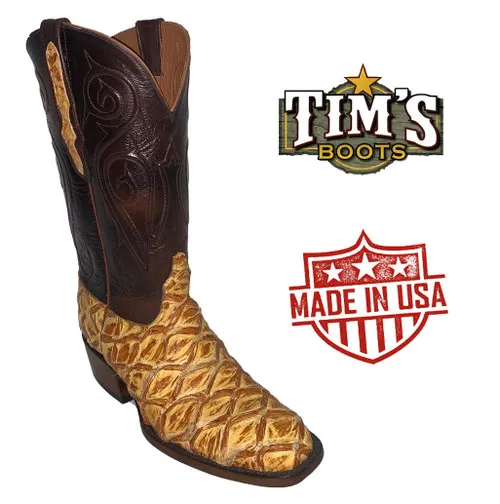
Pirarucu boots demand specialized care because their Amazonian fish scales are harder and more textured than cow leather, yet they dry out quickly without regular conditioning. The same goes for shark, ostrich, and caiman: each exotic skin has a unique structure that reacts differently to water, heat, and wear. We tested dozens of cleaning and conditioning products on our own exotic leather collection to identify what actually works without causing discoloration or stiffness.
Why Pirarucu Boots and Exotic Leathers Need Different Care
Standard leather conditioners often sit on top of exotic skins instead of penetrating, or they contain petroleum distillates that cloud the natural sheen. Pirarucu boots feature raised, coin-like scales that trap dirt in the crevices, while ostrich boots have quill bumps that can snag on stiff brushes. Shark boots carry a dense, pebbly grain that resists water naturally but cracks when over-dried.
Each material also ages differently:
- Pirarucu and fish skin: scales can lift or flake if the hide beneath loses moisture
- Ostrich and ostrich leg: quill follicles may flatten or tear under abrasive scrubbing
- Shark: the denticle texture dulls when coated with heavy wax
- Caiman: belly scales are softer than back scales and absorb conditioner unevenly
Because these leathers come from non-traditional sources, they lack the natural oils found in cowhide and need lighter, more frequent maintenance.
Cleaning Exotic Leather Boots Without Damage
Start every care session by removing loose dirt with a soft horsehair brush, working gently around raised textures. For ostrich leg boots, brush in the direction of the quills to avoid catching the bristles in the follicles.
Mix a few drops of pH-neutral saddle soap or a dedicated exotic leather cleaner with lukewarm water until it barely foams. Dampen a microfiber cloth (never soak it), wring out the excess, and wipe the boot surface in small circles. Pay attention to the welt, heel counter, and any stitched seams where salts and oils accumulate.
For stubborn grime in pirarucu scale grooves or caiman belly creases, use a soft toothbrush dipped in the same solution and work with a light touch. Rinse the cloth in clean water, wring it out, and wipe away any soap residue. Let the boots air-dry at room temperature, stuffed with boot trees or crumpled paper to hold their shape. Never use a hair dryer or place them near a radiator; rapid drying causes exotic leathers to shrink and crack.
If you are dealing with salt stains from winter wear, add one part white vinegar to two parts water and spot-treat only the affected area, then condition immediately after drying.
Conditioning and Protecting Exotic Skins
Once the boots are completely dry (usually 12 to 24 hours), apply a conditioner formulated for exotic leathers or a lightweight mink oil. We prefer products that list lanolin or neatsfoot oil in the first three ingredients, since they absorb quickly without leaving a greasy film.
Dab a small amount onto a clean cloth and rub it into the leather using circular motions. For shark boots and other dense grains, you will need less product; for pirarucu boots and ostrich, apply a thin second coat to the scale edges and quill bumps after the first has soaked in for 15 minutes.
Buff away any excess with a dry microfiber towel. The leather should look slightly darker and feel supple, not sticky. Condition every 8 to 12 wears, or monthly if you live in a dry climate.
Waterproofing Without Blocking Breathability
Exotic leathers benefit from a spray-on water repellent rather than a paste wax, which clogs the natural texture. Choose a silicone-free, fluoropolymer spray and apply it outdoors or in a well-ventilated space. Hold the can 8 inches away and mist evenly, then let the boots dry for at least an hour before wearing.
Reapply the spray every four to six weeks, or after any wet exposure. Even water-resistant skins like shark and caiman boots will show water spots and lose their finish if soaked repeatedly without treatment. Check our discount code to save on protective sprays and conditioners when you order.
Storage and Long-Term Maintenance
Store exotic leather boots in a cool, dry closet away from direct sunlight, which fades pigment and hardens scales. Insert cedar boot trees to absorb moisture and maintain the shaft shape; avoid plastic shoe forms, which trap humidity and encourage mildew.
If you are rotating between several pairs, including fish skin boots or cow fur boots, give each pair at least 24 hours of rest between wears so the leather can release moisture and bounce back. For long-term storage (seasonal or longer), wrap each boot in a breathable cotton dust bag and condition them before packing them away.
Inspect the soles and heels every few months. Exotic uppers often outlast the outsoles, so a timely resole protects your investment. Check stitching along the vamp and collar for loose threads, and bring them to a cobbler experienced with exotic leathers before a small tear becomes a full split.
Common Mistakes That Ruin Exotic Boots
We have seen too many beautiful pairs of ostrich and pirarucu boots damaged by well-meaning but incorrect care. Avoid these pitfalls:
- Using all-purpose leather conditioner meant for work boots: the heavy oils sit on the surface and attract dust
- Scrubbing with stiff brushes or Magic Erasers: these abrade delicate scale edges and quill bumps
- Wearing the same pair daily: exotic leathers need rest time to dry and recover their structure
- Skipping conditioning in humid climates: even high humidity does not replace the oils lost through wear
- Applying heat to speed drying: this is the fastest way to shrink and crack any exotic skin
If your boots do develop a crack or a lifted scale, take them to a specialist immediately. Exotic leather repair requires different adhesives and techniques than standard cowhide, and DIY fixes often make the damage worse. Grab our current code to save on your next pair while your favorites are in the shop.
Who Should Invest in Exotic Leather Boots
Exotic leathers reward owners who enjoy the ritual of care and appreciate materials with character. If you wear boots three or more days a week and want a pair that stands out visually while developing a unique patina, pirarucu boots, ostrich boots, or shark boots are excellent investments.
They suit professionals in creative industries, Western wear enthusiasts, and anyone building a curated boot collection. The extra 15 minutes of maintenance every few weeks pays off in longevity: properly cared-for exotic boots often last 10 to 15 years, far longer than mass-market leather.
However, if you need a low-maintenance work boot or you frequently walk through mud, saltwater, or construction sites, a traditional cowhide or rubber-soled style will serve you better. Exotic leathers thrive in indoor, semi-formal, and dry outdoor environments, not in extreme wet or abrasive conditions.
Ready to add an exotic pair to your rotation? Visit our store page to see current styles and lock in 10% off your order with our exclusive discount code.
 Shopping at Tim's Boots? See today's verified Tim's Boots discount code
Frequently asked questions
How often should I condition pirarucu boots?
Condition every 8 to 12 wears, or monthly if you live in a dry climate. Pirarucu scales dry out faster than cowhide, so consistent light conditioning prevents flaking and keeps the leather supple.
Can I use regular leather cleaner on ostrich boots?
Avoid all-purpose leather cleaners with harsh detergents or alcohol. Use a pH-neutral saddle soap or a cleaner specifically labeled for exotic leathers to protect the quill follicles and natural oils.
Are shark boots waterproof?
Shark leather is naturally water-resistant due to its dense grain, but it is not fully waterproof. Apply a fluoropolymer spray every four to six weeks to maintain protection and prevent water spots.
What is the best way to remove salt stains from exotic leather?
Mix one part white vinegar with two parts water, dampen a cloth, and gently blot the salt stain. Let the boots air-dry completely, then condition immediately to restore moisture.
Do exotic leather boots last longer than regular cowhide?
With proper care, exotic leathers like pirarucu, ostrich, and caiman often outlast cowhide by several years. Their unique fiber structures resist abrasion well, but they require consistent conditioning and waterproofing.
Can I wear pirarucu or ostrich boots in the rain?
Light rain is fine if you have treated them with a water repellent spray. Avoid prolonged soaking or puddles, and always air-dry and condition them after wet exposure to prevent cracking.