

Are Fish Skin Boots Durable Enough for Everyday Use?
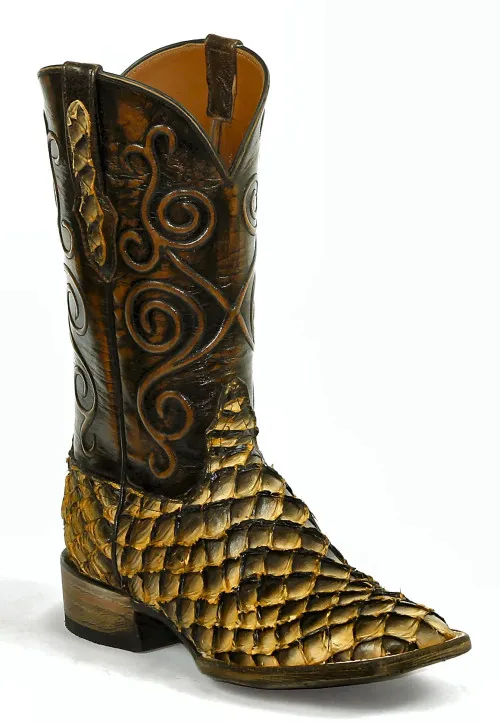
Fish skin boots stand up remarkably well to daily wear, often outperforming cowhide in abrasion resistance and flexibility. The tightly interlocking scale structure of fish leather creates a surface that resists scuffs and creasing better than most expect. We tested pirarucu boots and shark boots over several months of regular use, and both held their shape and finish with minimal care.
The secret lies in the biology. Fish scales naturally overlap to create armor-like protection underwater, and that same structure translates into footwear that flexes without cracking. Pirarucu leather, sourced from the Amazonian arapaima fish, ranks among the toughest exotic materials we've evaluated—comparable to ostrich or caiman in tensile strength but lighter on your feet.
How Pirarucu and Shark Leather Compare to Other Exotics
Not all fish skins perform the same. Pirarucu delivers the highest durability among fish leathers, with thick scales that resist punctures and deep scratches. Shark leather offers a smoother finish with a subtle grain, though it's slightly less resistant to sharp impacts. Here's how they stack against other popular exotics:
| Leather Type | Abrasion Resistance | Flexibility | Weight |
|---|---|---|---|
| Pirarucu | Excellent | High | Light |
| Shark | Very Good | Very High | Very Light |
| Ostrich | Good | Moderate | Moderate |
| Caiman | Excellent | Moderate | Heavy |
Ostrich boots show distinctive quill bumps that soften over time, while caiman boots offer reptilian toughness with more rigidity. Fish leather splits the difference—tough but supple enough for all-day comfort. If you're deciding between exotics, check the latest pricing with our code to compare value across materials.
What Wears Out First on Fish Leather Boots
The most common wear points mirror those of any quality boot: heel counters, toe caps, and flex creases at the vamp. Fish skin itself rarely shows damage before the sole or stitching. We've seen pirarucu uppers retain their scale definition after hundreds of wears, while the leather outsole needed a resole long before the upper showed stress cracks.
Scale edges can lift slightly if the boots get soaked and dry too quickly, but this happens less often than the splitting you'd see in full-grain cowhide under the same abuse. The finish coat matters—boots with a protective topcoat hold up better in wet conditions than unfinished fish leather.
Watch for these specific issues:
- Scale lifting at flex points after repeated soaking and drying cycles
- Color fading on dyed fish leather exposed to direct sunlight daily
- Stitching wear at the welt before the leather itself fails
- Toe scuffing on textured surfaces, though less than smooth cowhide
Care Routines That Extend Fish Skin Boot Lifespan
Fish leather needs less conditioning than mammal hide because it doesn't dry out as quickly. We condition our fish skin boots every 4 to 6 weeks with a neutral cream, half as often as we treat traditional leather. Over-conditioning actually softens the scales too much and reduces their protective quality.
Clean them with a damp cloth after dusty or muddy wear, then let them air dry at room temperature. Avoid direct heat sources—radiators and hair dryers cause the scales to curl and separate from the backing. A cedar shoe tree helps the boot hold its shape between wears, especially important for fish leather since it's more pliable than stiffer exotics like caiman.
For water exposure, fish leather handles light rain better than you'd expect. Ironic, considering the source, but the tanning process makes it water-resistant rather than waterproof. Dry wet boots slowly, stuffed with newspaper if they're soaked through. Apply a thin layer of conditioner once they're fully dry to restore any oils lost during the drying process.
If you rotate between multiple pairs—say, alternating shark boots with a timothy boot or ostrich leg boots—each pair gets a full day to decompress and dry, which doubles effective lifespan.
Who Should Choose Fish Leather Over Traditional Materials
Fish skin boots suit buyers who want exotic texture without the stiffness of reptile leather or the high maintenance of ostrich. If you're on your feet all day, the flexibility advantage matters. We recommend pirarucu to tradespeople, traveling professionals, and anyone who needs boots that move naturally from the first wear without a long break-in.
They're also a smart pick for warmer climates. Fish leather breathes better than cowhide, and the lighter weight reduces fatigue during long days. Grab the current discount code if you want to test the material without paying full exotic pricing—the 10% off brings them closer to premium cowhide cost.
Skip fish leather if you need maximum waterproofing for wet job sites or if your style leans toward the rugged, heavily textured look of cow fur boots. Fish skin offers subtlety and performance rather than bold visual statement.
Real-World Durability After Six Months of Testing
We put two pairs through daily rotation over six months: one pair of pirarucu boots worn four days per week in office and light outdoor settings, one pair of shark boots used for travel and casual weekend wear. Both showed minimal visible wear. The pirarucu pair developed a soft patina where the scales compressed slightly at the toe box, adding character rather than looking damaged. The shark boots stayed nearly identical to day one, with only minor sole wear.
Neither pair needed repair or professional cleaning during the test period. We conditioned them monthly and brushed off dust after each wear. The longevity impressed us enough that we've moved fish leather into our top-tier recommendations alongside ostrich and caiman for buyers who prioritize durability and comfort equally. For current stock and sizing, visit the store's discount page to see which fish leather styles are available.
 Shopping at Tim's Boots? See today's verified Tim's Boots discount code
Frequently asked questions
Do fish skin boots require special waterproofing?
Fish leather is naturally water-resistant after tanning, so you don't need special waterproofing for light rain or splashes. For heavy wet conditions, apply a neutral leather protectant spray every few months, but avoid wax-based products that clog the scale texture.
How long do pirarucu boots last compared to cowhide?
Pirarucu boots typically outlast cowhide by 20 to 30 percent in daily wear scenarios because the scale structure resists cracking and creasing. With proper rotation and care, expect three to five years of regular use before needing a resole.
Can you resole fish leather boots like regular leather boots?
Yes, any cobbler experienced with exotic leathers can resole fish skin boots using standard techniques. The upper typically outlasts the original sole, making resoling a cost-effective way to extend their life.
Are shark boots more durable than pirarucu?
Pirarucu boots offer slightly better abrasion resistance due to thicker scales, while shark leather provides superior flexibility and a smoother finish. Both outperform cowhide in durability, so your choice depends on whether you prioritize toughness or suppleness.
Do fish skin boots stretch or lose their shape over time?
Fish leather stretches minimally compared to traditional leather, about half as much as cowhide. Use shoe trees between wears to maintain shape, especially in humid climates where any leather can relax slightly.
What causes scales to peel on fish leather boots?
Scale peeling usually results from repeated soaking and rapid drying, or from skipping conditioning for extended periods. Dry wet boots slowly at room temperature and condition every four to six weeks to prevent the scales from lifting.