

How to Choose the Right Harness Size for Giant Breed Dogs
A properly fitted large dog harness prevents pulling injuries, distributes pressure evenly across your dog's chest, and gives you better control during walks. Giant breeds like Great Danes, Mastiffs, and Saint Bernards need harnesses designed specifically for their size, with reinforced stitching and wide straps that won't dig into their skin. We tested dozens of options to help you find the perfect fit.
Measure Your Dog's Chest Girth Accurately
The most critical measurement for any large dog body harness is the chest girth, measured at the widest part of the rib cage just behind the front legs. Use a soft fabric tape measure and ensure your dog is standing naturally.
- Wrap the tape snugly but not tight around the chest
- Add two finger widths of space to your measurement for comfort
- Measure twice to confirm accuracy
- Weigh your dog if possible, as many harness size charts require both metrics
Most xl dog harness options accommodate chest measurements between 32 and 50 inches, but giant breeds often exceed these ranges. Check the manufacturer's size chart before ordering, and when in doubt, size up. You can always tighten adjustable straps, but a too-small harness will rub and restrict movement.
What Makes a Harness Suitable for Giant Breeds
Not every x large dog harness is built for dogs over 100 pounds. Giant breeds generate tremendous pulling force, so you need heavy-duty materials that won't snap or fray.
Key features to prioritize:
- Reinforced stitching at stress points where the leash attaches
- Wide straps (at least 1.5 inches) to distribute pressure
- Padded chest plate to prevent chafing during long walks
- Multiple adjustment points on the chest and belly straps
- Sturdy metal D-rings rated for your dog's weight
The best harness for large dogs that pull often includes a front-clip attachment point, which redirects your dog's momentum toward you when they lunge forward. Big Ass Dog Company specializes in gear engineered for these demands. Grab our discount code to save 10% on your order.
Compare Harness Styles for Large and Giant Dogs
Different designs suit different needs. Here's how the most common styles stack up for giant breeds:
| Style | Best For | Considerations |
|---|---|---|
| Back-clip | Trained dogs, casual walks | Less control with pullers |
| Front-clip | Dogs that pull, training | Redirects pulling motion |
| Dual-clip | Versatility, switching between training and casual use | Slightly more expensive |
| No-pull with handle | Reactive dogs, mobility assistance | Handle adds control in tight situations |
A large dog harness with handle on the back gives you an extra grip point for loading your dog into a vehicle or guiding them through crowded spaces. This feature is especially useful for senior giant breeds who need help standing or navigating stairs.
For dogs with a strong prey drive or leash reactivity, the extra large dog harness with a front clip offers better steering. According to Wirecutter's harness testing, front-clip designs significantly reduce pulling compared to traditional back-clip models.
Adjust for Proper Fit and Comfort
Once you receive your dog harness xl, spend time adjusting every strap before your first walk. A harness that shifts or rides up can cause sores and won't provide secure control.
Fitting checklist:
- Slide the harness over your dog's head (or use a step-in style)
- Fasten the chest and belly buckles
- Check that you can fit two fingers under every strap
- Walk your dog around the yard and watch for rubbing or shifting
- Tighten or loosen straps as needed
The chest strap should sit about two inches behind the front legs, never riding up into the armpit area where it can restrict shoulder movement. The belly strap should rest behind the rib cage but ahead of the soft belly. If your dog can back out of the harness by reversing, tighten the chest strap incrementally until escape is impossible without compromising comfort.
Pair your new harness with a big dog leash that matches the harness's weight rating. A lightweight leash on a heavy-duty harness creates a weak point in your control system.
When to Size Up or Consider Custom Options
Some giant breeds fall between standard sizes or have unusual body proportions. Barrel-chested breeds like English Mastiffs may need a larger chest size than their weight suggests, while lean breeds like Irish Wolfhounds might need a smaller chest with a longer torso.
Signs your harness doesn't fit:
- Red marks or fur loss where straps sit
- Harness rides up toward the neck during walks
- Dog can slip out by backing up
- Straps are maxed out on the loosest or tightest setting
If standard sizes don't work, Big Ass Dog Company offers sizing guidance for their full range. Check the latest sizing options and pricing to find models that accommodate unique proportions.
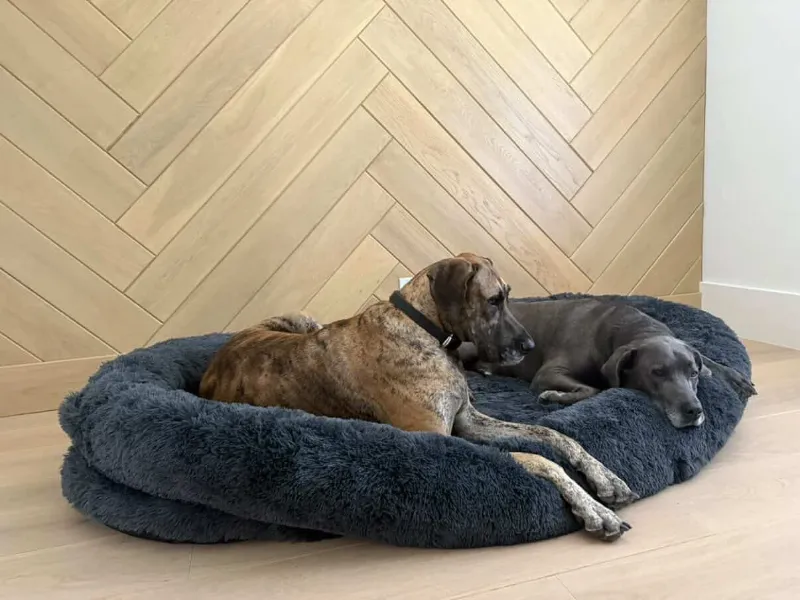
Many owners of giant breeds also invest in supportive accessories like a giant dog bed for joint health and large dog bowls to reduce neck strain during meals, addressing the full comfort picture for big dogs.
Test the Harness on Short Walks First
Even a perfectly sized dog harness big needs a break-in period. Start with short 10-minute walks around your neighborhood and gradually increase duration as both you and your dog adapt to the new gear.
Watch for changes in your dog's gait or enthusiasm. Some dogs initially resist the feeling of a chest harness if they're accustomed to a collar. Use treats and praise to create positive associations, and never force the harness on. TechGearLab's harness testing found that patient introduction significantly improved long-term acceptance rates.
After a few walks, inspect the harness for signs of wear. Giant breeds put serious stress on stitching and buckles, so catching early fraying prevents mid-walk failures. Quality manufacturers like Big Ass Dog Company design their big dog harness models with replaceable parts and durable materials that handle this wear.
Large dog harness heavy duty construction means your investment should last years, not months. Check reviews and warranty terms before purchasing, and always buy from retailers with clear return policies in case sizing doesn't work out.
 Shopping at Big Ass Dog Company? See today's verified Big Ass Dog Company discount code
Frequently asked questions
How do I measure my dog for a large dog harness?
Measure the widest part of your dog's chest (behind the front legs) with a soft tape measure, add two finger widths for comfort, and check the manufacturer's size chart. Weight is also important for giant breeds, so have both measurements ready.
What's the difference between a front-clip and back-clip harness for big dogs?
Front-clip harnesses redirect pulling force toward you, giving better control for dogs that pull. Back-clip models work well for trained dogs and casual walks but offer less steering control with reactive or strong pullers.
Can a harness be too big for a giant breed dog?
Yes. An oversized harness can shift during walks, causing chafing and reducing your control. Your dog may also back out of a too-large harness. You should be able to fit exactly two fingers under each strap when properly adjusted.
How often should I replace a harness for a large dog?
Inspect your harness every few months for frayed stitching, cracked buckles, or stretched webbing. Heavy-duty harnesses for giant breeds typically last one to three years depending on use frequency and your dog's pulling strength.
Do I need a harness with a handle for my giant breed?
A handle is helpful for mobility assistance, guiding your dog through crowds, loading into vehicles, or providing support for senior dogs. It's not essential for every dog but adds versatility for active lifestyles.
What strap width is best for dogs over 100 pounds?
Look for straps at least 1.5 inches wide, preferably with padding on the chest plate. Wider straps distribute pressure more evenly and prevent the harness from digging into your dog's skin during pulls.