

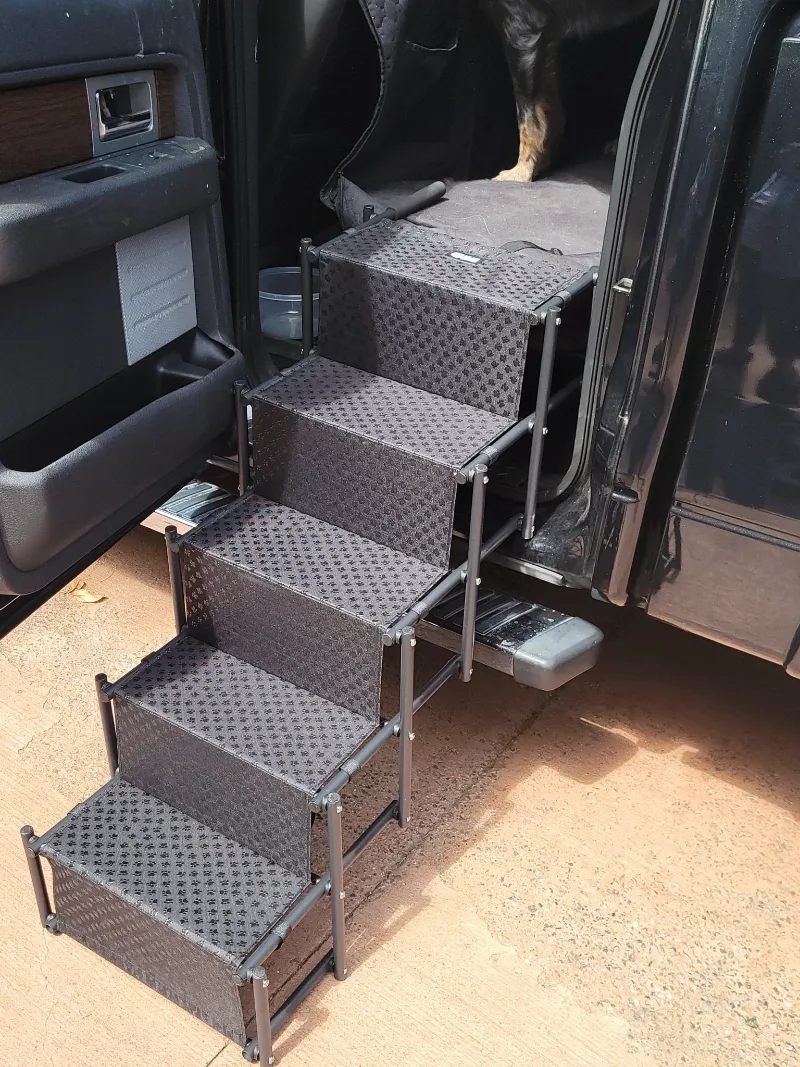
Big dog stairs for giant breeds like Great Danes and Mastiffs need to reach 24 to 36 inches in total height to access most beds, couches, and SUV cargo areas without forcing your dog to jump. The right height depends on what your dog is climbing to, but equally important are step depth, weight capacity, and stability—because a wobbly staircase scares giant breeds and defeats the purpose.
Why Height Matters for Big Dog Stairs
Great Danes stand 28 to 32 inches at the shoulder, and Mastiffs range from 27 to 30 inches. A bed frame adds another 24 to 30 inches of platform height, which means your dog needs stairs that bridge that gap in manageable increments. Forcing a 150-pound dog to stretch or leap stresses joints, especially in senior dogs or breeds prone to hip dysplasia.
The ideal step rise (the vertical distance between each tread) should stay under 8 inches. That keeps the climb comfortable and reduces the chance your dog will skip steps or refuse to use the stairs altogether. For a 30-inch-tall bed, you'd need at least four steps with 7.5-inch rises.
Measuring Your Target Height
Before you shop, measure the exact height your dog needs to reach:
- Bed or couch: Measure from the floor to the top of the mattress or cushion, not the frame.
- Vehicle cargo area: Measure from the ground to the lip of the trunk or rear hatch when the vehicle is parked on level ground.
- Grooming table or exam table: Measure to the table surface.
Add two inches to your measurement as a safety margin. Most modular stairs let you add or remove steps, but fixed-height models don't, so accuracy matters. If you're shopping at Big Ass Dog Company, grab the code to save 10% on accessories that pair with stairs, like a big dog leash for controlled stair training.
Step Depth and Tread Width for Giant Breeds
Height is only half the equation. Each tread (the flat surface your dog steps on) should be at least 10 to 12 inches deep for giant breeds. Great Danes and Mastiffs have long strides, and shallow treads force them to bunch their paws or hesitate mid-climb.
Tread width should match your dog's shoulder width, typically 16 to 20 inches for these breeds. Narrow stairs tip or shift under 120+ pounds of moving weight. Look for stairs with:
- Non-slip surfaces: Carpet, rubber treads, or textured foam prevent slipping.
- Side rails or walls: These guide your dog and add confidence, especially during nighttime trips.
- Weight capacity over 150 pounds: Many "large dog" stairs max out at 100 pounds, which isn't enough for Mastiffs or male Great Danes.
Materials and Stability
Lightweight foam stairs collapse under giant breeds. We recommend solid wood, reinforced plastic, or heavy-duty aluminum frames. Chewy's selection includes several models rated for 200+ pounds, though you'll want to cross-check dimensions.
Stability features to prioritize:
- Rubber feet or grippers on the bottom to prevent sliding on hardwood or tile.
- Wide base: A bottom step that's wider than the top adds a stable footprint.
- Foldable vs. fixed: Folding stairs are convenient for travel but usually wobble more than fixed frames.
If you're outfitting your dog's space with other large-breed gear, a giant dog bed placed next to the stairs creates a safe landing zone, and large dog bowls nearby keep hydration accessible without extra trips.
Height Recommendations by Use Case
| Use Case | Target Height | Recommended Steps | Notes |
|---|---|---|---|
| Standard bed frame | 24-30 inches | 4 steps | Most common residential height |
| High bed or platform bed | 30-36 inches | 5 steps | Consider modular or adjustable stairs |
| SUV or truck cargo | 28-34 inches | 4-5 steps | Measure with vehicle loaded for accuracy |
| Couch or sofa | 18-22 inches | 3 steps | Lower rise, wider treads preferred |
For vehicles, portable ramps often work better than stairs because they adjust to any height and fold flat. Rover's guide to pet ramps covers telescoping and tri-fold options that handle 200+ pounds.
Training Your Dog to Use New Stairs
Even perfectly sized stairs take patience. Giant breeds can be cautious, and a bad first experience will make your dog avoid the stairs entirely. Start with treats on each step, let your dog explore at their own pace, and never force or pull them up. A large dog harness gives you gentle support during training without choking, especially if your dog hesitates mid-climb.
BigDogMom's review of dog steps includes video clips of training techniques for nervous dogs, which is helpful if your Dane or Mastiff freezes on step two.
Practice during daylight first, then add a nightlight near the stairs so your dog can see each tread during late-night bathroom trips. Consistency matters—use the stairs yourself a few times to show they're safe, and reward every successful climb for the first two weeks.
When to Skip Stairs and Use a Ramp
If your dog has advanced arthritis, a torn ACL, or hind-leg weakness, a ramp often works better than stairs. Ramps eliminate the need to lift each paw repeatedly, which reduces joint strain. The tradeoff is space—a ramp needs 3 to 4 feet of floor length to achieve a safe incline, while stairs fit in 2 feet.
For vehicle access, ramps win for most giant breeds because they handle uneven ground and adjust to different car heights. For beds, stairs usually fit tighter spaces and look less industrial. Check the latest price on both options at Big Ass Dog Company before deciding, since sales can tip the value either way.
What We Recommend
For Great Danes and Mastiffs, aim for stairs that hit 30 inches of total height with four or five steps, each at least 11 inches deep and 18 inches wide. Prioritize solid construction, rubberized feet, and a weight capacity above 150 pounds. Measure your bed or vehicle first, add two inches, and verify the step rise stays under 8 inches.
If you're also upgrading leashes or harnesses for stair training, an xl dog harness pairs well with controlled practice sessions and gives you a secure handle if your dog wobbles. Pair that with a x large dog harness for dogs over 140 pounds to ensure even weight distribution during the learning phase.
Giant breeds deserve gear that actually fits their size and weight. The right stair height, paired with stable construction and patient training, keeps your dog mobile and your floors free of the joint-damaging jumps that shorten active years.
 Shopping at Big Ass Dog Company? See today's verified Big Ass Dog Company discount code
Frequently asked questions
What is the best height for big dog stairs for a Great Dane?
Big dog stairs for Great Danes should reach 24 to 30 inches for standard beds and 28 to 34 inches for SUV cargo areas. Choose stairs with four or five steps so each rise stays under 8 inches, which protects joints and encourages consistent use.
Can Mastiffs use the same stairs as smaller large breeds?
No, most stairs labeled for large dogs max out at 100 pounds, which isn't safe for Mastiffs. You need stairs rated for at least 150 to 200 pounds with wider treads (16+ inches) and deeper steps (11+ inches) to accommodate their size and weight.
Should I use a ramp instead of stairs for my giant breed dog?
Ramps work better for dogs with severe arthritis or hind-leg weakness because they eliminate repetitive paw lifting. Stairs fit tighter spaces and work well for healthy dogs or those with mild joint issues. Measure your available floor space before deciding.
How do I train a nervous Great Dane to use new stairs?
Place treats on each step and let your dog explore without pressure. Use a harness for gentle support, practice during daylight first, and reward every successful climb. Never pull or force your dog, as one bad experience can create lasting fear.
What step depth do giant breed dogs need?
Giant breeds need treads at least 10 to 12 inches deep. Shallow steps force dogs to bunch their paws or hesitate, which defeats the purpose of stairs and can cause slipping or refusal to climb.
Do portable dog stairs hold enough weight for Mastiffs?
Most portable foam stairs collapse under giant breeds. Look for portable models with reinforced aluminum or heavy-duty plastic frames explicitly rated for 175+ pounds, and always test stability on your floor type before letting your dog climb.