
Digital Laser Angle Finder: When a Level Isn't Enough

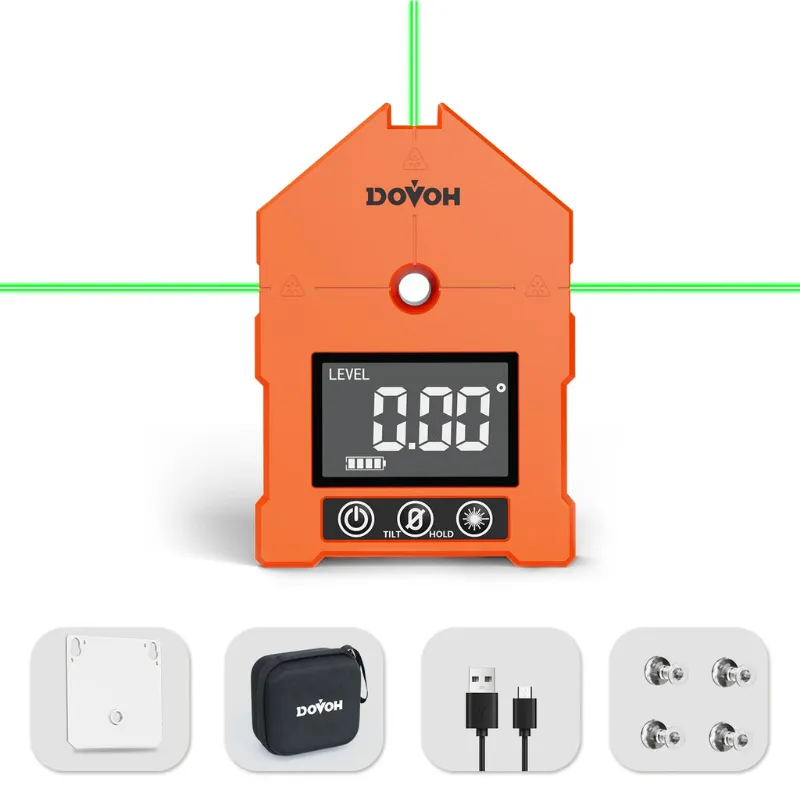
Why You Need More Than a Bubble Level
A digital laser angle finder delivers precise angular measurements and projects reference lines simultaneously, which is exactly what you need for crown molding, rafter cuts, and matching existing angles that a standard level simply can't measure. While a cross line laser level shows you plumb and level, an angle finder tells you the actual degree of a slope, bevel, or miter, then projects a laser line at that exact angle so you can transfer it directly to your work.
We tested angle finders alongside traditional levels and found that jobs requiring angle matching, complex joinery, or roof work went dramatically faster when we could read and project the angle in one tool instead of guessing with a protractor and then setting up a separate laser.
When a Standard Laser Level Isn't Enough
Standard laser levels excel at establishing horizontal and vertical references. A grid laser level or outdoor laser level projects multiple lines across a room or jobsite, perfect for tile layout, framing, and alignment. But they can't measure an existing angle or project a line at 38.5 degrees to match your cathedral ceiling.
That's where a digital angle finder bridges the gap. You place the tool against the surface, read the digital display, and the integrated laser projects that angle onto your workpiece or wall. This combination makes it indispensable for:
- Crown molding and trim – Match wall-to-ceiling angles that are rarely exactly 90 degrees, then transfer the correct miter setting directly to your saw.
- Stair and railing work – Measure the exact slope of stringers or handrails and project the angle onto balusters or newel posts.
- Roofing and siding – Capture roof pitch digitally, then use the laser to mark cut lines on rafters or siding without climbing up and down.
- Bevel cuts and joinery – Copy angles from furniture, cabinets, or architectural details with 0.1-degree accuracy.
A dovoh laser level handles layout and leveling across the room, but only an angle finder can tell you that the corner is 88.3 degrees and project that measurement as a cutting guide.
Magnetic Base and Laser Projection
The best digital angle finder designs include a 4-side magnetic base that locks onto saw fences, pipe, framing, and steel studs, freeing both hands for marking or cutting. The magnetic grip also stabilizes the tool on uneven surfaces, so the digital readout stays steady while you note the measurement.
Laser projection is the second critical feature. Once the tool reads the angle, a built-in laser line extends that measurement onto your workpiece or the adjacent surface. This laser angle projector function eliminates the need to transfer measurements manually with a T-bevel or protractor, cutting setup time in half and reducing errors on complex cuts. Some models include a level vial as well, giving you a hybrid tool that handles both tasks.
When comparing options, look for:
| Feature | Why It Matters |
|---|---|
| 0.1° resolution | Precision for trim and finish carpentry where half a degree shows |
| Magnetic base | Hands-free operation and stable readings on metal surfaces |
| Integrated laser | Projects the measured angle directly onto the work |
| Auto-shutoff | Extends battery life on jobsites where you set the tool down between cuts |
Pairing with a Full Laser Level Kit
Most pros carry both tools. A laser level and pole or laser level with receiver sets up the layout for framing, drywall, and tile, establishing level and plumb across long spans and outdoor sites. The digital laser angle finder comes out when the job shifts to angles: cutting rafters to match pitch, installing handrails on stairs, or mitering trim around bay windows.
We keep a cross line laser level mounted on a tripod for general layout and pull the angle finder from the toolbox whenever we encounter a non-90-degree joint. The two tools complement each other instead of overlapping, and job efficiency improves because you're always using the right tool for the task.
One workflow that saves time: use the laser level to establish your horizontal or vertical reference, then place the angle finder against the intersecting surface to measure the deviation. The angle finder's laser then projects that exact measurement onto your material, so your cut matches the real-world condition instead of an assumed square corner.
Battery and Accuracy Considerations
Most digital angle finders run on common AA or AAA cells, though some models use rechargeable packs. If your other Dovoh tools share a battery platform (such as the fl 260 battery), check whether the angle finder accepts the same pack to reduce the number of chargers and spares you carry.
Accuracy specs typically range from ±0.1° to ±0.3°. For finish carpentry and millwork, aim for 0.1° resolution and ±0.2° accuracy. Framing and rough work can tolerate 0.5°, but tighter specs future-proof the tool as your projects grow more detailed.
Calibration is straightforward: most units include a calibration mode where you zero the display on a known flat surface or use a machined reference block. Recalibrate every few months or after a drop to maintain accuracy. The laser module itself rarely drifts, but the inclinometer sensor benefits from periodic zeroing.
Check the latest pricing and grab the current code to save 15% on a complete angle finder and level kit.
Who Should Add an Angle Finder to Their Kit
If your work involves any of the following, a digital angle finder will pay for itself in time saved and mistakes avoided:
- Finish carpenters installing crown, baseboard, or wainscoting in older homes where walls and ceilings are out of square.
- Stair builders who need exact stringer angles and consistent baluster cuts.
- Framers and roofers measuring and cutting rafters, hips, and valleys to match pitch.
- Cabinet and furniture makers copying angles from existing pieces or architectural elements.
- DIYers tackling trim or deck railings who want professional results without trial-and-error miter cuts.
A standard bubble level won't measure the angle of your deck stairs or the pitch of a shed roof. A grid laser level will show you plumb and level, but it can't tell you that the wall leans 2.3 degrees or that your miter saw needs to be set to 33.7° to match the existing trim. That's the job of a digital angle finder with laser projection, and once you own one, you'll wonder how you managed complex angles without it.
Visit the Dovoh discount code page to see current bundles and pricing on angle finders, laser levels, and accessories.
Frequently asked questions
What is the difference between a digital angle finder and a laser level?
A laser level projects horizontal or vertical reference lines to establish plumb and level across a surface. A digital angle finder measures the precise angle of a slope or bevel and projects a laser line at that exact angle, which is essential for mitering trim, cutting rafters, and matching non-square corners.
Can a digital laser angle finder replace my regular level?
Not entirely. An angle finder excels at measuring and projecting specific angles, but a cross line or grid laser level is faster and more practical for general layout, tile work, and framing. Most pros carry both tools because they serve different purposes.
How accurate are digital angle finders for finish carpentry?
Quality models offer 0.1-degree resolution and ±0.2-degree accuracy, which is more than sufficient for crown molding, stair railings, and cabinetry. Recalibrate the tool every few months to maintain precision.
Do I need a magnetic base on my angle finder?
A magnetic base is extremely useful because it lets the tool grip saw fences, pipe, and steel framing hands-free, stabilizing the readout while you mark or cut. It's not mandatory, but it speeds up repetitive angle work significantly.
Will a digital angle finder work outdoors for roofing?
Yes, you can measure roof pitch and project the angle onto rafters or siding. However, laser visibility drops in bright sunlight, so work in shade or early morning when possible, or pair the tool with a laser level receiver for long-distance outdoor work.
What battery does the Dovoh digital laser angle finder use?
Check the product specifications for your model. Some angle finders use AA or AAA batteries, while others may share rechargeable packs with other Dovoh tools for convenience on the jobsite.