
Drillbrush Drill Brush Attachments Reviewed: The Right Set for Every Surface

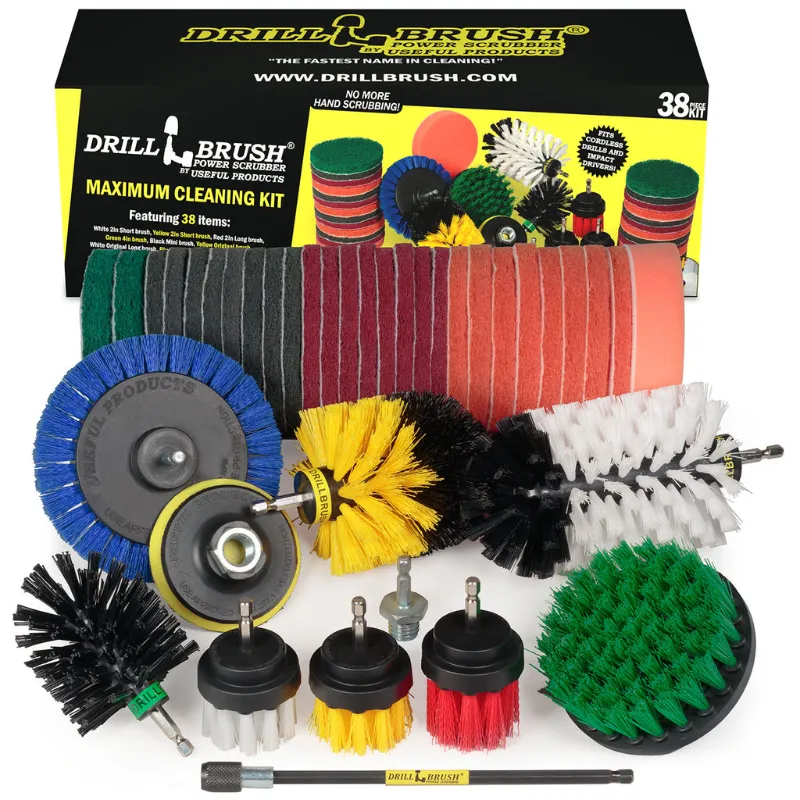
Drill brush attachments turn any standard power drill into a serious cleaning machine, handling everything from bathroom grout to car upholstery in a fraction of the hand-scrubbing time. Drillbrush makes a wide lineup that covers stiff bristles for tough grime, soft bristles for delicate finishes, and polishing pads for a showroom shine. This guide breaks down which attachment suits which job so you buy the right one the first time.
How Drill Brush Attachments Actually Work
A drill brush attachment threads or chucks onto your drill's bit holder, then spins at several hundred RPM to do the scrubbing for you. The mechanical action loosens grime faster than a hand brush because the torque stays consistent the whole time.
The key components in any set are:
- The brush head — the business end, available in different shapes (flat, cone, corner) and stiffness levels
- The drill adapter — a universal extension shaft that connects the brush to your drill's chuck and gives you reach in tight spots
- The cleaning media — bristles for scrubbing, foam or microfiber pads for polishing
The drill adapter is worth calling out separately because it fits most standard drills and lets you swap heads mid-job without stopping to re-chuck anything.
Choosing the Right Bristle Stiffness
Bristle stiffness is the single most important decision you'll make when picking an attachment. Using a stiff brush on a delicate surface scratches it; using a soft brush on heavy calcium deposits wastes your time.
| Surface Type | Recommended Bristle | Product to Use |
|---|---|---|
| Grout, concrete, tile | Stiff | drill brush scrubber |
| Car interiors, fabric seats | Medium | drill brush scrub |
| Painted surfaces, gel coat | Soft | soft bristle brush |
| Rubber, vinyl trim | Stiff or medium | black brush |
| Polishing clear coat or chrome | Pad only | polishing pad for drill |
A good rule of thumb: if the surface can be scratched by a fingernail, start with the soft bristle brush and work up only if needed. For outdoor jobs like deck cleaning or wheel wells, the stiff drill brush is the right default.
The Polishing Pad Options Explained
Polishing is a different job from scrubbing, and Drillbrush addresses it with dedicated foam pads rather than bristles. The polishing pads for drill mount the same way as the brush heads, so switching between scrubbing and polishing mid-detail is quick.
What the pads are designed for:
- Applying and buffing wax or sealant on car paint
- Finishing stainless steel appliances after cleaning
- Polishing natural stone countertops
- Working compound or glaze into painted surfaces
The polish pad drill is the companion piece to the polishing pad for drill — one for heavier compound work, one for finer finishing. Pair either with a multi purpose cleaning paste or the dedicated paste for cleaning and you get a full clean-then-polish workflow without switching products.
> Tip: Run polishing pads at a lower drill speed than you would bristle brushes. High RPM on a pad can burn through wax or overheat a compound.
Best Surfaces for Each Attachment
Knowing which head to reach for first saves both time and surfaces from accidental damage.
Bathroom and kitchen:
- Grout lines respond best to a cone-shaped stiff drill brush scrubber
- Tile faces and sink basins work well with the flat stiff brush
- Chrome fixtures and ceramic do better with a softer head to avoid micro-scratches
Automotive:
- Carpet and cloth seats: medium drill brush scrub
- Wheel wells and tire sidewalls: stiff black brush
- Paint, clear coat, and trim panels: soft bristle brush for cleaning, polishing pads for finishing
Outdoor and utility:
- Deck boards, patio pavers, and concrete: stiff brush or drill brush scrubber
- Boat hulls above the waterline: medium bristle with a marine-safe cleaner
- Garden furniture: medium bristle depending on the material
Using a Cleaning Paste With Your Attachment
A brush alone handles loose grime, but embedded stains and oxidation need a chemical assist. The paste for cleaning from Drillbrush is formulated to work with their brushes and pads rather than against them, meaning it won't degrade the bristles or foam over time the way some harsh degreasers can.
How to get the best results:
- Pre-wet the surface
- Apply a small amount of the multi purpose cleaning paste directly to the brush head or surface
- Run the drill at medium speed, working in small sections
- Rinse thoroughly before the paste dries
The multi purpose paste handles most household surfaces, so if you're buying for general home use rather than a specific application, that's the one to start with.
What to Look for When Buying a Set
If you're outfitting from scratch rather than adding a single attachment, a bundled set usually makes more sense than buying heads individually. Here's what a well-rounded set should include:
- At least two bristle stiffness levels (stiff and soft)
- One flat brush and one cone or edge brush for corners
- At least one polishing pad for drill if you do any auto detailing
- A drill adapter with enough shaft length to reach into recessed areas
Check the current lineup and grab the discount code before you order — there's an active 10% off offer on all orders that applies to sets and individual attachments alike.
Caring for Your Brushes and Pads
Attachments last considerably longer with basic maintenance after each use.
- Rinse bristle brushes under warm water immediately after use and shake out excess moisture
- Never store a wet brush head enclosed — lay it flat or hang it to dry
- For polishing pads, wipe off compound residue with a damp cloth; don't soak them
- Inspect the threads on the drill adapter periodically; a cross-threaded connection reduces speed transfer and can damage your chuck
Stiff bristles will naturally soften slightly with use — that's normal. If a brush is leaving behind grime it used to handle, it's time to replace the head rather than press harder, which just strains the drill motor.
---
Ready to upgrade your cleaning setup? Check the latest prices and discount code at the Drillbrush store to see the full range of attachments, sets, and cleaning pastes available right now.
Frequently asked questions
Will drill brush attachments fit any drill?
Most Drillbrush heads are designed to fit standard 3/8-inch and 1/2-inch drill chucks. If you need extra reach or a more secure connection, use the dedicated drill adapter, which provides a universal fit for the vast majority of corded and cordless drills.
What is the difference between the soft bristle brush and the black brush?
The soft bristle brush is designed for delicate surfaces like painted finishes, gel coat, and sealed stone where scratching is a risk. The black brush uses stiffer bristles suited to harder surfaces like rubber trim, tire sidewalls, and textured plastic.
Can I use the polishing pads for drill on car paint without damaging the clear coat?
Yes, the polishing pads are foam-based and safe for clear coat when used at a moderate drill speed. Pair them with an appropriate polish or the paste for cleaning, and keep the drill speed lower than you would for bristle brushes to avoid heat buildup.
Is the multi purpose cleaning paste safe for all surfaces?
It is formulated for general household use across a wide range of surfaces, but always spot-test on an inconspicuous area first, especially on natural stone, unsealed wood, or soft plastics.
How often should I replace drill brush attachments?
There is no fixed interval since it depends on frequency of use and surface hardness. Replace a brush head when the bristles are visibly deformed, splayed unevenly, or no longer removing the grime they once handled. Polishing pads should be replaced when they tear, compress unevenly, or no longer hold compound properly.
Is there a discount code available for Drillbrush products?
Yes, there is a current 10% off offer on all orders. You can find the active code and verify it is still running on the Drillbrush discount code page before you check out.