
In-Ear Monitor System vs Traditional Stage Monitors: Which Is Right for Your Band?

In Ear Monitor System vs Traditional Stage Monitors: Which Is Right for Your Band?
An in ear monitor system delivers a personalized audio mix directly into your ears, eliminating feedback and giving you freedom to move across the stage. Traditional floor wedges broadcast sound to the entire stage, which works for smaller setups but often creates volume wars and muddy mixes as your band grows. We'll walk you through how each approach works, what gear you need, and which setup suits your band size and budget.
How an In-Ear Monitor System Works
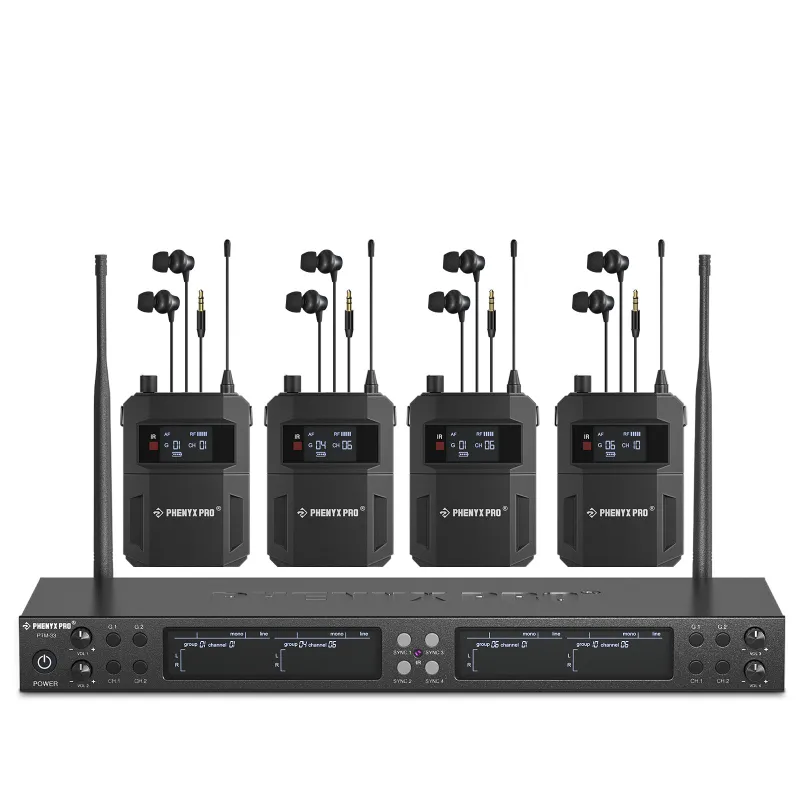
In-ear monitor systems use a transmitter connected to your mixer and wireless belt-pack receivers that feed earpieces. Each musician gets an independent mix, so your drummer can crank the click track while your singer hears more vocals and less kick drum. The phenyx pro ptm-10 is a popular wireless system that handles up to four separate mixes simultaneously, making it ideal for smaller bands transitioning from wedges.
You'll need a mixer with auxiliary sends to create individual mixes. The alto professional truemix 800 portable 8-channel analog mixer with usb offers four aux outputs, letting you build unique monitor feeds for four band members. Pair it with a wireless in-ear monitor system for whole band setup and you can cover vocals, guitar, bass, and drums without adding a single floor monitor.
Key components include:
- Transmitter base station that receives audio from your mixer
- Belt-pack receivers (one per musician)
- Earpieces or earbuds designed for stage use
- TS cables or 1/4 input cable to connect mixer aux sends to transmitters
- Optional 4u rack case to mount transmitters for touring rigs
Traditional Stage Monitors: When Floor Wedges Still Make Sense
Floor wedges are passive or powered speakers angled toward performers. They're simple to set up and require no additional wireless gear or batteries. For small acoustic acts, solo performers, or bands with a stationary front person, wedges remain a practical choice. You plug your aux send into a powered monitor, aim it at the vocalist, and you're ready to perform.
The trade-offs become clear as stage volume increases. Every wedge adds to the overall sound bleeding into vocal mics, which forces your sound engineer to push everything louder to overcome feedback. Drummers often struggle to hear themselves without cranking wedges so loud that the front-of-house mix suffers. If you're playing smaller venues or coffee shops where stage volume matters, check the latest price on wireless IEM systems before committing to more wedges.
Best In Ear Monitor System Configurations for Different Band Sizes
For singers and front-line musicians, a single-channel wireless setup covers most needs. The in ear monitor system we tested delivers clear vocal reproduction and lets you move freely without tripping over monitor cables. Pair it with a professional wireless microphone so you're completely cable-free.
For whole bands, look at four-channel systems like the 5200/4 that support multiple mixes from a single rack unit. Each member controls their own volume via the belt-pack, which eliminates the "turn me up" requests that plague wedge-based rigs. Churches and worship bands particularly benefit because singers can hear the music director's cues without disturbing the congregation.
For drummers, in-ear systems solve the chronic problem of hearing anything over cymbal wash. An in-ear monitor system for drummers isolates the click track, bass, and kick drum in your mix while providing up to 26 dB of passive noise reduction from the earpieces themselves. The 7000/2 works well for drummers who need stereo monitoring to distinguish between left and right overheads.
| Feature | In-Ear Monitors | Floor Wedges |
|---|---|---|
| Stage volume | Low (isolated audio) | High (broadcasts to stage) |
| Mobility | Full freedom | Tethered to monitor position |
| Personalized mix | Yes, per musician | Shared across nearby performers |
| Hearing protection | Built-in isolation | None (often exceeds 100 dB) |
What You Need to Build Your First In-Ear Monitor System for Musicians
Start with your existing mixer's aux sends. If you're running a four channel mixer, you may only have one or two aux outputs, which limits you to one or two independent mixes. Upgrade to an eight-channel board like the alto professional truemix 800 portable 8-channel analog mixer with usb and you unlock four separate IEM feeds.
Next, choose between wired and wireless. Wired systems cost less and never need battery changes, but cables restrict movement. Wireless systems like the phenyx pro wireless series give you 300-foot range and rechargeable receivers. Budget around the cost of one receiver per musician, plus a transmitter for each unique mix you're sending.
Don't forget earpieces. Generic earbuds fall out during energetic performances. Stage-grade earpieces use over-ear cable routing and foam or silicone tips that seal your ear canal for better bass response and noise isolation. Many musicians start with universal-fit models and upgrade to custom-molded earpieces once they're committed to IEMs.
Switching from Wedges to IEMs: Common Challenges and Fixes
The biggest adjustment is learning to trust your mix. Wedges let you hear ambient stage sound, crowd noise, and natural room acoustics. IEMs isolate you, which feels disconnected at first. Add a small amount of audience mic or room mic to your IEM mix so you still feel the energy and applause. Many FOH engineers run ambient mics specifically for in-ear monitor systems for church bands and touring acts.
Stereo versus mono matters more with IEMs. A mono mix feels centered in your head, which some singers find fatiguing. Stereo mixes let you pan instruments left and right for a more natural soundstage. The phenyx pro ptm-10 supports both modes, so experiment during rehearsal before your next gig.
Battery management becomes part of your pre-show routine. Charge all receivers the night before and carry spares. Some musicians keep a wired IEM cable as a backup in case a receiver dies mid-set. The wireless mic batteries often last longer than IEM receivers because mics transmit less continuous data, so plan accordingly.
Where to Buy and How to Save on Your Setup
We've tested dozens of in-ear monitor system for whole band configurations, and Phenyx Pro consistently delivers reliable wireless performance without the premium prices of legacy brands. Grab the code for an additional discount on multi-channel systems when you're outfitting your entire band. Bundling your mixer, wireless mics, and IEM transmitters in a single order often unlocks better pricing than buying piece by piece.
The right choice depends on your stage size, band dynamics, and whether hearing protection matters to you long term. If you're playing loud rock gigs or running monitors for multiple musicians, an in-ear monitor system will transform your live sound and save your ears. Smaller acoustic acts and solo performers may find a single powered wedge still meets their needs. Either way, investing in proper monitoring improves every performance more than almost any other gear upgrade.
Frequently asked questions
Can I use an in ear monitor system with my existing mixer?
Yes, as long as your mixer has auxiliary sends. Each aux output creates one monitor mix, so a mixer with four aux sends supports up to four independent IEM mixes. Connect the aux output to your wireless transmitter using standard TS or TRS cables.
Do in-ear monitors work for drummers who need to feel the bass?
Absolutely. Quality IEM earpieces deliver tight low-end response, and you can boost the kick drum and bass in your personal mix without affecting the rest of the band. Many drummers prefer IEMs because they isolate the click track and reduce cymbal bleed.
How many IEM receivers do I need for a four-piece band?
One receiver per musician, so four receivers total. You'll also need a transmitter for each unique mix. A four-channel system lets you send four different mixes from one transmitter rack, which is more efficient than running separate single-channel units.
Are wireless in-ear monitors reliable enough for live performances?
Modern wireless IEM systems operate on UHF frequencies with solid range and minimal dropouts. Keep fresh batteries in your receivers, avoid placing the transmitter near metal obstacles, and stay within the rated range. We've run entire tours on wireless systems without issues.
What's the main advantage of IEMs over floor wedges for singers?
IEMs eliminate feedback, reduce stage volume, and let you move anywhere without losing your monitor mix. You also protect your hearing because you control the volume directly at your ears instead of competing with loud wedges.
Can I mix in-ear monitors and floor wedges on the same stage?
Yes, but it reduces some IEM benefits. If half the band uses wedges, stage volume stays high and you may still get mic bleed. It works as a transition setup while you gradually move everyone to IEMs, especially if budget limits how many receivers you can buy at once.