
What Size Rack Case Do You Need? Matching 4U Cases to Your Audio Equipment

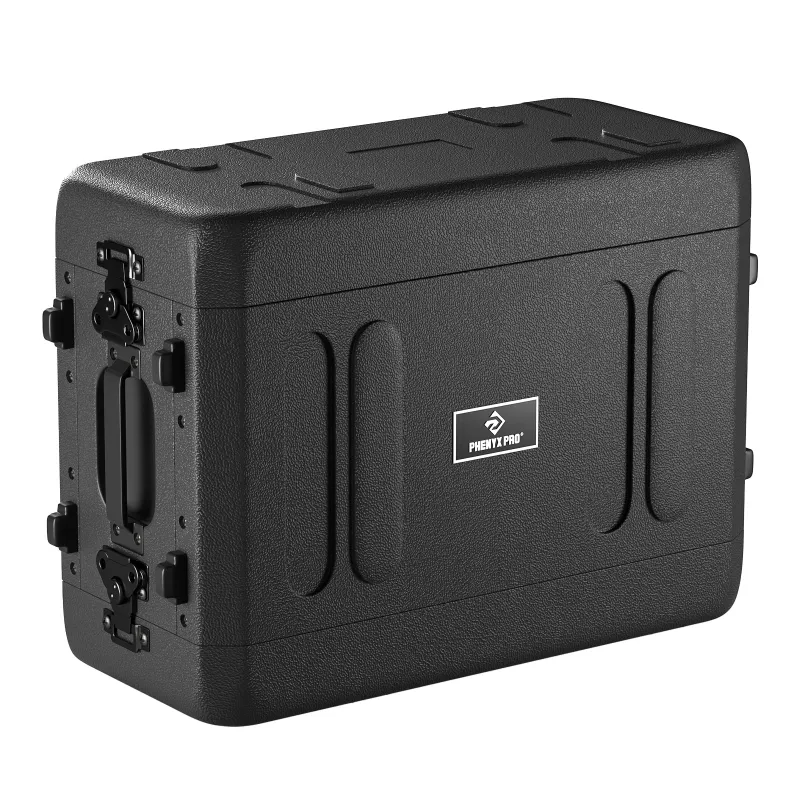
A 4u rack case provides seven inches of vertical mounting space, ideal for compact mixers, wireless microphone receivers, and in-ear monitor transmitters. If you're building a portable audio rig or organizing rack-mountable gear, understanding rack unit sizing ensures your equipment fits securely and leaves room for cable management.
Understanding Rack Unit Measurements
Rack units (U) measure vertical space in 19-inch equipment racks. One rack unit equals 1.75 inches of usable panel height. A 4u rack case offers exactly 7 inches of mounting space (4 × 1.75"), while a 2u rack case provides 3.5 inches and a 6u rack case gives you 10.5 inches.
The standard 19-inch width applies across all rackmount cases, so your primary decision is vertical capacity. Most audio interfaces, wireless systems, and small mixers occupy between 1U and 3U of space, making 4U cases a practical middle ground for portable setups.
When measuring your gear, check the manufacturer's specs for rack space requirements. Some devices include mounting ears but take up more space than their panel suggests once you account for rear connectors and ventilation clearance.
What Audio Equipment Fits in a 4U Rack Case
A 4U case comfortably houses several common audio devices we use in live sound and studio applications:
- Compact mixers: The alto professional truemix 800 portable 8-channel analog mixer with usb and similar four channel mixer units typically require 2U to 3U when rack-mounted with a shelf
- Wireless microphone receivers: Dual-channel systems like the phenyx pro wireless and quad-channel units such as the 5200/4 usually occupy 1U per receiver
- In-ear monitor transmitters: An in ear monitor system transmitter commonly takes 1U, leaving space for a wireless mic receiver or audio processor
- Audio processors and effects: Compressors, EQs, and gates in single-rack-space formats stack efficiently in 4U
- Patch bays and distribution: Quarter-inch or XLR patch panels for organizing ts cables and 1/4 input cable connections
For example, you could fit a 7000/2 wireless system (1U), a phenyx pro ptm-10 in-ear monitor unit (1U), and a small mixer on a 4u rack shelf (2U) in a single case. Check current pricing and grab our discount code to save 5% on Phenyx Pro gear.
Comparing 2U, 3U, 4U, and 6U Rack Cases
Choosing the right rack depth depends on how much equipment you need to transport and whether you prioritize portability or expandability.
| Rack Size | Height | Best For | Portability |
|---|---|---|---|
| 2u rack case | 3.5" | Single wireless system or processor | Maximum |
| 3u rack case | 5.25" | Mixer + one wireless unit | High |
| 4U | 7" | Small multi-device rig | Moderate |
| 6u rack case | 10.5" | Full mixer, wireless, and monitoring | Lower |
A 2u rack case works well for a minimalist setup with just a professional wireless microphone receiver and a simple audio interface. A 3u rack case adds breathing room for a second device or a compact mixer.
We recommend 4U for most mobile rigs because it balances capacity with weight. You can carry it comfortably while still having room for core components plus one or two accessories. A 6u rack case suits permanent installations or touring setups where you're loading flight cases into a vehicle rather than hand-carrying gear.
Mounting Hardware and Cable Management
Most rackmount cases use standard 10-32 threaded cage nuts or tapped rail strips. Verify your case includes mounting hardware, or purchase rack screws and washers separately. Each device requires four screws (two per side) for secure installation.
Cable management tips for 4U setups:
- Route power cables along the rear rails using velcro straps
- Use right-angle 1/4 input cable connectors to reduce rear depth
- Leave at least 1U of space between heat-generating devices (amplifiers, wireless transmitters)
- Label both ends of every cable before mounting devices permanently
- Install a power strip or conditioner at the bottom or top of the case to centralize AC connections
Some 4U cases include removable front and rear covers. Rear covers protect connectors during transport but should be removed during operation to allow airflow. Front covers shield controls from accidental changes but can limit access to frequently adjusted settings.
Choosing Between Hard Cases and Soft Rack Bags
Hard shell 4U cases use ABS plastic or polyethylene construction with foam interiors. They offer maximum protection for air travel and rough handling but add significant weight (typically 8 to 15 pounds empty).
Soft rack bags use padded nylon or polyester with reinforced corners. They weigh 3 to 6 pounds and cost less than hard cases, making them popular for local gigs and studio transport.
We use hard cases when shipping gear or working outdoor festivals where weather protection matters. Soft bags suit controlled environments like churches, theaters, and recording studios where you're moving equipment between climate-controlled spaces. Visit our Phenyx Pro coupon page to see current deals on both case styles.
For a wireless mic and small mixer setup that stays indoors, a quality soft bag saves money and back strain. If you're mounting a full monitoring rig with an in ear monitor system and multiple wireless channels, the investment in a hard case pays off in long-term equipment protection.
Depth Considerations for Rack Cases
Standard rackmount equipment uses 19-inch width, but depth varies significantly. Most 4U cases range from 12 to 20 inches deep (measured front rail to rear rail).
Measure your deepest device before buying a case. Wireless receivers and simple processors typically need 8 to 10 inches of depth. Mixers and multi-channel wireless systems may require 12 to 16 inches. Add two inches to your measurement to account for cable connections at the rear panel.
Shallow cases (12 to 14 inches) work for most wireless systems and rack-mounted interfaces. Deep cases (16 to 20 inches) accommodate mixers and powered devices with larger transformers. If you're unsure, measure from the front mounting ears to the furthest rear protrusion (usually a power connector or XLR jack) on your equipment.
Who Should Choose a 4U Rack Case
A 4U configuration suits several common audio scenarios we encounter:
- Mobile DJs running a small mixer, wireless handheld system, and audio interface
- House of worship sound teams with a monitor mixer and wireless mic receivers for vocalists
- Podcasters and content creators using multiple wireless mic channels and a compact mixer
- Small venue engineers who need a portable rack for wireless coordination and signal processing
- Musicians with in-ear monitoring combining a personal mixer, phenyx pro wireless pack, and effects
If your setup requires only one or two 1U devices, a 2u rack case saves space and cost. If you're running a full mixing console, multiple wireless systems, and extensive processing, step up to a 6u rack case or modular rack system. The 4U sweet spot handles three to four standard rack devices comfortably, with room for organized cabling and occasional gear swaps.
Frequently asked questions
How many rack units do I need for a wireless microphone system?
Most dual-channel wireless microphone receivers occupy 1U of rack space. A quad-channel system typically requires 1U to 2U depending on the model and front-panel controls.
Can I mount a mixer in a 4u rack case?
Yes, compact mixers like eight-channel and four-channel models fit in a 4U case when installed on a rack shelf. Most small format mixers require 2U to 3U of vertical space including the shelf hardware.
What is the difference between a 4U case and a 4u rack shelf?
A 4U case is an enclosure that holds multiple rack-mounted devices and provides transport protection. A 4u rack shelf is a flat tray that mounts inside a rack or case to support non-rackmount equipment like a laptop or mixer without mounting ears.
Do all 4U rack cases fit 19-inch equipment?
Yes, standard 4U rack cases use 19-inch mounting rails, which is the universal width for professional audio and IT rackmount equipment. Always verify depth capacity for your specific devices.
How much does a loaded 4U rack case weigh?
An empty 4U hard case weighs 8 to 15 pounds. Adding typical audio gear like wireless receivers, a small mixer, and cables brings the total to 20 to 35 pounds depending on equipment density.
Can I stack a 2U and 4U case for transport?
Yes, hard shell rack cases often include stacking recesses and latches that allow secure stacking. Soft rack bags should not be stacked with weight on top, as they lack rigid structure.