
What Is a Hidden Monitor Desk and Why Do Designers Love Them?

# What Is a Hidden Monitor Desk and Why Do Designers Love Them?
There's a quiet revolution happening in home offices and studios everywhere: the hidden monitor desk. At first glance, it looks like a clean, elegant piece of furniture — a console, a credenza, maybe even a dining surface. But lift a panel, swing open a lid, or slide back a hatch, and your entire workstation disappears in seconds. Monitor, cables, keyboard clutter — gone.
For designers, the appeal is obvious. A workspace that vanishes when not in use means the room gets to be something else: a living room, a bedroom, a studio that still feels like a studio. If you've ever tried to work from home in a shared space, you already understand the problem this solves.
What Exactly Is a Hidden Monitor Desk?
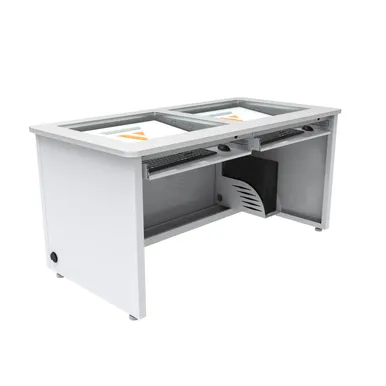
A hidden monitor desk (sometimes called a hidden desk with monitor storage or a murphy desk with monitor storage) is a desk designed so the monitor — and often the rest of your setup — can be concealed when you're not working. The concealment usually happens in one of a few ways:
- Lift-up panels or hinged tops — the monitor rises out of the desk or flips down from a cabinet.
- Rolling or sliding shelves — the screen retreats into a compartment on rails.
- Monitor lift mechanisms — motorized systems that raise and lower the screen at the push of a button.
- Tandem or pocket-door designs — the monitor slides sideways into a cabinet bay, hidden behind a panel.
Some designs go further with a hidden dual monitor desk setup, concealing two screens side by side so professionals with multi-display workflows can still enjoy a clutter-free room.
Interior designers love this category because it solves one of the most stubborn problems in modern interiors: technology visually colonizing every room. Even the most beautiful desk setup, left out overnight, makes a bedroom feel like an office and a living room feel like a cubicle. A hidden monitor desk restores the room's original identity the moment you close the lid.
You can see real homeowners wrestling with (and celebrating) this exact challenge in threads like this Mumsnet discussion on hidden monitors for work-from-home setups — it's a design dilemma with a passionate following.
Why Designers Love Them
1. They preserve visual calm. Minimalism isn't just an aesthetic; it's psychological. A room free of screens after hours helps people mentally clock out. Designers know that clients who "can't switch off" often just can't stop looking at the monitor.
2. They make small spaces functional. In apartments and multifunctional rooms, a desk that disappears doubles your usable square footage. For more ideas along these lines, this roundup of hideaway desk ideas that actually save space is worth a read.
3. They protect equipment. Dust, sunlight, curious pets, and visiting toddlers are all enemies of expensive monitors. Concealment is protection.
4. They hide the cables. Ask any designer what ruins a room fastest and they'll say cable clutter. Hidden monitor desks route cords internally, so the mess never sees daylight.
Popular Styles and Configurations
The Murphy-Style Desk
Borrowed from the Murphy bed concept, a murphy desk with monitor storage folds up into the wall or a cabinet when not in use. It's the most dramatic transformation — one minute it's a wall panel, the next it's a full workstation. Great for studio apartments and guest rooms that need to stay guest-ready.
The Lift-Top Console
This is the classic hidden monitor desk silhouette. The top lifts or the front panel drops, revealing your screen at the perfect eye height. It works beautifully in living rooms and bedrooms where you want the furniture to read as "storage" rather than "office."
The Hidden Dual Monitor Desk
For developers, traders, editors, and designers who genuinely need two screens, a hidden dual monitor desk keeps both displays tucked away behind doors or panels. When you close up, the room looks like it never contained technology at all.
The Motorized Lift Desk
The luxury option: press a button and the monitor rises smoothly out of the desktop. These pair especially well with height-adjustable bases — if you're considering this route, an electric standing desk with a spacious surface gives you the flexibility to alternate between sitting, standing, and concealed setups.
The DIY Approach
The hidden monitor desk DIY community is thriving. Hobbyists retrofit piano hinges, drawer slides, and soft-close hardware into existing cabinets to create their own concealment systems. If you're handy, it's a genuinely satisfying weekend project — though it's worth being honest with yourself about your skill level before cutting into expensive cabinetry.
And if you're browsing ready-made options and wondering about the hidden monitor desk IKEA question: mainstream flat-pack retailers have limited purpose-built options, which is exactly why specialty furniture makers like VersaTables have carved out a niche with purpose-built monitor desks and concealment solutions like the hidden monitor desk designed specifically for this use case.
Choosing the Right Hidden Monitor Desk
Before you buy, work through this checklist:
- Monitor size and count. Measure your display(s) diagonally and check the compartment's internal dimensions — including depth, which people often forget.
- Ventilation. Monitors and especially computers need airflow. Look for ventilation cutouts or leave clearance in a hidden desk with monitor storage design.
- Cable routing. Internal grommets and channels are non-negotiable if you want true "invisible" operation.
- Mechanism quality. Hinges, slides, and lift arms take daily abuse. Soft-close hardware is worth the upgrade.
- Ergonomics. The concealed position should still put your screen at eye level when open. If you alternate between sitting and standing, a height-adjustable base like the electric standing desk keeps the ergonomic math working.
Pairing Your Hidden Monitor Desk With the Right Supporting Pieces
A concealment desk is the star, but the supporting cast matters:
- Creative professionals: If your work extends beyond screens, a drafting table or a drawing desk table gives you a dedicated analog surface for sketching and rendering — keeping paper work separate from the concealed digital setup.
- Students and study spaces: A school desk in a kid's room or study nook benefits from the same "everything has a place" philosophy.
- Meeting rooms: In offices, a conference table with integrated cable management delivers the same visual calm that designers prize at home — clean lines, no cord spaghetti in the middle of a presentation.
- Mobile and secondary devices: A laptop wall mount is a smart complement — it gets your laptop off the desk entirely and onto the wall, freeing the hidden desk surface for what matters.
Frequently Asked Questions
Can a hidden monitor desk fit a large monitor?
Many can — but always check internal compartment dimensions before buying. Screens up to 27–32 inches are commonly supported; ultrawide and dual setups need purpose-built designs like a hidden dual monitor desk.
Is a hidden monitor desk DIY project realistic for beginners?
A simple hidden monitor desk DIY retrofit (adding a hinged panel and cable grommets to an existing cabinet) is beginner-friendly. Building a full murphy-style desk from scratch requires solid carpentry skills and quality hardware.
Does hiding my monitor cause overheating?
Not if the design is right. Choose a desk with ventilation slots or fans in the compartment, and avoid fully sealing electronics in unventilated cavities.
What's the difference between a murphy desk and a hidden monitor desk?
A murphy desk folds the entire workstation away into the wall. A hidden monitor desk stays a usable desk or surface — it just conceals the monitor (and often peripherals) when you're done working.
The Bottom Line
Designers love hidden monitor desks because they solve a modern problem with an old-fashioned idea: furniture that adapts to your life instead of the other way around. Your room stays beautiful, your equipment stays protected, and your workday ends the moment the lid closes.
Ready to reclaim your space? Explore the hidden monitor desk from VersaTables — and before you check out, grab the current 6% OFF All Orders offer on the VersaTables coupon page.
Frequently asked questions
Can a hidden monitor desk fit a large monitor?
Many can — but always check internal compartment dimensions before buying. Screens up to 27–32 inches are commonly supported; ultrawide and dual setups need purpose-built designs like a hidden dual monitor desk.
Is a hidden monitor desk DIY project realistic for beginners?
A simple retrofit (adding a hinged panel and cable grommets to an existing cabinet) is beginner-friendly. Building a full murphy-style desk from scratch requires solid carpentry skills and quality hardware.
Does hiding my monitor cause overheating?
Not if the design is right. Choose a desk with ventilation slots or fans in the compartment, and avoid fully sealing electronics in unventilated cavities.
What's the difference between a murphy desk and a hidden monitor desk?
A murphy desk folds the entire workstation away into the wall. A hidden monitor desk stays a usable desk or surface — it just conceals the monitor (and often peripherals) when you're done working.