
Standing Desk vs. Drafting Table: Which Workspace Is Right for You?

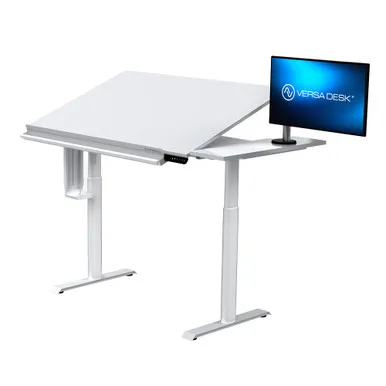
Standing Desk vs. Drafting Table: The Short Answer
An electric standing desk is the right pick if your work mostly happens on a computer: typing, dual monitors, video calls, and long stretches of sitting that you want to break up by standing. A drafting table is the right pick if your work is hands-on: drawing, drafting, painting, or any craft that benefits from tilting the work surface toward you. Many artists and designers genuinely need both, and that is exactly how we test and compare them here at The Planet Deals.
We have spent time with the VersaTables lineup, which covers both sides of this decision: their electric standing desk for computer-first workstations and their drafting table for creative work. Below, we break down where each one wins, and how to decide without overthinking it.
What Each Workspace Is Actually Built For
The two furniture types look similar at a glance, but they solve different problems.
Electric standing desks
A good adjustable standing desk solves one core problem: static posture. Sitting all day is rough on your back, and a desk that moves between sitting and standing height lets you change positions without clearing off your entire workspace. The best adjustable standing desk models do this at the press of a button, which matters more than you would think. Manual-crank desks get adjusted less because adjusting them is annoying, and a standing desk you never adjust is just a desk.
Features we look for when testing an electric standing desk adjustable height range, motor smoothness under load, wobble at standing height, and whether the frame can grow with your setup. If storage matters to you, an electric standing desk with drawers keeps your surface clear for monitor arms and keyboard trays. Wirecutter's standing desk reviews are a solid reference for what separates a great frame from a mediocre one, and their testing criteria line up closely with what we look for in our own evaluations.
Drafting tables
A drafting table solves a different problem: angle. Whether you are sketching, drafting plans, or doing layout work, tilting the surface between roughly flat and 30-plus degrees brings the work closer to your eyes and takes strain off your neck and wrist. No standing desk is designed to tilt its top, so this is not a feature you can bolt on.
VersaTables' drafting table is built around that tilt, with a surface designed for artists and students who work with paper, boards, and reference materials rather than dual monitors.
Side-by-Side Comparison
| Feature | Electric Standing Desk | Drafting Table |
|---|---|---|
| Best for | Computer work, dual monitors, sit-stand routines | Drawing, drafting, painting, craft work |
| Surface angle | Fixed, height-adjustable only | Tilts toward the user |
| Height range | Sitting to standing height | Typically seated use |
| Storage | Often optional drawers | Built into most designs |
| Who it suits | Office workers, developers, hybrid workers | Artists, architects, design students |
How to Choose: Four Questions to Ask Yourself
- Where does most of your work happen? If 80 percent of your day is on a keyboard and screen, get the standing desk. If 80 percent is on paper or a canvas, get the drafting table.
- Do you need to stand? If back pain, stiffness, or long sitting sessions are the issue, only an electric standing desk solves that. Tilt alone will not help.
- Do you have room for both? If yes, this is a genuinely good combo: the drafting table for creative sessions, the desk for everything else. If space is tight, pick the one that matches your dominant task.
- What does storage look like? If you are drowning in supplies and cables, an adjustable standing desk with storage, or a drafting table with built-in drawers, earns its footprint.
If you work in a shared space or education setting, it is also worth knowing that a dedicated school desk or a conference table may fit your room better than either of these, depending on how many people use the space.
Why Many People End Up Needing Both
Here is the honest answer from our testing: the standing desk vs. drafting table question often turns out to be a false choice. Creative professionals typically spend part of the day rendering, emailing, and editing on a computer, and part of the day with a pencil in hand. Trying to do drawing work on a flat standing desk leads to hunching, and trying to type on a tilted drafting surface is awkward at best.
If your budget allows one and your tasks are clearly split, our recommendation is simple: put your money into the electric standing desk for the daily computer grind, and add the drafting table as a secondary station when you can. If budget only allows one, let your dominant task decide, not the trend of the week.
For computer-heavy buyers comparing brands, it is worth browsing Standing desks at IKEA and Evodesk's electric sit-stand desk lineup to see how price and features compare across the market before you commit.
Buying Smart: What to Check Before You Order
Whatever you choose, check these before checkout:
- Height range. Measure from your floor to your elbow while seated and while standing, then confirm the desk covers both.
- Motor and frame quality. Listen for strain under load. A desk that grinds at full height will annoy you within a week.
- Storage. An electric standing desk with drawers saves a separate drawer unit, and it keeps your standing surface clean.
- Surface size. Drafting work wants depth; monitor setups want width. Measure your wall.
- Price and the discount code. VersaTables builds to order in the US, and current pricing changes. Before you buy, grab the code on our coupon page and check the latest price so you are not overpaying.
Our Verdict
If your job lives in a browser, choose the electric standing desk. If your job lives in a sketchbook, choose the drafting table. If your job lives in both, plan for both and start with whichever station you will use more hours per day. Either way, buy once, measure your space first, and use our VersaTables coupon page to knock something off the total.
Frequently asked questions
Is a drafting table or a standing desk better for artists?
A drafting table lets you tilt the surface toward you for drawing and craft work, while an electric standing desk raises and lowers between sitting and standing height. They solve different posture problems, and many people who split their day between computer and drawing work benefit from having both.
What should I look for in an electric standing desk?
A good electric standing desk should have a smooth dual-motor lift, minimal wobble at standing height, a height range that fits both your seated and standing elbow heights, and optional drawers if you need storage. Independent reviews like Wirecutter's standing desk tests are a good starting point for comparing frames.
Can you use a drafting table as a standing desk?
Most drafting tables are designed for seated use and tilt rather than lift, so they are not a substitute for sit-stand working. If you need to stand while drawing, the closest option is a standing desk paired with a separate angled top or easel.
Do VersaTables standing desks come with drawers?
Yes. An electric standing desk with drawers keeps your work surface clear and saves you from buying a separate drawer unit. VersaTables offers storage and drawer options on its standing desk line.
Where can I find a VersaTables discount code?
We keep current offers on our VersaTables coupon page, where you can grab the code and see the latest pricing before you order. Current pricing changes, so it is always worth checking the page rather than trusting an old number.
How do I know what desk height I need?
Measure the distance from the floor to your elbows both seated and standing, then confirm the desk's height range covers both numbers with your shoes on and your setup (monitors, arms, keyboard tray) in place.