

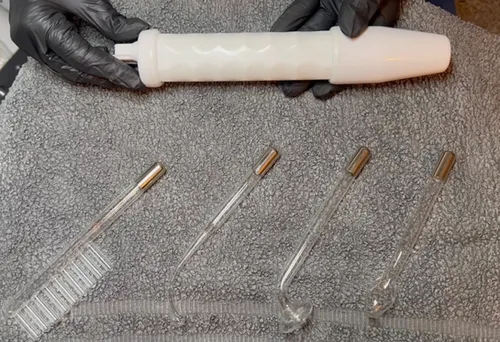
The high frequency wand is worth adding to your facial routine if you are targeting blemishes, congestion, dullness or early fine lines, because it delivers a low-level alternating current that oxygenates the skin surface and temporarily calms inflammation. It is not a miracle device and it will not replace a good cleanser or SPF, but as a ten-minute add-on it does things most creams cannot. Here is what it genuinely does, who it suits, and how to use one without irritating your skin.
What a High Frequency Wand Actually Does to Skin
High frequency works through a glass electrode filled with neon or argon gas. When the wand powers up, the current passes through the gas and creates a mild violet or orange glow at the tip. Held against the skin, it produces ozone at the surface, increases local blood flow and creates a gentle warming, tingling sensation.
That translates into a few measurable effects:
- Surface bacteria reduction. Ozone is antimicrobial, which is why high frequency is traditionally used on active spots and oily zones.
- Temporary tightening. The mild heat and stimulation give an immediate, short-lived firmness, which is why it photographs well before an event.
- Better product absorption. Skin that has been stimulated takes up serums more readily, so apply hydrating actives straight after.
- Calmer redness. Many users find the low setting reduces the look of redness around the nose and chin.
What it does not do is resurface texture, fade pigmentation or replace in-clinic treatments. Treat it as a supporting step, not the headline act.
The Main High Frequency Wand Benefits, Ranked by Realistic Expectation
Not all the claims you see online hold up equally. Ranked from most to least reliable:
| Benefit | How reliable | Best for |
|---|---|---|
| Calming active breakouts | High | Oily, congested, spot-prone skin |
| Temporary pore and firmness boost | High but short-lived | Pre-event prep |
| Improved serum absorption | Moderate | Anyone using hydrating serums |
| Reduced redness appearance | Moderate | Sensitive-but-not-reactive skin |
| Long-term collagen building | Low to moderate | Not a substitute for professional collagen treatments |
The honest summary: it is a great maintenance tool and a poor standalone treatment.
How to Add a High Frequency Wand to Your Facial Routine
Keep it simple and consistent rather than long and intense.
- Cleanse and dry fully. The wand needs dry, intact skin. Never use it over wet product or broken skin.
- Choose your setting. Low for sensitivity and redness, higher for oily zones. Start low regardless.
- Work in sections. Glide slowly over the forehead, cheeks and chin, keeping the glass in contact. Two to three minutes per area is plenty.
- Go gentle around the eyes and neck. Short passes only, and skip the thyroid area entirely.
- Follow with hydration. A hydrating serum or a jelly face mask locks in the post-treatment glow.
- Repeat two to three times a week. Daily use is unnecessary and can leave skin sensitised.
Clean the electrode with alcohol after every use, and stop immediately if you feel sharp heat rather than a mild tingle.
A decent starter device does not cost much. You can see the current high frequency wand offer and check the settings and attachments before you commit.
At-Home Wand vs a Professional Facial
If you are deciding where to spend your money, this is the split most people get wrong.
| Feature | High frequency wand at home | Professional facial |
|---|---|---|
| Cost per session | One-off device cost | Per-visit pricing |
| Frequency | 2 to 3 times weekly | Every 4 to 6 weeks |
| Skill involved | Low, self-taught | Trained therapist |
| Best for | Maintenance between visits | Extraction, massage, layered protocols |
The strongest routine is usually both. Use the wand at home for upkeep, and book in for a treatment that does the deeper work. A dragon facial, for example, combines a more involved protocol with hands-on technique that you cannot replicate with a handheld device. The wand keeps the results going in between.
You can grab the sitewide discount code before booking or buying, since the same offer tends to cover both training and retail items.
Who the High Frequency Wand Suits, and Who Should Skip It
It tends to suit:
- Oily and combination skin that breaks out regularly
- Anyone wanting a quick pre-event glow
- People already having facials who want to extend results at home
- Students who want a low-cost treatment add-on for clients
Skip it, or check with a doctor first, if you:
- Are pregnant
- Have a pacemaker, metal implants in the treatment area, or epilepsy
- Have broken, freshly waxed or actively inflamed skin
- Are using prescription retinoids at high strength
- Have rosacea that flushes easily
If you are training to treat clients, contraindications are one of the first things you will cover on proper facial courses, and you should never treat a client without knowing their medical history.
Turning It Into a Saleable Treatment: Training and Kit
A wand on its own is not a business. Clients pay for the protocol around it, which means knowing skin analysis, extraction, massage and layering. That is where formal training earns its money.
Yorkshire Beauty Academy runs accredited beauty training courses across most of the treatment menu, so you can build a rounded offering rather than a single trick:
- Facial and advanced facial training, including device-led protocols
- Sports massage courses and massage therapy courses for body work
- Acrylic nail classes and nail technician training
- Waxing courses with a professional waxing kit
- Lash lift course and brow lamination course
- Fake tan course and fake tanning course
Worth checking before you book anywhere:
- Course accreditation and whether insurers will accept the certificate
- Course materials included, so you know what to bring
- Online vs classroom courses, since device work is far easier to learn hands-on
- Flexible payment options and whether student finance applies to your situation
- Whether the price includes a kit or just tuition
Those five questions sort good providers from thin ones faster than any brochure.
The Bottom Line
The high frequency wand is a solid, low-cost addition to a home facial routine, best used two to three times a week on cleansed skin for breakouts, congestion and a short-term firmness boost. It works best as maintenance alongside professional treatments, not instead of them. If you are building this into a client-facing service, get the training and the accreditation first, then let the device do the easy part. Check the latest Yorkshire Beauty Academy offer before you buy either.
 Shopping at Yorkshire Beauty Academy? See today's verified Yorkshire Beauty Academy discount code
Frequently asked questions
How often should I use a high frequency wand?
Two to three times a week is enough for most skin types. Daily use is not necessary and can leave skin sensitised, so build up slowly and drop back if you notice tightness or redness.
Can I use a high frequency wand on active spots?
Yes, that is one of its most common uses. Work on a low setting over the area for short passes, avoid broken or picked skin, and always clean the glass electrode afterwards.
Is a high frequency wand safe during pregnancy?
It is generally advised to avoid it during pregnancy. Speak to your GP or midwife before using any electrical facial device, and always disclose pregnancy to a therapist before a professional treatment.
Do I need training to use a high frequency wand on clients?
Yes. To treat paying clients you need accredited training and insurance that covers device facials. Facial courses covering device protocols, contraindications and skin analysis are the standard route.
Will a high frequency wand replace professional facials?
No. It is a maintenance tool for home use. Deeper treatments such as a dragon facial involve extraction, massage and layered protocols that need a trained therapist and cannot be replicated with a handheld device.