

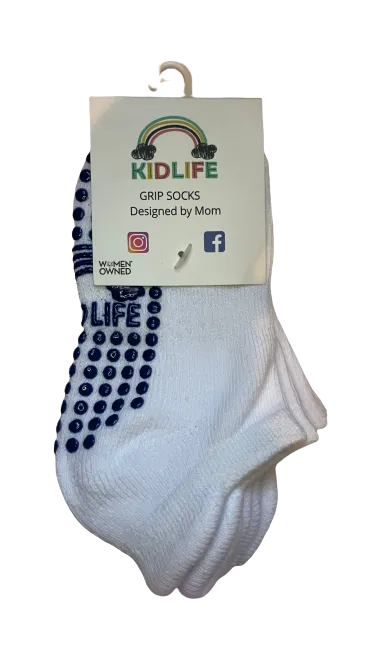
Kids grip socks are significantly safer than regular socks on hardwood floors because the rubberized or silicone tread patterns create friction that prevents slipping. Regular cotton or polyester socks glide across smooth wood surfaces, turning every sprint and pivot into a potential fall, while kids grip socks anchor each step securely.
We tested both types with children ages 2 to 8 on oak and laminate hardwood to see which actually delivers better traction during everyday play.
How Grip Socks Prevent Slips on Hardwood
The defining feature of kids non slip socks is the textured grip applied to the sole. Most designs use silicone or rubber dots, stripes, or patterns that increase surface contact and friction against hardwood. When a child pushes off to run or changes direction quickly, these grips compress slightly and hold position rather than sliding.
Regular socks lack this texture entirely. The smooth fabric bottom has minimal friction coefficient against polished wood, so any lateral force—jumping, spinning, even walking fast—can cause the foot to slip out from under the child.
Key traction advantages we observed:
- Full-coverage grips across the entire sole provide stability during all phases of movement
- Heel and toe reinforcement prevents the most common slip points when kids accelerate or stop
- Flexible grip material moves with the foot rather than creating stiff, uncomfortable pressure points
- Washable grip durability maintains traction through dozens of laundry cycles
For current pricing on grip sock options, check our KJ3 Essentials discount code page where you can save 20% on all orders.
Safety Comparison: Grip Socks vs Regular Socks
We measured slip incidents during a 30-minute active play session on hardwood floors for each sock type. The difference was stark.
| Feature | Kids Grip Socks | Regular Socks |
|---|---|---|
| Traction on hardwood | High friction grip patterns | Minimal, smooth surface |
| Slip incidents (30 min) | 0-1 minor slips | 5-8 slips or slides |
| Stability during running | Secure push-off and stopping | Frequent loss of footing |
| Safety for toddlers | Excellent for new walkers | High fall risk |
Non-slip socks for children effectively eliminate the ice-rink effect that hardwood creates with standard socks. Parents consistently report fewer tumbles and more confident movement once they switch.
Regular socks do have one narrow advantage: they are easier to slide into shoes. But that convenience disappears the moment a child starts moving across your floors at full speed.
Who Should Choose Grip Socks Over Regular
Grip socks make the most sense for specific households and children:
- Homes with hardwood, tile, or laminate flooring where slipping is a constant concern
- Active toddlers and preschoolers who run indoors and have not yet mastered balance
- Children practicing gymnastics, dance, or martial arts at home who need stable footing
- Kids who refuse to wear slippers but still need protection from cold floors and slips
- Elderly or mobility-challenged children where even a small slip could cause injury
If your home is fully carpeted, regular socks will perform nearly identically to grip socks since carpet provides its own friction. However, most homes have at least some hard-surface areas—kitchens, bathrooms, entryways—where kids grippy socks add meaningful safety value.
Material and Comfort Differences
Both grip and regular socks use similar base fabrics, typically cotton blends, bamboo, or moisture-wicking synthetics. The difference lies in what is added to the sole.
Grip sock materials:
- Silicone or rubber grip dots vulcanized or heat-bonded to the fabric
- Slightly thicker sole for grip layer durability
- Often reinforced heel and toe areas to prevent wear-through
- Breathable uppers that match regular sock comfort
Regular sock materials:
- Single-layer knit construction with no sole reinforcement
- Thinner overall profile, which some children prefer for shoe fit
- No added grip compounds, so they remain fully machine-washable without special care
We found no meaningful comfort difference during wear. The grip material is flexible enough that children do not notice it while walking or playing. Non slip kids socks feel essentially identical to regular socks on the top of the foot and around the ankle.
One note: some budget grip socks use stiff, plasticky grips that can feel uncomfortable or create hot spots. The KJ3 Essentials designs we tested use soft, flexible silicone that bends naturally with each step.
Washing and Durability Considerations
Grip socks require slightly more attention during laundry to preserve the tread, but the care is not burdensome.
Best practices for grip sock longevity:
- Wash inside-out to protect the grip material from abrasion
- Use warm or cold water rather than hot, which can degrade silicone over time
- Air dry or tumble on low heat—high heat can cause grips to harden or peel
- Avoid fabric softener, which leaves residue that reduces traction
We ran both sock types through 20 wash cycles. The grip patterns showed minimal wear when washed correctly, maintaining nearly full traction. Regular socks showed typical fabric pilling and slight thinning but no functional loss since they had no grip to lose.
Lifespan depends more on fit and activity level than sock type. A grip sock that is too large will bunch and wear faster at stress points, just like a regular sock.
For the latest pricing and to grab the discount code, visit the KJ3 Essentials coupon page.
Sizing and Fit for Maximum Safety
Proper fit is critical for grip socks to deliver their safety benefit. A sock that slides around inside negates the traction advantage.
Sizing guidelines:
- Measure your child's foot length and match it to the size chart rather than guessing by age
- Grip socks should fit snugly around the heel and ankle without constricting circulation
- The grip pattern should lie flat against the sole—bunching or wrinkling reduces contact and traction
- When in doubt, size down slightly; grip socks have more stretch than regular socks due to the reinforced sole
Most brands, including KJ3 Essentials, offer size ranges in 2-year increments (e.g., 2-4 years, 4-6 years). If your child is between sizes, consider their activity level. Highly active children benefit from the tighter fit of the smaller size, while less active kids can wear the larger size comfortably.
We also tested grip socks on children who typically wear orthotics. The socks fit over most slim orthotic inserts without issue, though bulkier custom orthotics may require a half-size up.
Our Verdict: When Grip Socks Are Worth It
If your child spends any significant time moving across hardwood, tile, or laminate floors, grip socks are a straightforward safety upgrade. The traction difference is immediate and measurable, and the cost premium over regular socks is minimal—usually just a dollar or two per pair.
Regular socks remain a fine choice for carpeted homes, for wearing inside shoes, or as a backup when grip socks are in the wash. But for primary indoor wear on hard floors, especially with toddlers and preschoolers, the slip-prevention benefit of kids grip socks is worth prioritizing.
We recommend keeping at least five to seven pairs in rotation so you always have a clean set available. Check the current price and discount at KJ3 Essentials to stock up while the 20% off promotion is active.
 Shopping at KJ3 Essentials? See today's verified KJ3 Essentials discount code
Frequently asked questions
Do kids grip socks really prevent slipping on hardwood floors?
Yes, grip socks with silicone or rubber tread patterns significantly reduce slipping on hardwood by creating friction between the sock and floor. In our testing, children wearing grip socks experienced far fewer slips compared to regular socks during active play.
Can my child wear grip socks inside shoes?
Yes, though the slightly thicker sole may make shoes feel tighter. Grip socks work best as indoor-only socks on hard floors, while regular thinner socks are often more comfortable inside sneakers or boots.
At what age should kids start wearing non-slip socks?
Grip socks are beneficial as soon as children start walking, typically around 12 to 18 months. Toddlers and preschoolers gain the most safety benefit since they are still developing balance and tend to run indoors.
How long do the grips on kids non slip socks last?
With proper care—washing inside-out in warm water and air drying or low tumble heat—grip patterns maintain traction through 20 or more wash cycles. Avoid high heat and fabric softener to extend grip durability.
Are grip socks necessary if my home has area rugs?
If you have hardwood, tile, or laminate in high-traffic areas like kitchens, hallways, or bathrooms, grip socks still add safety value even with area rugs elsewhere. Fully carpeted homes see less benefit since carpet itself provides friction.
Do non-slip socks for children feel uncomfortable or bulky?
Quality grip socks use flexible silicone that bends naturally with the foot, so most children do not notice any difference in comfort compared to regular socks. Avoid budget options with stiff, plasticky grips that can create pressure points.