

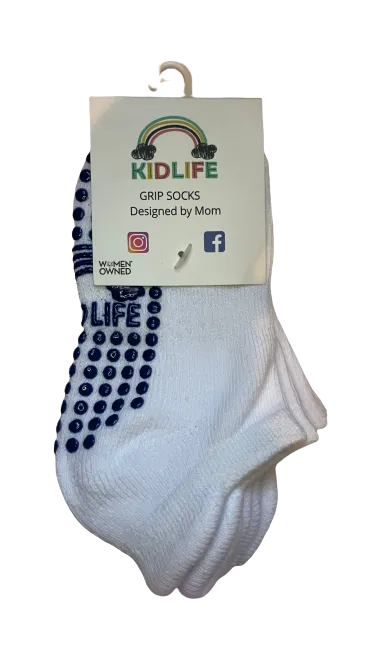
Why Kids Grip Socks Slip (And How to Fix It for Good)
If your child's kids grip socks keep sliding down or spinning around on their feet, the cause is almost always one of three things: the wrong size, a stretched-out cuff, or grip pads that have been ruined by heat or fabric softener. The good news is that nearly every one of these fit problems can be diagnosed in two minutes and fixed without buying anything, though sometimes the right pair of kids grip socks makes all the difference. Here is how we work through it, based on the socks we have actually tested and the mistakes we see parents make most often.
The Real Reasons Grip Socks Slide Down
Slipping socks are not a random defect. In our experience the causes break down like this:
- Sizing gap. If the sock is even half a size too big, the heel pocket sits low on the foot and the whole sock migrates with every step. This is the single most common cause we see.
- Worn or loose cuff elastic. Cuffs lose elasticity from hot washing, machine drying, or simply age. A loose cuff means nothing holds the sock up, no matter how good the grip pads are.
- Wrong sock height for the activity. Low-cut pairs tucked under leggings or too-big trainers can get pulled down by the shoe itself.
- Dead grip pads. Silicone or rubber grips that have peeled, flattened, or picked up lint stop holding the foot in place inside the shoe, so the sock rotates and slides instead.
- Slippery insoles. Smooth leather or synthetic insoles give grip pads nothing to bite into. This is more common in dress shoes and some trainers.
Identify which one is happening and you are halfway to the fix.
Quick Diagnosis: Match the Symptom to the Fix
Use this table to pinpoint your problem fast.
| What you notice | Likely cause | The fix |
|---|---|---|
| Sock slides down the leg during wear | Loose cuff or too-large size | Size down, or replace a worn cuff |
| Heel logo slides under the arch | Sock too big or heel pocket too long | Size down one step |
| Sock spins inside the shoe | Grip pads worn, flattened, or coated in lint | Wash to restore grips, or replace the pair |
| Slipping only in certain shoes | Smooth insoles or too much shoe volume | Check insole material; try a thicker sock |
If the same pair slips across every shoe and every activity, the sock itself is the problem. If it only misbehaves in one pair of shoes, look at the shoe first.
Getting the Size Right the First Time
Kids grow fast and parents often size up to get more months of wear. That is exactly what kills grip socks, because the grip pads are positioned to match the foot length. When the sock is too long, the pads sit behind or in front of the contact zones and stop working.
Our checklist for fitting:
- Measure your child's foot from heel to longest toe in centimetres.
- Match that measurement to the brand's size chart rather than guessing by age. Age ranges overlap wildly between brands.
- The heel marker on a well-fitted pair should sit exactly on the heel bone, not above it or under the arch.
- Snug is correct. Grip socks should feel closer to a second skin than a casual sock, because the grip only works under light pressure.
If your child is between sizes, size down for grip socks. A fitted pair of kids non slip socks will outlast a stretched-out larger one anyway, since slipping causes extra friction and thinning at the heel.
Caring for the Grip Pads So They Keep Working
Grip pads fail faster than the fabric does, and the way you wash them decides how long they last. The rules we follow after testing dozens of pairs:
- Wash cool or warm, never hot. High heat hardens and curls silicone grips.
- Skip fabric softener entirely. It coats the grips and the fibres and cuts traction noticeably.
- Turn socks inside out before washing so lint does not mat onto the pads.
- Air dry. Tumble drying is the fastest way to peel grips off.
- Pick lint off the pads by hand. A coated pad is a smooth pad.
A pair treated this way keeps its grip for a long time. A pair thrown in a hot wash with softener can lose traction in a handful of cycles.
Which Style Works for Which Child
Different kids need different sock builds, and KJ3 Essentials covers the main options. Here is how we would match them up.
| Your situation | What to reach for |
|---|---|
| Everyday play, soft floors, nursery | kids grippy socks with all-over pads for indoor grip |
| Trampolines, play centres, slides | Thicker-padded pairs, ideally crew height |
| Trainers and sports | Low-profile non slip kids socks that sit below the shoe collar |
| Wide or chunky feet | A stretchier knit rather than a heavily ribbed pair |
Height matters more than most people expect. Crew-height pairs stay put far better under leggings and wellies because there is more cuff holding them. Ankle pairs suit closed shoes where a tall cuff would bunch. If you are unsure which build your child needs, our full buyer's guide breaks down height, pad density, and fabric by activity.
The Two-Minute Fit Test
Before you give up on a pair, run this quick test with your child standing:
- Heel check. The heel marker should sit square on the heel bone. If it has slid forward or backward, the size is wrong.
- Cuff pinch. You should be able to slide one finger under the cuff with slight resistance. Two fingers or a gaping cuff means the elastic is done.
- Twist test. Hold the sock at the cuff and rotate it a quarter turn. If it rotates freely on the foot, the grip pads or sizing are failing.
- Walk and look. Ten steps across a hard floor will reveal whether the heel marker stays put. A quality fitted pair will not budge.
If a pair passes all four and still slips, the shoe is the variable. If it fails the heel check, replace it rather than tugging it up all day, because a misfitting sock wears out fast and can cause blisters.
When to Replace a Pair
Grip socks are safety gear as much as comfort items, especially for toddlers on hard floors and kids on trampolines. Replace a pair when:
- The grips are smooth, peeling, or flattened in the ball and heel zones.
- The cuff has permanently lost its hold.
- The heel is thinned or pilling heavily.
- Your child has clearly grown past the size.
When you do replace them, fit properly the first time and check the current KJ3 Essentials pricing before you buy, since running our discount code usually takes the sting out of stocking up in multiples. Two good-fitting pairs beat four loose ones every time.
The Bottom Line
Gripping problems come down to fit, cuff condition, and grip pad care far more often than any flaw in the socks themselves. Measure the foot, size down when in doubt, wash cool without softener, and air dry. Do that and a fitted pair of grip socks will stay exactly where you put it, from the first step of the day to the last.
 Shopping at KJ3 Essentials? See today's verified KJ3 Essentials discount code
Frequently asked questions
Why do my child's grip socks slide down even though they have grips?
Most slipping comes down to sizing. Grip pads are positioned to match foot length, so if the sock is too long the pads miss the contact zones and the sock migrates. Measure heel to longest toe and size down if you are between sizes.
How do I stop grip pads from wearing out?
Wash cool or warm without fabric softener, turn them inside out, and air dry. Heat and softener are the two things that harden or coat silicone pads and kill traction.
Should grip socks be tight or loose?
Yes. A slightly snug pair keeps the heel marker on the heel bone and the pads in position, while a loose pair slides and wears out faster from extra friction.
How long should a pair of grip socks last?
Check whether the grips are smooth or peeling, whether the cuff still holds with light pressure, and whether the heel is thinned. Any of those signs means the pair should be replaced.
What type of non slip kids socks work best for trampoline parks?
Reach for low-profile non slip kids socks for trainers and sports, and crew-height padded pairs for trampolines, play centres, and indoor floors where the cuff helps keep everything in place.
Can I use fabric softener on kids grippy socks?
No. Fabric softener coats both the grips and the fibres, which noticeably reduces traction. Skip it entirely and the pads will hold much longer.